


Hey Adopter,
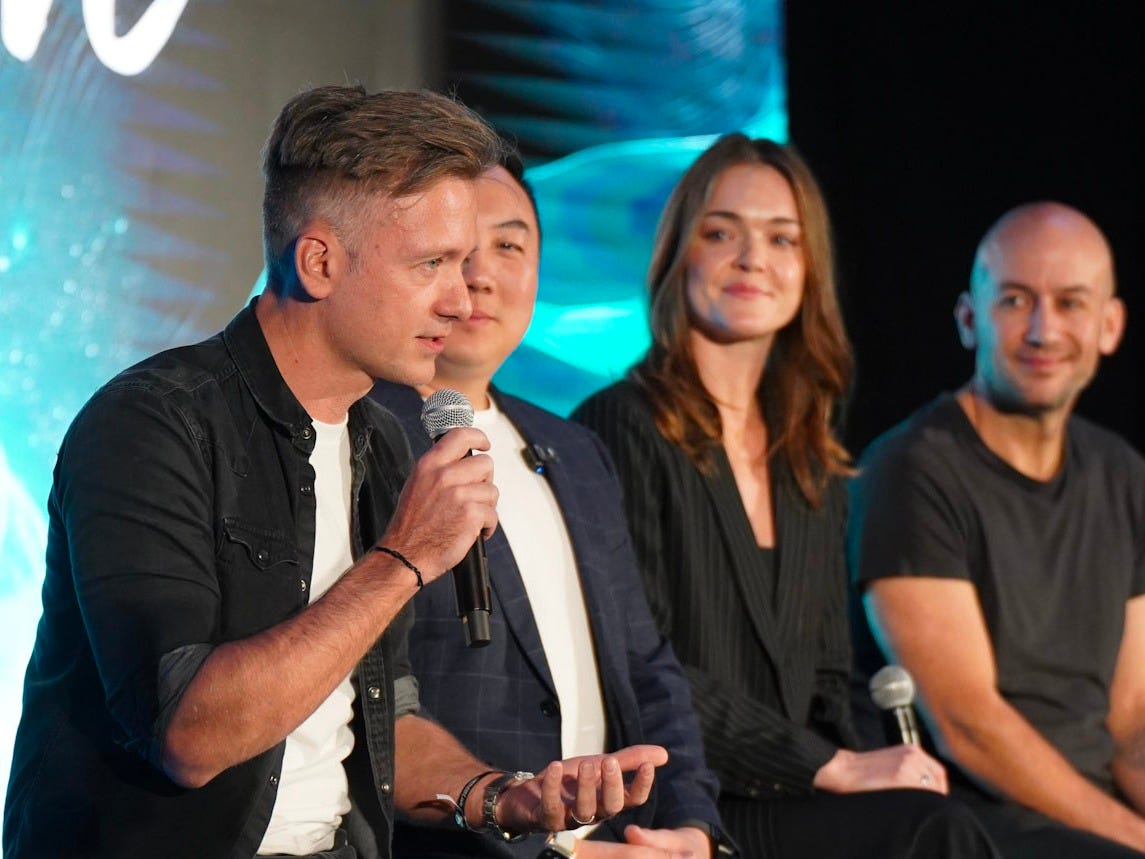
I shared a stage at Limitless Live 2025 with Harper Carroll AI (Stanford AI researcher, former Meta engineer, now at Nvidia), Ari Meisel (productivity expert and author of The Art of Less Doing), and John Lee (a renowned Entrepreneur, Investor, Speaker, and Mentor). Jim Kwik’s event brought together people hungry for practical ways to level up, and we got to spend time unpacking what AI means for ambitious professionals.
Here are my highlights:
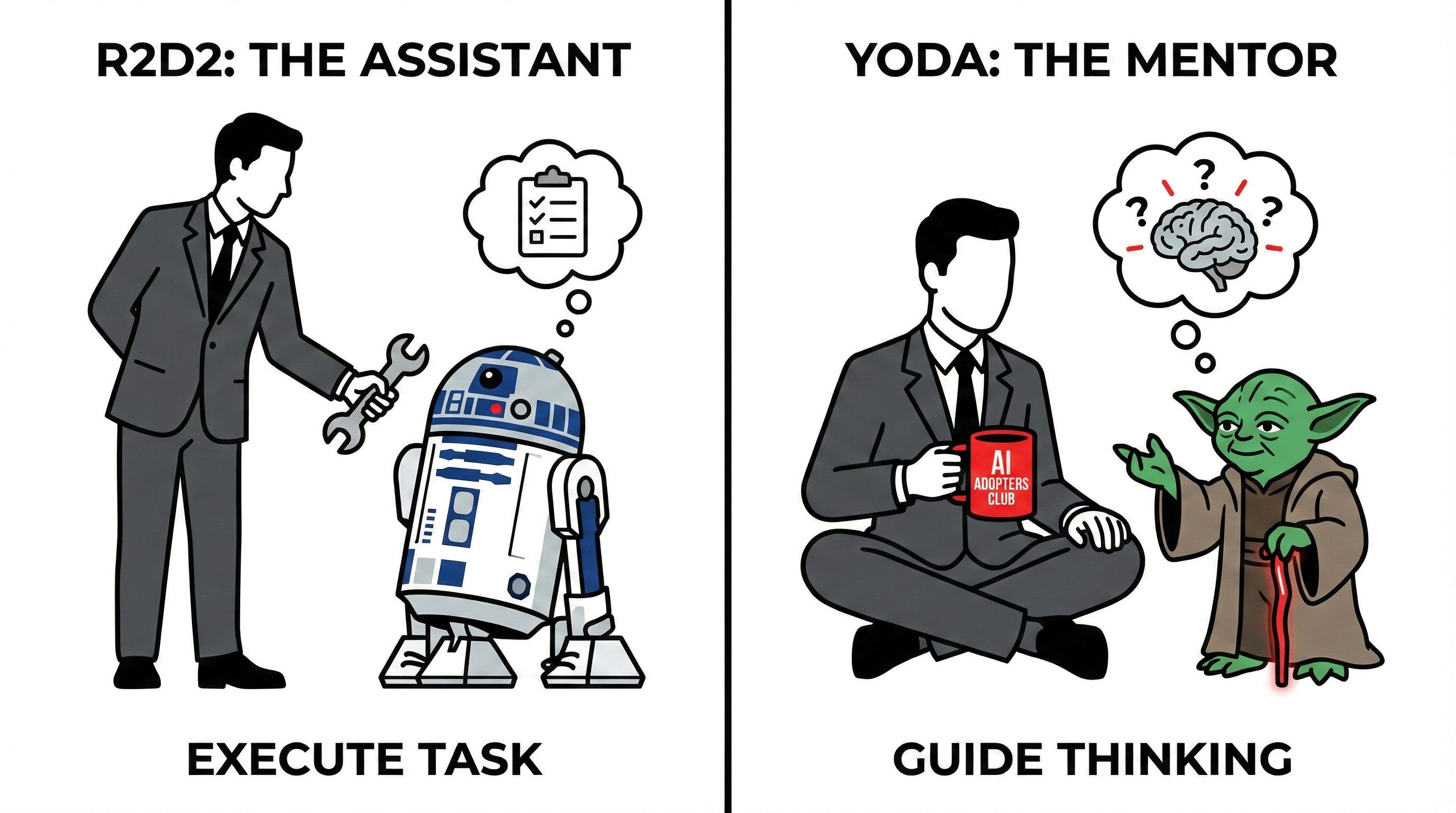
Stop treating AI like R2D2
One of my favourite lines from the panel: most people use AI like they’re talking to a little can robot. They ask it for answers. That’s backwards.
Treat it like Yoda instead. Ask for questions. Ask for help thinking through your day, your decisions, your blind spots. The shift from “give me the answer” to “help me think” changes everything about how useful these tools become.
Harper put it well: AI is a probability machine generating words based on distributions. It can go down low-probability paths and just keep going. You need to stay in the driver’s seat.
What would you like AI to help you with in 2026?
The DJ analogy that stuck
Here’s another frame I shared: AI is a great DJ. You decide which vinyls to play.
I wrote 48 children’s stories based on the 48 Laws of Power. Not because AI told me to, but because I saw a creative mashup worth exploring. AI handled the cross-domain synthesis. I handled the vision and the weird idea.
That’s the split. You bring direction. AI brings speed.

The word that should trigger you
Ari Meisel dropped something I’ve been saying for years about automation, and it applies perfectly to AI: listen for the word “every.”
Every time I post on social media. Every time I onboard a client. Every time I send a weekly report.
That word signals repetition. Repetition signals opportunity. Before AI, you needed no-code tools to automate these things. Now you can build workflows in minutes. Small hinges swing big doors.
ChatGPT projects, and why almost nobody uses them
How many of you use ChatGPT projects?
Barely any hands went up. That’s a miss.
Projects let you create separate spaces with custom instructions and documents. I have one for my business, one for school board work, one for family stuff, one for biohacking. Inside each project, I run individual chats like team members. A CMO chat. A CRO chat. A coaching partner.
It’s not just organisation. It helps your brain context-switch properly. When you’re in your business project, you think like a business owner. When you switch to family, you shift gears. The tool forces the compartmentalisation your brain needs anyway.
The director’s chair
The first article I published on my newsletter was called “Welcome to the Director’s Chair.”
We all got a promotion we never asked for. If you were a graphic designer, you’re no longer a pixel pusher. You’re directing the work. You’re setting the vision. AI handles the execution you used to grind through.
That promotion comes with new skills to learn. Critical thinking. Storytelling. Knowing when to push back on AI outputs and when to trust them.
Harper reminded us: AI hallucinates. A Stanford professor faced perjury charges because he used a ChatGPT-generated source that didn’t exist. Validation is your job now.
The real skill that matters
We talked about what separates people thriving with AI from those feeling lost.
Growth mindset came up. Adaptability. Willingness to learn.
But Ari nailed something deeper: in the past, physical labour kept us fit. Now fitness is a choice. The same will happen with thinking. You can choose not to think critically if AI handles everything. Staying mentally fit will become a decision you make on purpose.
The winners will be the ones who keep their brains sweating.
Watch the full panel
The video captures more than I could fit here. Conversations about AI replacing jobs (spoiler: it won’t, but jobs will evolve). The future of tokenomics and personal AI agents. Why storytelling becomes more important as AI handles the mechanical work.
Press play. See what resonates.
Adapt & Create,
Kamil


