


Hey Adopter,
The bottleneck in AI careers has shifted from execution to judgment. Engineer-to-PM ratios at top companies are collapsing toward 1:1, signaling that “writing code is getting cheaper. Deciding what code to write is not.” Career success now depends on combining technical skills with product thinking and business focus.
I spent Sunday morning watching a Stanford lecture that changed how I think about AI careers. Andrew Ng and Lawrence Moroney (from ARM) ran a session on career advice for AI practitioners. One data point stood out: the engineer-to-product-manager ratio at top AI companies is collapsing toward 1:1.
One engineer. One PM. Same team.
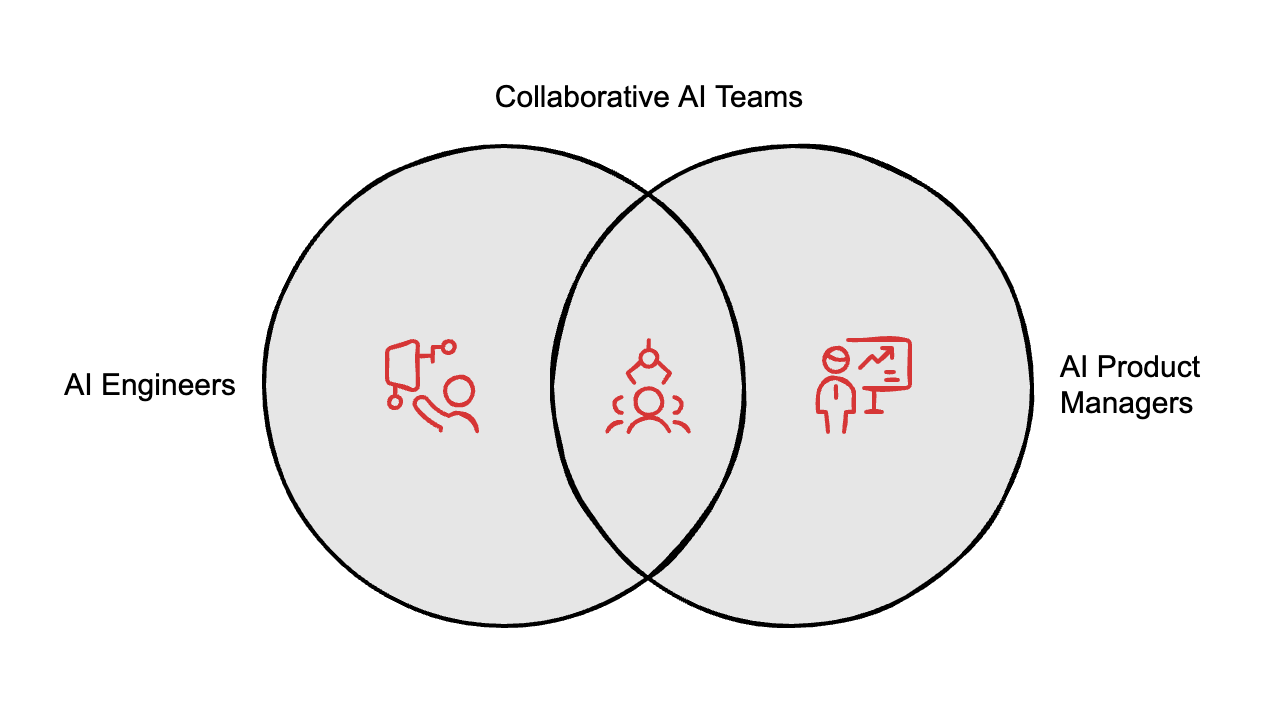
That shift tells you everything about where AI careers are heading, and what you need to do about it.
The bottleneck moved
AI coding tools double in capability roughly every few months. Ng mentioned his personal favourite tool changes every three months. Being half a generation behind makes you measurably less productive.
The implication: writing code is getting cheaper. Deciding what code to write is not.
When you can prompt software into existence over a weekend, the constraint shifts upstream. Who talks to users? Who understands what they need? Who makes the call on what to build next?
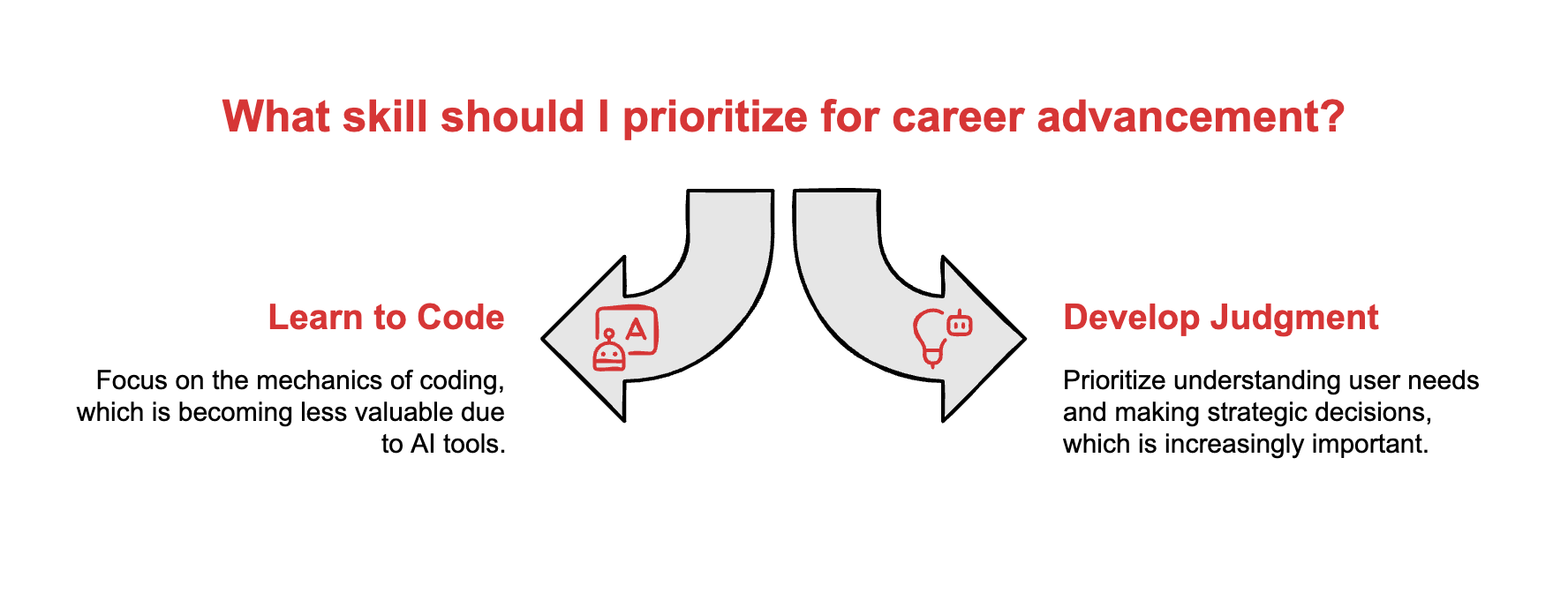
This is where I’d push back on the “everyone should learn to code” narrative. The skill that matters now is developing judgment about what to build, not the mechanics of building it. Engineers who can write code and shape product without waiting for someone else to translate move fastest. Ng called this “collapsing the engineer and PM into a single human.”
Sounds like a productivity hack. It’s a career strategy.
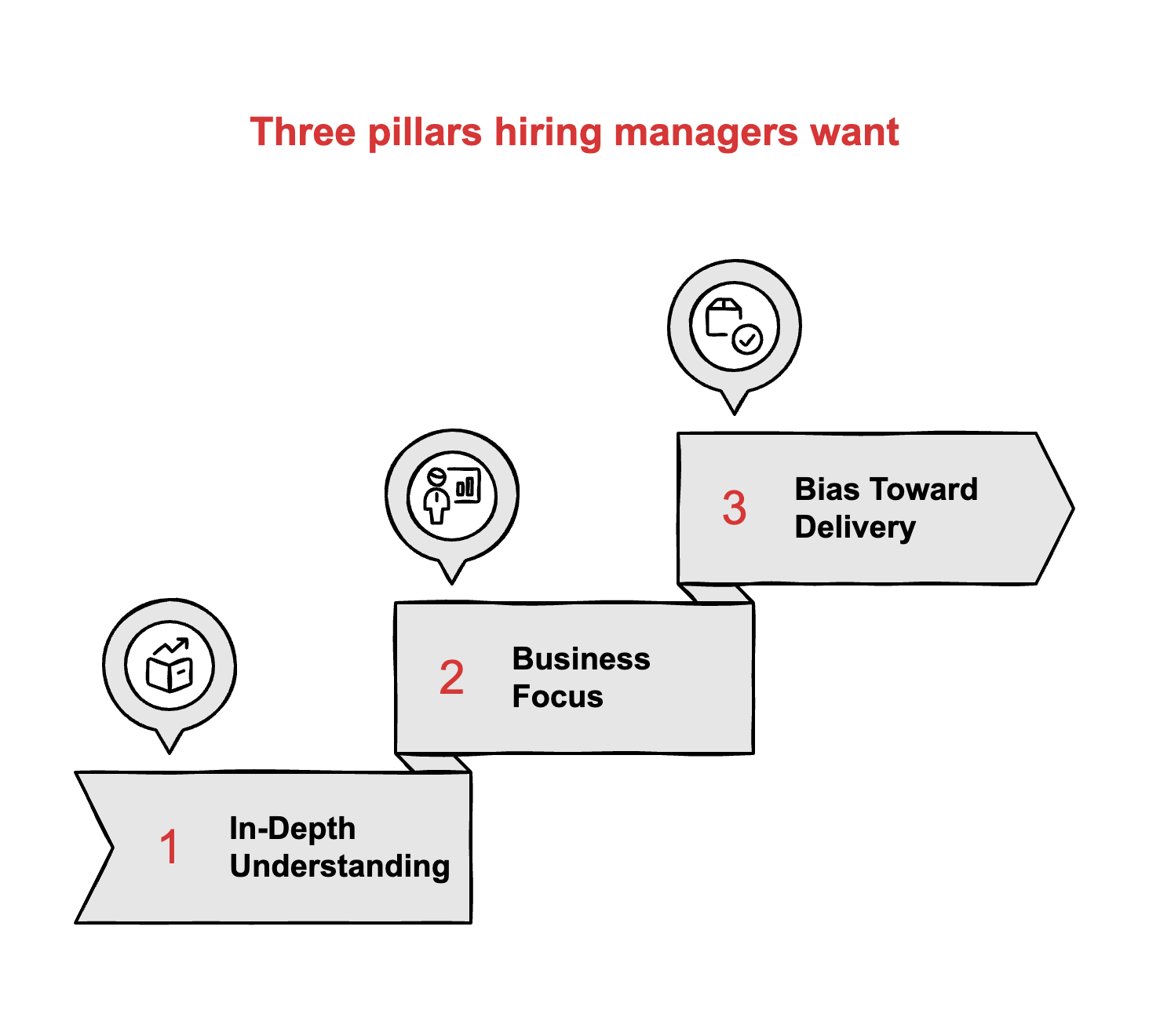
Three pillars hiring managers want
Moroney has interviewed hundreds of candidates across Google, Microsoft, and startups. His framework for standing out comes down to three pillars.
Understanding in depth
Two flavours here. Academic: read papers, know model architectures, grasp how things work. And market understanding: know which trends are signal and which are noise. The second is harder. Most people drown in hype and never develop a filter.
Business focus
Every piece of work you produce should connect to business outcomes. Moroney shared his own Google interview: he built a Java application that predicted stock prices using their cloud. His entire interview became a conversation about his code. He controlled the narrative.
“Don’t dress for the job you have, dress for the one you want” becomes: don’t let your output be for the job you have, let your output be for the job you want.
Bias toward delivery
Ideas are cheap. Execution is everything. The 2022-2023 overhiring phase is over. Teams that hired anyone with “AI” on their resume discovered credentials don’t ship products.
Moroney put it bluntly: business focus is now non-negotiable.
So what does this mean for your portfolio or job hunt?
Technical debt and the vibe coding trap
The ability to prompt code into existence creates a new problem: technical debt you don’t understand.
Moroney defines technical debt like financial debt. Every time you build, you take on obligations. Bugs to fix. Features to add. Documentation to write. People to convince. The only way to avoid debt is to build nothing.
Good debt: a mortgage that builds equity. Bad debt: impulse purchases on a high-interest credit card.
Good technical debt in AI: clear objectives, business value, human understanding of what you built.
Bad technical debt: spaghetti code from endless prompting, VP-generated prototypes that become your problem to maintain.
This connects directly to what I keep saying about foundation before fancy. The skill gap isn’t “can you code?” It’s “can you manage the debt your code creates?”
One practical filter before you ship: ask whether the next person who looks at this will understand it without you explaining.
My take: the hype filter is your edge
Moroney made a point that resonated with everything I write about in this newsletter. The currency of social media is engagement. Accuracy is not.
LinkedIn is flooded with AI influencers using ChatGPT to write engaging posts that get likes but teach nothing. If you’re the person who can filter signal from noise, and communicate that signal clearly to decision-makers, you become invaluable.
This is the exact positioning I built AI Adopters Club around. No hype. No enterprise budgets required. Practical implementation for mid-market companies and professionals who need results without the learning curve costs.
The trusted adviser position, the one companies pay premium rates for, goes to people who understand business problems first and reach for AI second. Not the other way around.
This is where I’m heading in 2026. The skills that got you hired in 2023 won’t cut it. Companies need to rethink what they screen for. Professionals need to rethink what makes them valuable. I’ll be creating specific content for premium subscribers on exactly this: the skills that matter now, how to position yourself, and how to think about your role when the ground keeps shifting.
If that sounds like something you need, join premium before January. You’ll get first access to everything I’m building for the year ahead.

Where the jobs are going
Moroney sees a split coming. Big AI: Gemini, Claude, GPT, chasing AGI, hosted by someone else. Small AI: open-weight models you run yourself, fine-tuned for specific tasks.
Y Combinator reports 80% of their companies now use smaller models. Privacy-sensitive industries like law, healthcare, and entertainment cannot send data to third-party APIs. They need models they control.
The skills that matter on both sides: understanding business problems, managing technical debt, translating complex ideas into mundane terms that leadership can act on.
Andrew Ng’s strongest predictor for career success? The people you surround yourself with. If your five closest colleagues are building, shipping, and staying current, you will too. Brand on the door means nothing if your daily work doesn’t inspire you.
One last piece of advice Ng gave, knowing it might be unpopular: work hard. Not 9-to-9 measuring time. Measuring output. The 2 AM hyperparameter tuning. The weekend spent testing a new tool. The coding instead of scrolling.
The opportunity to build is greater than ever. The cost of failure is lower. You waste a weekend and learn something.
Go build!
Adapt & Create,
Kamil


