


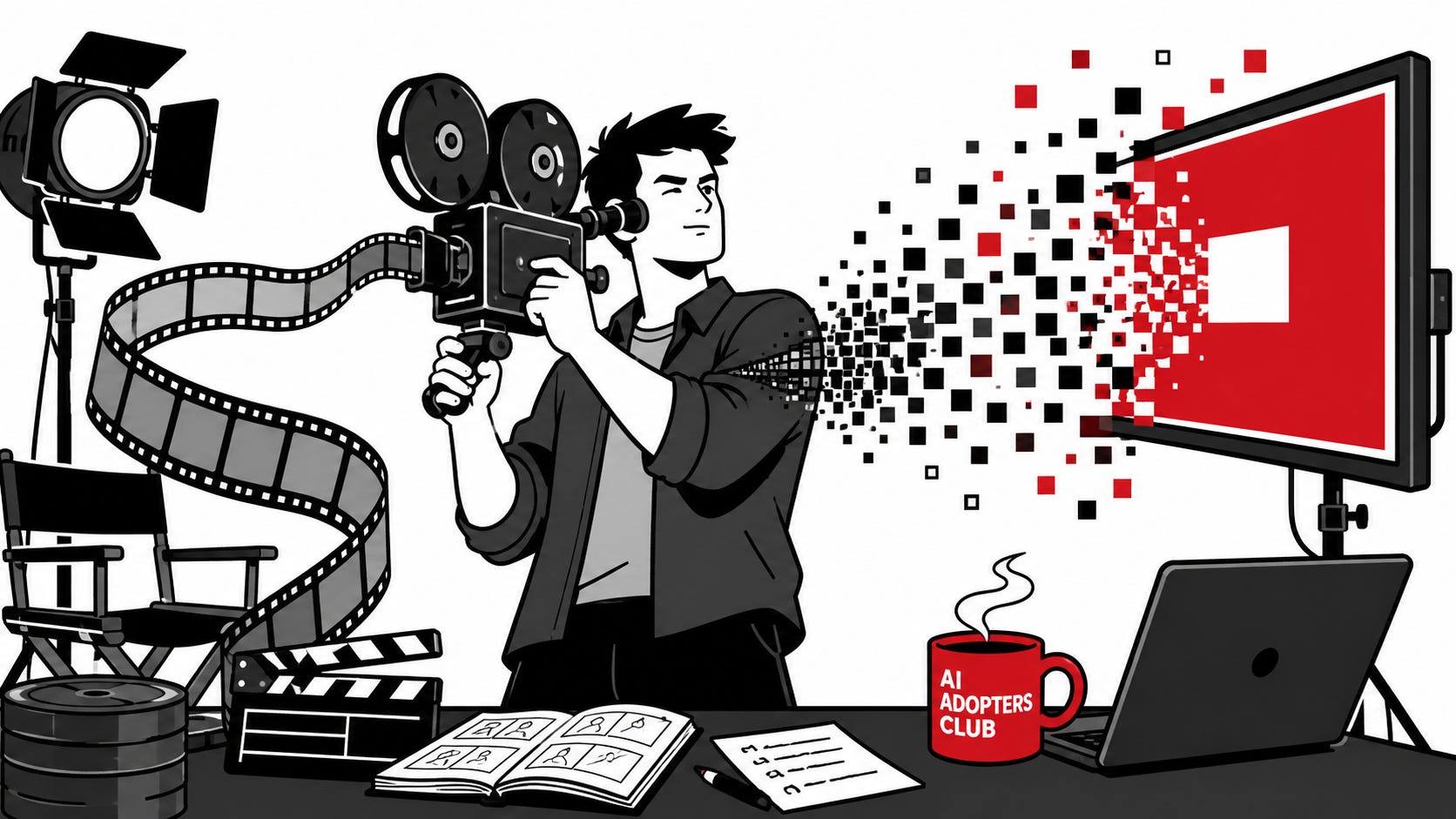
Hey Adopter,
In the mid-80s, a teenager in the back of a car in Hollywood yelled “stop the car.” He’d spotted a pink car that matched the pink leather jacket of the guy next to him, Axl Rose. He grabbed his film camera and took a shot that ended up in Rolling Stone and, decades later, on an album cover.
That kid was Dean Clark. He went on to design artwork for James Cameron’s Titanic and run a high-end studio for thirty years, charging six figures for work that A-list brands lined up to buy.
Then AI showed up and, in his words, said “hold my beer.”
Inside of a year, the clients stopped calling. The work he used to charge six figures for, a non-artist with a prompt could now fake in an afternoon. His industry didn’t shrink. It vanished.
I had Dean on the podcast this week, because what he did next is the entire playbook for anyone watching AI creep toward their job.
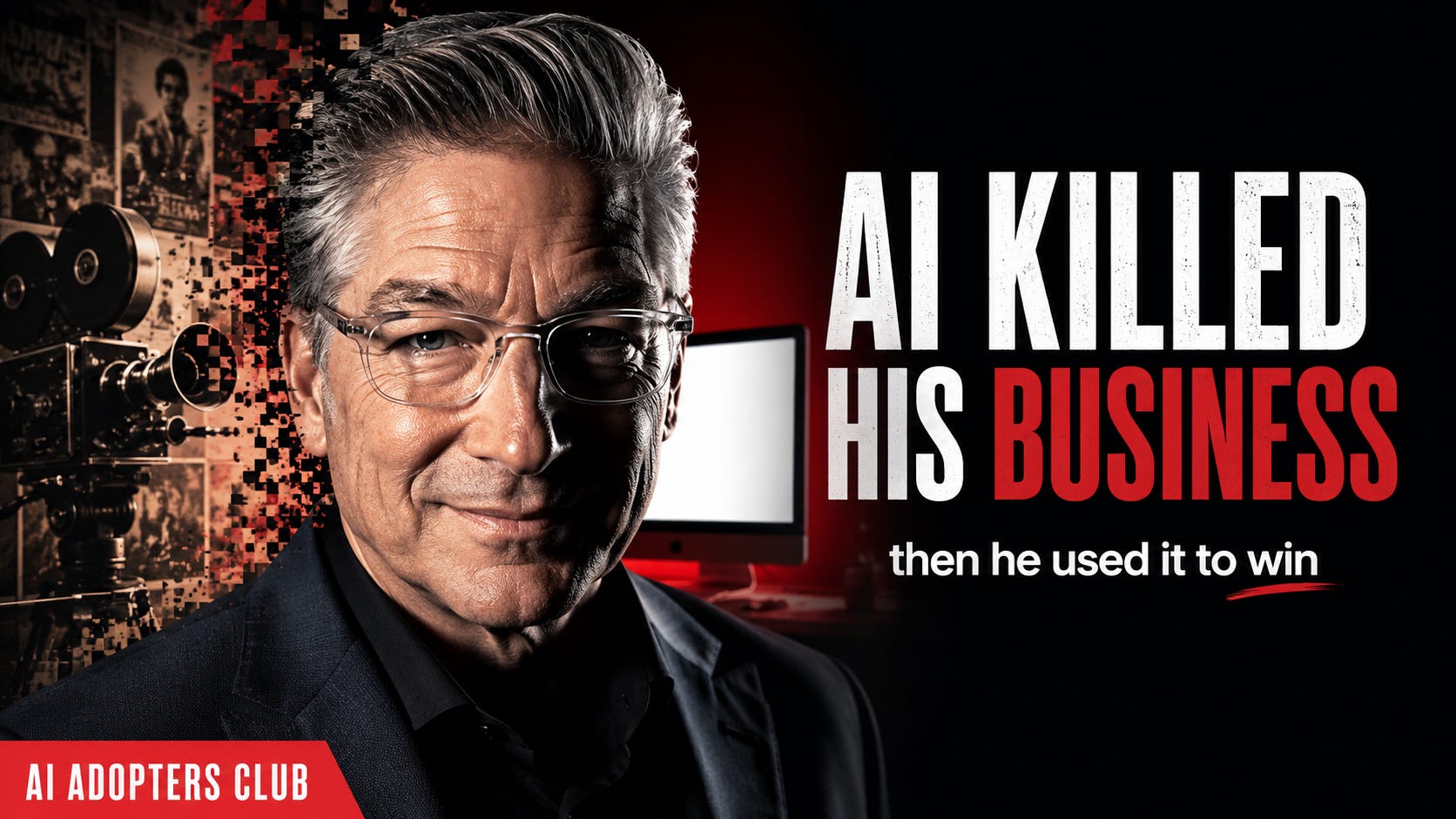
Watch the full conversation with Dean Clark ☝️
The floor went up. Did you?
Here’s the part most people get backwards. AI doesn’t replace skill. It raises the floor.
Suddenly everyone can produce something average. A passable logo, a serviceable paragraph, a decent video. Which sounds democratizing until you notice what it actually does: it makes “average” worthless, because average is now free.
Dean’s line for this is “taste is the new skill.” Art used to be hard. You got hired because you owned Photoshop and knew how to drive it. Now the software is cheap and the model does the heavy lifting, so the value moved. It moved from making the thing to knowing which thing is any good.
“We used to be creators,” he told me. “Now we’re curators. We went from the creator economy to the curator economy, and the best curator wins.”
A million-dollar train, or ninety minutes of AI
The clearest example he gave involves his new role at Ritual Ads, the AI-powered cinematic creative-as-a-service company behind some of the most successful campaigns of recent times.
A major brand was relaunching a sneaker with one of the biggest names in basketball. The original plan was to shut down a subway station in Chicago, light the tunnel, and shoot a multi-day shoot.
After six months of planning, it imploded. Days before launch, they had nothing.
The Ritual Ads team got the call. In ninety minutes the Ritual Ads team built a shot-by-shot proof of concept with AI. The executives approved it, they shot the athlete on a white cyc soundstage, and the shoe sold out within hours.
But here’s the part that matters for you, and the part the hype crowd skips: that commercial required significant human taste, team, talent, and technology including going frame by frame through thousands of frames, re-prompting, and fixing. Animators, sound designers, and editors still did the work only humans could do. AI did the part only AI could do.
“Use AI for what only it can do,” he said. “But creative humans still need to be in the driver’s seat.”
Show it to your teenager
So how does a leader who isn’t an artist use this without embarrassing the brand?
Dean’s north star is the best filter I’ve heard: show it to your teenager.
They look at AI slop all day. They will tell you in two seconds whether it’s cool or cringe. You don’t need to hunt down a guru. You need to trust the gut of someone who lives in the feed, and your own gut as the person whose name is on the thing.
The brands that get burned are the ones who let the tool make the taste decisions. The ones who win keep a human with judgment sitting between the model and the market.
The director’s chair, again
Long-time readers know I’ve been beating this drum since the first issue: when a new layer of automation arrives, you don’t fight it, you climb above it. You stop pushing the pixels and you start directing the work.
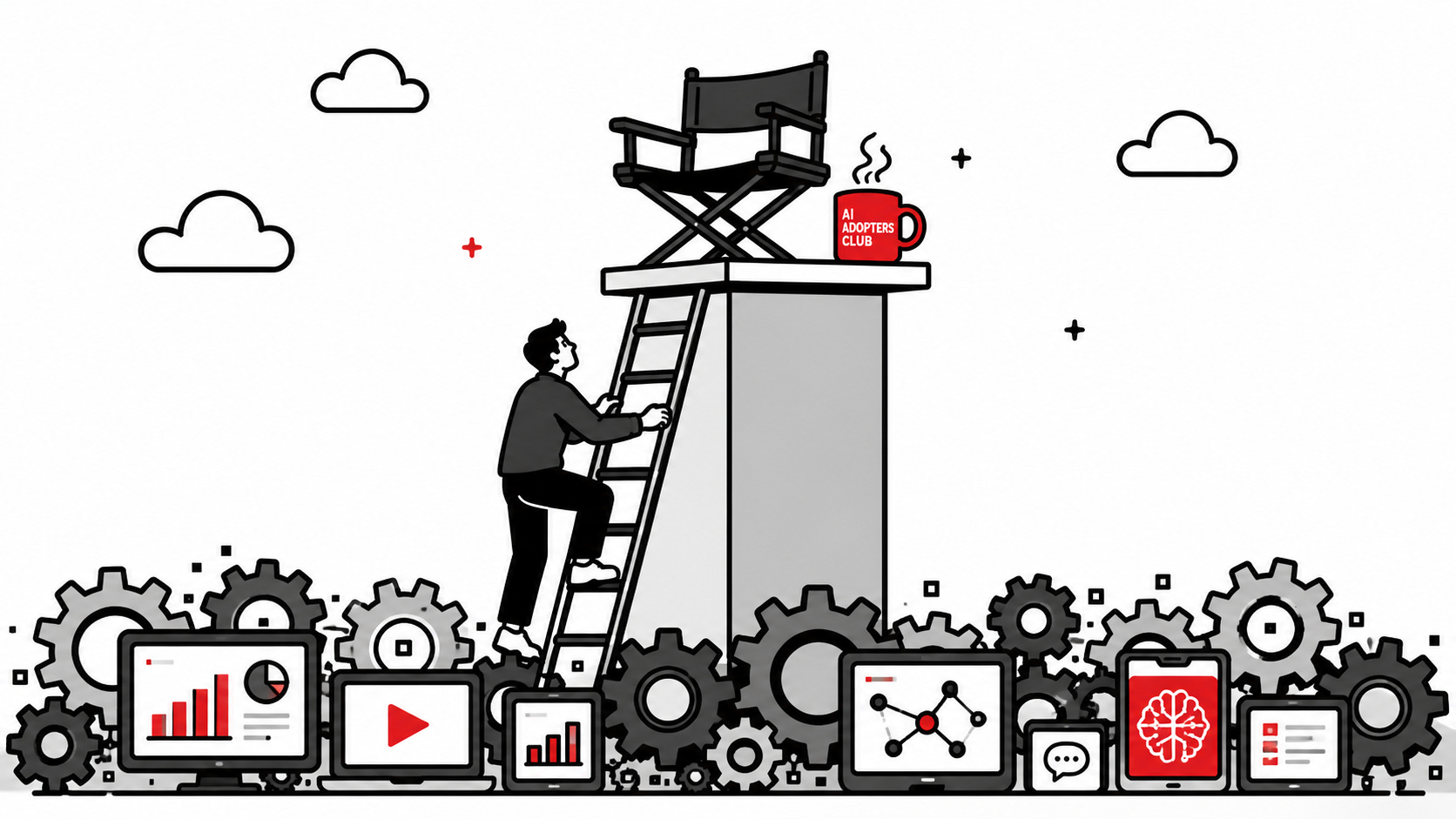
Dean got there on his own, without me feeding him the line. The cameraman whose job dried up is now a director with AI. The blog writer who used to serve one client can now serve fifty. The skill that survives isn’t execution. It’s judgment, taste, and the relationship. “People still buy from people they trust,” he said. That didn’t change. It got more valuable.
He learned it the hard way. About a year ago, almost to the day, he had a massive heart attack, his thirty-five-year marriage ended, and his business cratered, all in the same stretch. He calls it his “Job year,” after the biblical one, and also the best year of his life, because it forced him to climb. . He’s now a VP of Business Development at Ritual Ads, the AI-powered cinematic creative-as-a-service company behind recent breakout campaigns for Reebok, Martha Stewart, and Shopify, prepping for Cannes Lions.
That’s the whole lesson. The tools will keep eating the floor you’re standing on. The move is always the same. Go up a level.
What to do this week
One question, same as always. Who in your market is getting better at AI faster than you are?
If you can’t name them, you’re not looking. If you can, you have a problem worth solving before they solve it for you.
The full conversation with Dean is up top. Watch it when you’ve got twenty minutes. It’s one of the more honest accounts I’ve heard of a creative burning the ships and coming out the other side intact.
Adapt & Create,
Kamil
PS: Dean’s whole life runs on one line, “But God had a plan.” Whatever you believe, there’s something in it. The people who adapt tend to be the ones who decided, ahead of time, that the disruption was happening for them, not to them.


