Hi Adopter,
You’ve got a tool that spots a problem in seconds. Great. Who checks it? Who calls the crew? Without that next step, you’ve produced a very fast addition to somebody’s inbox.
Before your team adds AI to another process, decide where it belongs in the job and what people still need to do. Hawai‘i has some useful examples.
I lived there for almost a decade, and my friend Ian Kitajima introduced me to design thinking. Our recent conversation got me looking at AI projects across the islands. These are separate efforts by different organizations, not one coordinated statewide rollout.
Start with the job
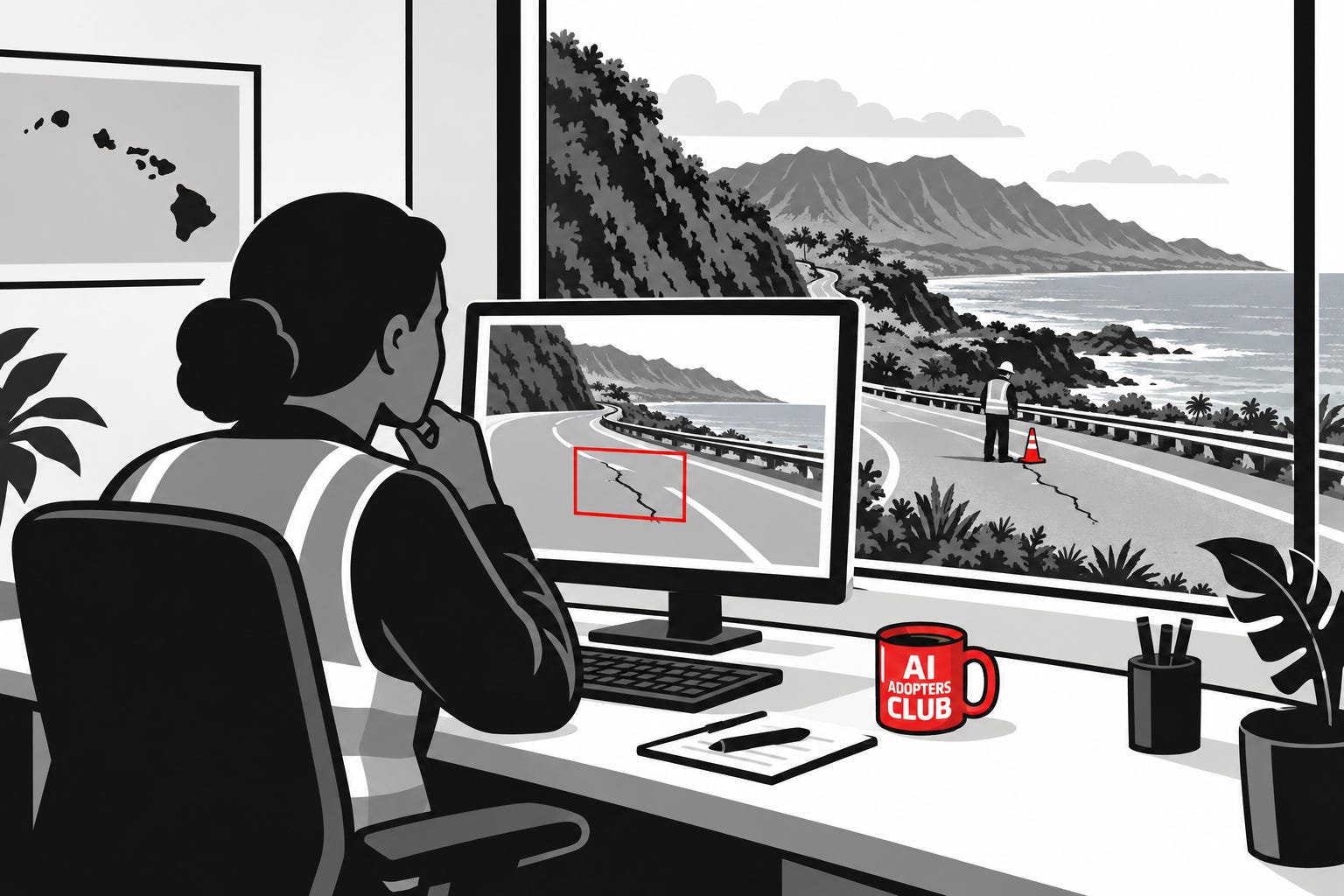
Road maintenance. Hawai‘i’s transportation department is collecting dashcam footage to help identify potholes, damaged guardrails and other road conditions. Its Eyes on the Road update describes information flowing to maintenance staff. Someone still needs to check a finding and decide what gets fixed. Spotting a pothole isn’t the same as repairing it.
Wildfire detection. Hawaiian Electric’s camera system uses AI to flag possible smoke. People review the imagery before notifying the utility and emergency agencies. The human review is part of the system, not an afterthought.
Evacuation planning. Maui’s contract for evacuation tools combines traffic modeling with public communication. The county said first responders would review proposed zones using their local knowledge. Software can propose a plan; people who know the roads need to question it.
Learning. In a Hawai‘i Island classroom, students defended historical inventions against a skeptical chatbot. AI challenged their reasoning instead of doing the assignment. The students still had a job.
That last example connects to something Ian told me. He ran a design-thinking workshop where AI took over much of the work people normally do together. He recalls participants leaving demotivated, rather than energized. It’s one workshop, not a study, but the question is worth asking: are you removing tedious work, or the part people need to learn and feel involved?
Watch our conversation to find out more about it.
Below, I’ll walk through how these lessons apply to your team. Which job should you try with AI? Who needs to check its work? And how do you tell whether you’ve saved time or just moved the work onto someone else?
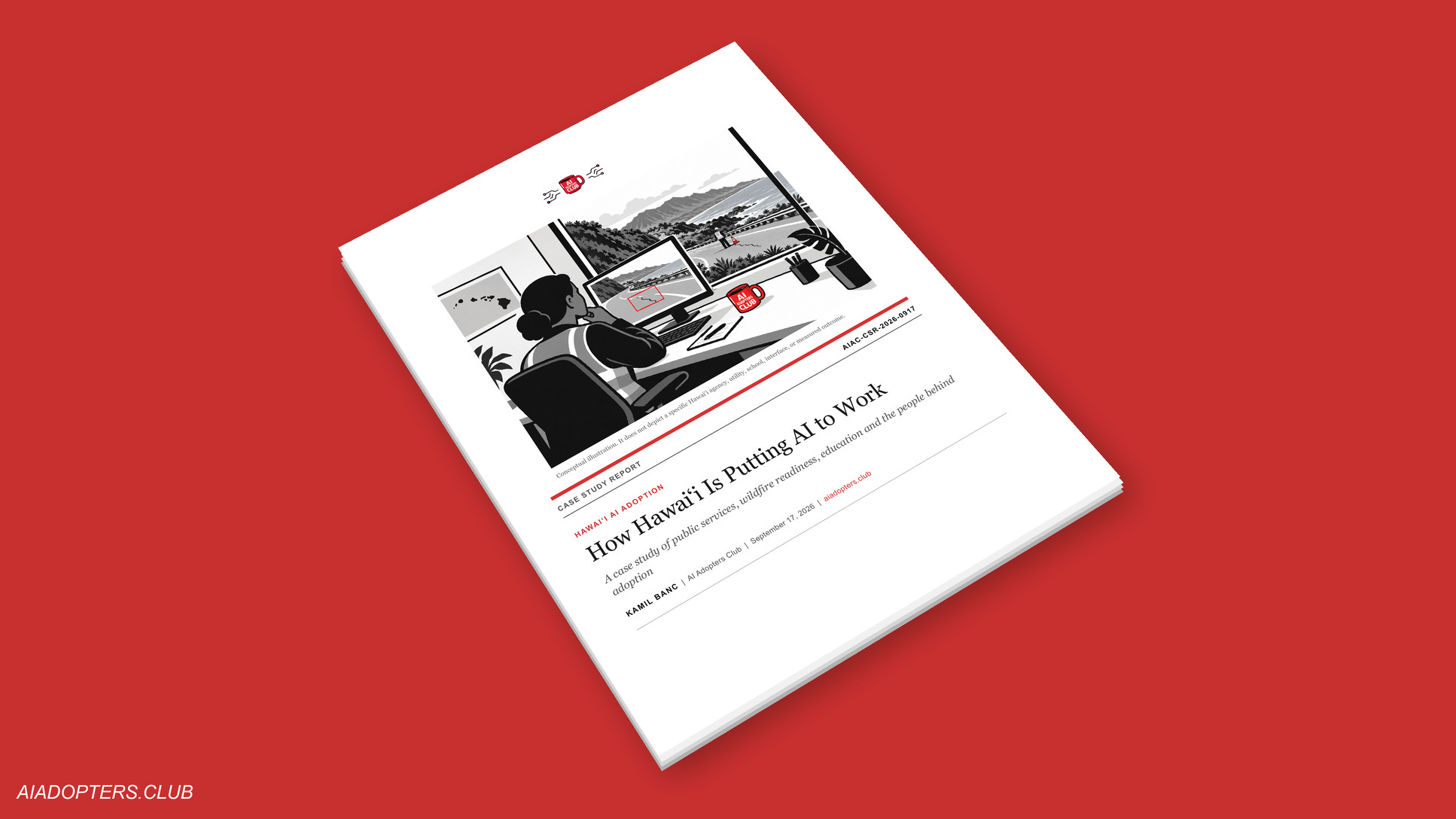
You’ll get a four-step checklist for testing one recurring task, plus the full 24-page Hawai‘i case study. The PDF includes the project details, source links and a printable pilot approval sheet you can fill in with whoever owns the work.