


In partnership with Copley, the AI agent that finds why your ads actually work, then builds the next one.
Hey Adopter,
A candle company ran an ad with a red leather chair in the background. The ad crushed it. Higher click-through rates, better return on ad spend, the kind of numbers that make a marketing team feel like geniuses. So they did what any reasonable team would do: told production to feature that red leather chair in every shoot going forward.
The next round of ads flopped.
It was never the chair. A wide-angle camera shot with dramatic lighting they hadn’t used before made people stop scrolling. The angle was different enough from everything else in the feed to break attention. The chair was just furniture sitting in the frame.
David Henriquez, CEO of Copley and former Klaviyo engineer, told me this story when we sat down last week. His team used their trait analysis system to dissect the original ad and found the actual drivers: camera technique and lighting contrast. They edited a batch of the brand’s existing ads to match those traits. Those edits became the top-performing creatives for the following month.
The chair never showed up again.
The gap between what you see and what the algorithm rewards
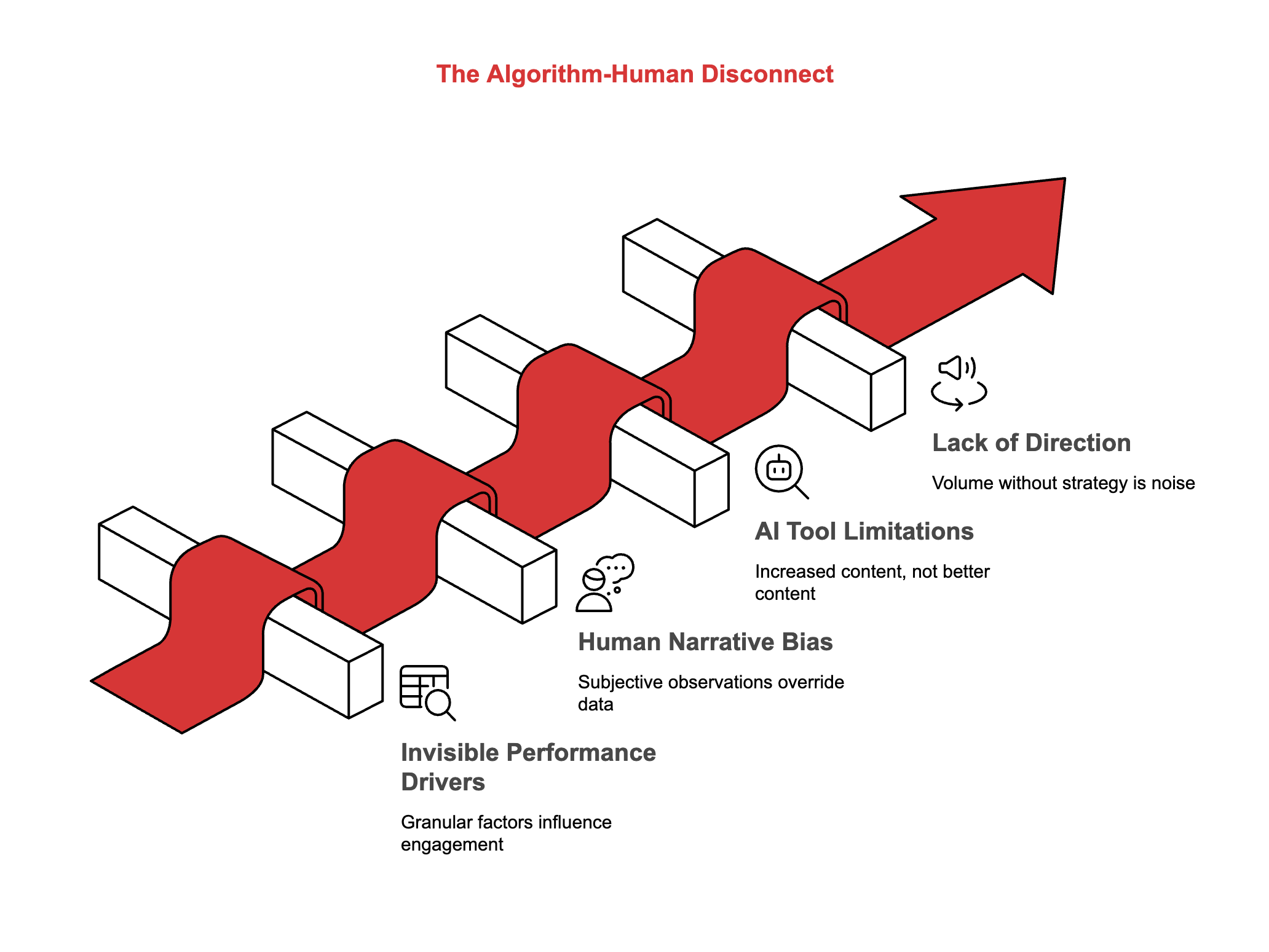
This pattern repeats across every brand I’ve talked to, from mid-market e-commerce to companies in the top five of their industry. They know something works. They don’t know why. And the explanations they come up with, the product looked great, the copy hit, the colour palette popped, are human narratives layered on top of data that tells a different story.
The actual performance drivers are granular to the point of being invisible. Camera angle, lighting temperature, text positioning, background complexity, number of products in frame, the emotional register of the copy. All of it influences whether someone stops or scrolls. But marketing teams make creative decisions based on what their eyes notice in the final image, not what the algorithm registered across a thousand impressions.
Two years of AI creative tools haven’t fixed this. They’ve made it worse. Hundreds of “AI ad generators” launched, most of them wrapping frontier models in a UI and calling it innovation. The output is more content, faster, which sounds great until you realise the bottleneck was never production speed. It was knowing what to produce. Volume without direction is just expensive noise.
What the best teams actually do differently
The brands winning on paid creative right now treat every ad as a data point inside a testing engine. Not a thing to ship and hope for.
They label everything at the trait level, not just “video” or “static” but the individual characteristics inside each piece. Camera angle. Product placement. Background type. Headline structure. Colour mood. When you can tag those traits across hundreds of ads and map them to conversion events, patterns emerge that no amount of dashboard staring will reveal.
That data writes the next creative brief. Instead of a creative director guessing what might work based on the last winner, trait performance tells you which combinations drive high return on ad spend. Then you build from that foundation.
Speed compounds the advantage. The best teams launch, read results, iterate, and relaunch in days. If you’re only shipping five to ten ad variations per quarter, you don’t have enough signal to learn anything. One of Copley’s customers, Million Dollar Baby, went from testing 5-10 creative concepts per quarter to running 150 tests once they had the system to support it.
And here’s the part that surprised me. When brands test across channels, the intuitive move is to take whatever converts best at each individual touchpoint. Best ad, best landing page, best email. Stitch them together. David’s team found this approach routinely loses to a consistent experience end to end, even when the individual pieces are weaker performers. Drop-off spikes when the message shifts between ad and landing page, even if each piece tested well in isolation. Consistency across the entire funnel beats optimised fragments.

in partnership with Copley
Where Copley fits
Copley does what I described above, but without requiring you to build the infrastructure yourself.
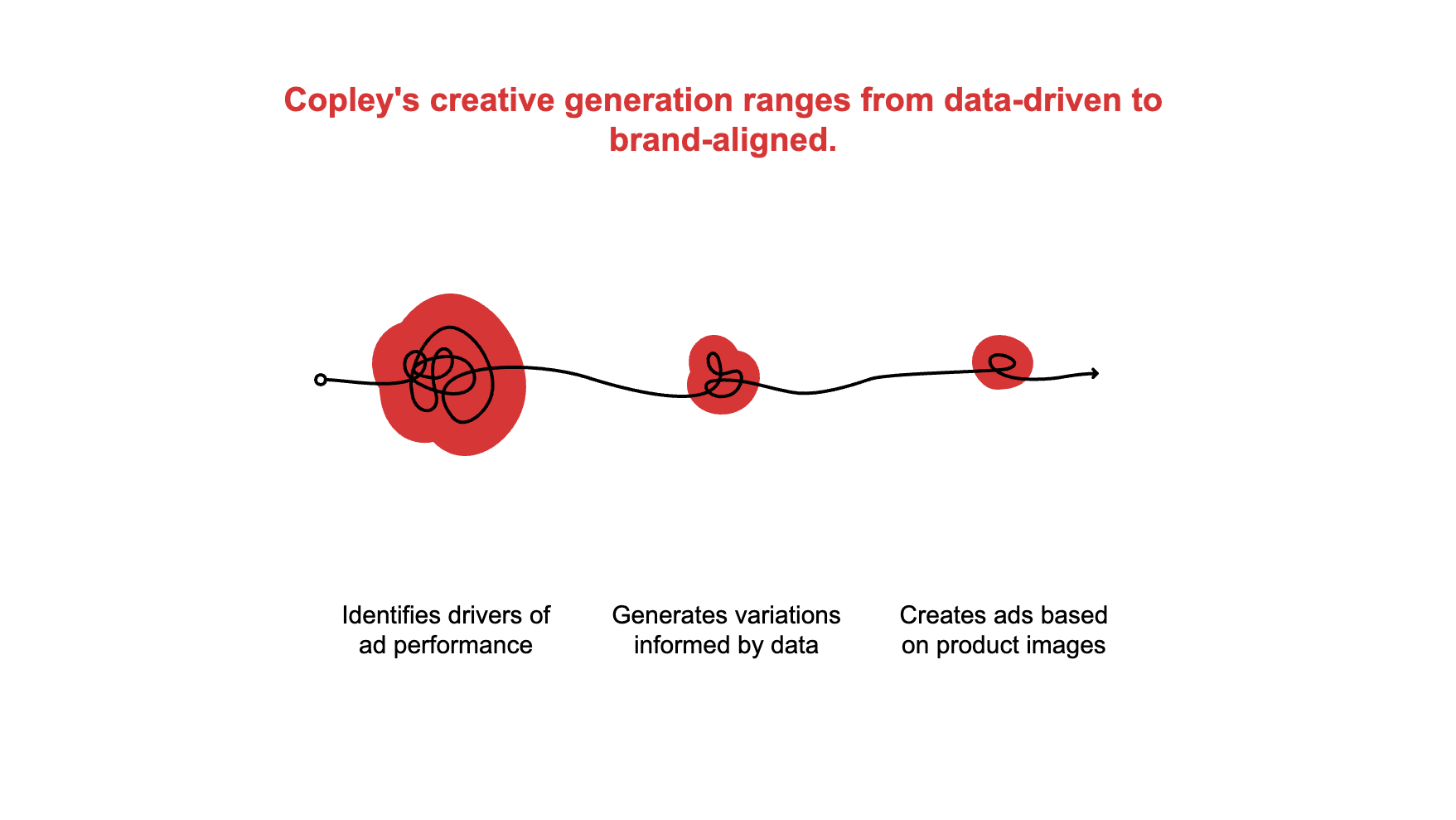
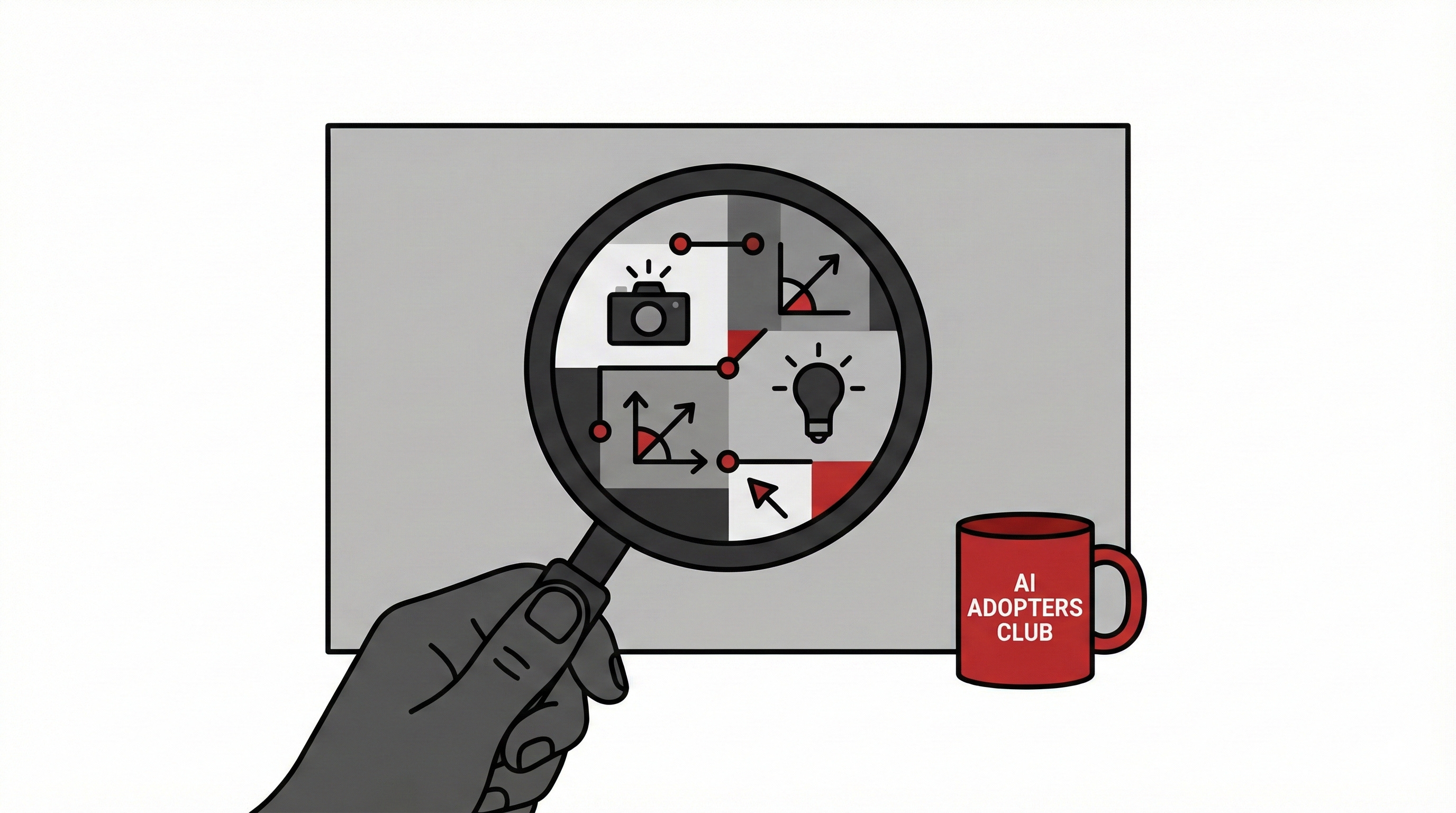
You connect your Meta account, and Copley pulls in every piece of creative you’ve run alongside full performance data. It breaks each asset into discrete traits: camera angle, lighting, copy structure, product placement, background, visual mood. Then it maps those traits to your actual conversion events, purchases, click-throughs, quiz completions, whatever you’re tracking.
The result: you stop reverse-engineering stories about why an ad worked and start seeing the actual drivers.
From there, it generates new creative informed by your data. Not generic output. On-brand variations built from your product images, your brand guidelines, your tone. The system lives in Slack. You message the agent, ask for new ads based on your top-selling product, and it delivers variations ready to launch. You calibrate by telling it what you like and don’t like, and through reinforcement learning, it gets sharper with every round.
The onboarding is minutes, not weeks. Connect Meta, sync your analytics source of truth (they integrate with Triple Whale and about 15 other tools), and the agentic onboarding walks you through the rest even if you’ve never touched an AI tool before.
A few specifics:
$2,500/month. Positioned as a team member, not a project tool. Available through Slack and their web platform.
Meta-focused today. TikTok, email (Klaviyo), and organic channels are on the roadmap. Traits are platform-specific and dynamic per brand.
Early results. Culture Kings reported a 50% increase in ROAS and doubled CTR after switching to trait-based creative.
The team. Built by former Klaviyo (Series A through IPO) and Salesforce Commerce Cloud operators. Backed by $4.8M from Asymmetric Capital and Underscore VC, with Klaviyo’s co-founders among their angel investors.
They’re currently invite-only but offering a free AI Creative Report that analyses your ad performance and surfaces the traits behind your top-performing creative. Worth grabbing even if you’re not ready to commit. At minimum, you’ll find out whether your red leather chair is actually a red leather chair.
The real takeaway
Whether you use Copley or build your own process, the principle holds. Most brands are making creative decisions based on what humans notice in a winning ad, not what the data says drove performance. The gap between those two things is where budgets bleed.
The fix isn’t more content. It isn’t another AI wrapper that makes slop faster. It’s knowing, with actual evidence, which traits make people stop scrolling, and then building everything from there.
Adapt & Create,
Kamil