Hey Adopter,
Read this and you’ll know why AI adoption gets worse before it gets better, where your team sits on that curve, and what to steal from three organisations that shortened the painful part.
Don’t forget grabbing the prompt pack at the end of the article
The 2 a.m. problem nobody budgets for
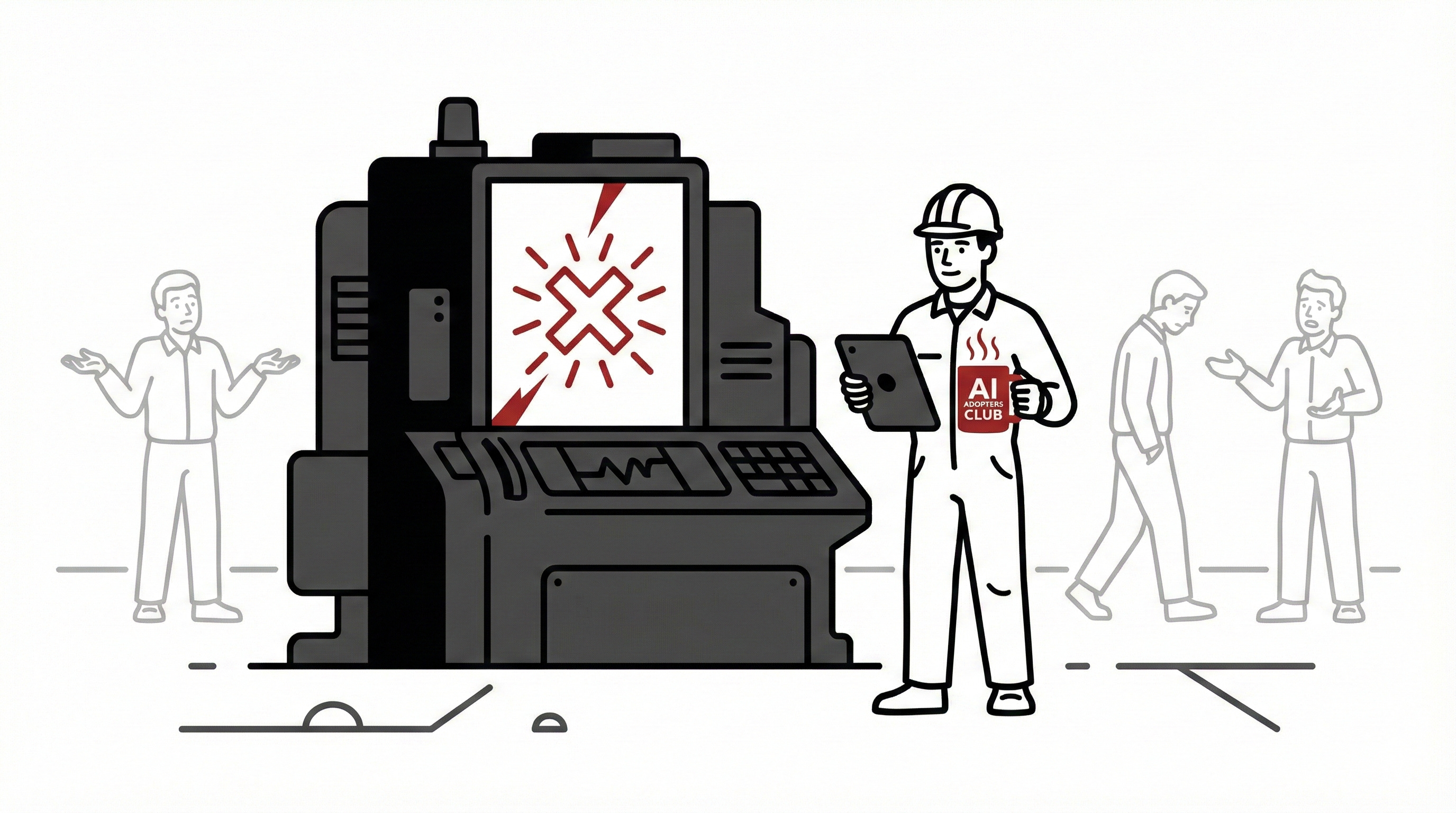
A maintenance technician at Siemens’ electronics factory in Erlangen, Germany is staring at a flashing error code. Middle of the night. The machine produces over 1,000 product variants. The one person who knows this specific fault is at home, asleep. The manual runs 400 pages. Production stops.
Across manufacturing, machines sit idle an average of 800 hours per year. In automotive, one hour of downtime runs past $2 million.
Old playbook: wait until morning, eat the cost, file the incident report nobody reads.
New playbook: the technician opens an AI assistant on a shop-floor tablet, types a question in plain language, and gets step-by-step guidance pulled from machine manuals, error logs, and safety specs. Line running again in minutes.
Erik Schwulera, Siemens’ lead data analytics and AI specialist, summed it up: “Instead of sending the ‘right’ person, we make the person who is there the ‘right’ person.”
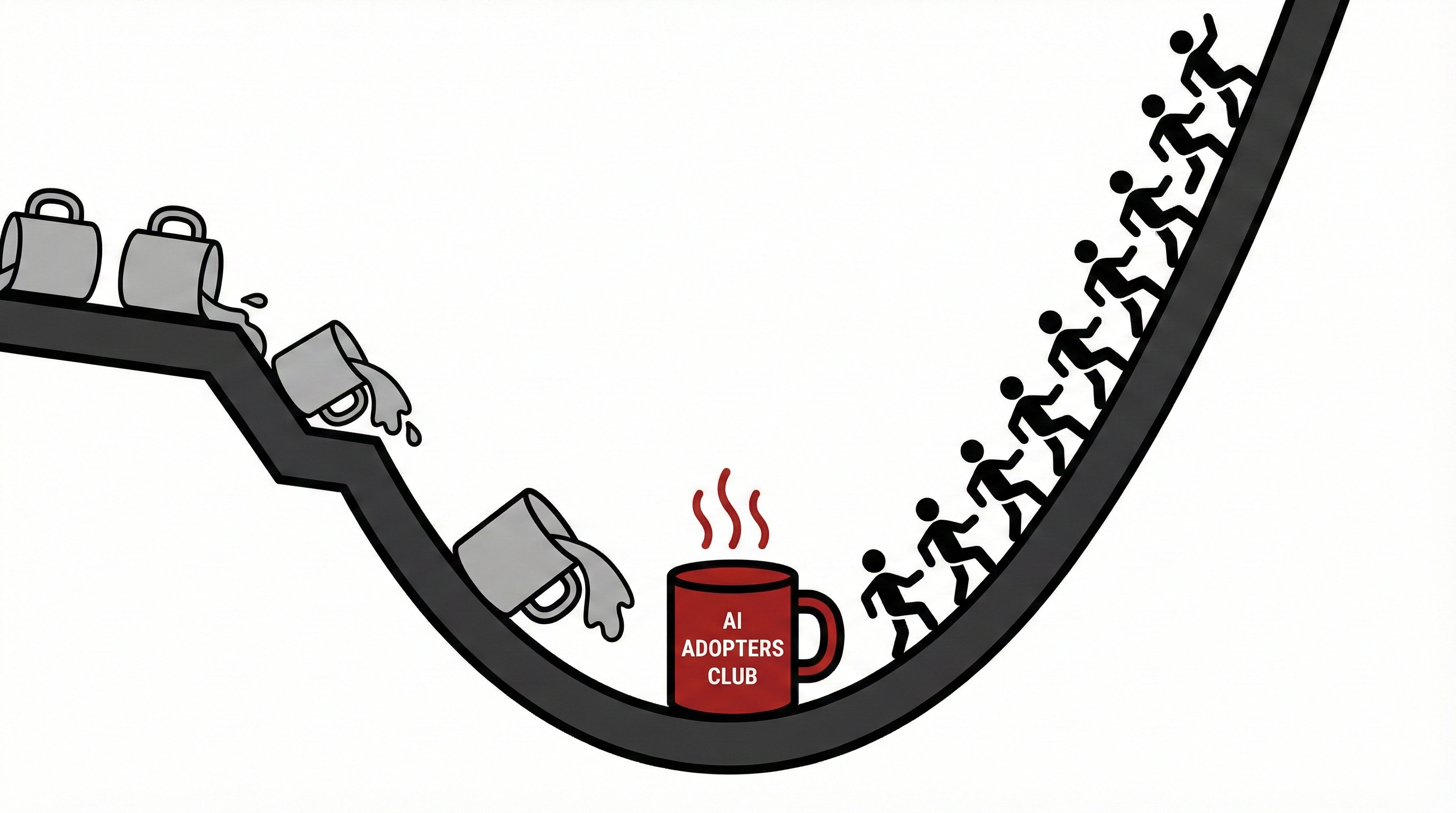
Early results showed a 25% cut in reactive maintenance time. Sounds like a clean win. It wasn’t. Getting there required something most boardrooms don’t account for: the dip.
The part of AI adoption nobody puts in the slide deck
Every leadership team loves the “before and after” story. Nobody wants to talk about the middle.
Stanford economist Erik Brynjolfsson calls it the “productivity J-curve.” When a company adopts AI, the first measurable phase isn’t a gain. It’s a loss. Retraining takes hours away from output. Existing processes break before new ones solidify. Workers feel exposed. Confidence drops. Measured productivity falls, even while the investment is quietly building capacity underneath.