


Hey Adopter,
A controlled trial by METR gave 16 experienced developers the best AI tools available and 246 real tasks. They predicted a 24% speedup. They were 19% slower. After seeing the results, they still believed they’d gotten faster.
That 40-point gap between feeling and measurement isn’t a developer problem. It shows up everywhere.
90% of AI users say it saves them time. Measured savings: 2.8% of work hours. 49% never use AI at work. Only 4% report significant gains. 95% of organisations see no measurable ROI. Only 21% have replaced a single task.
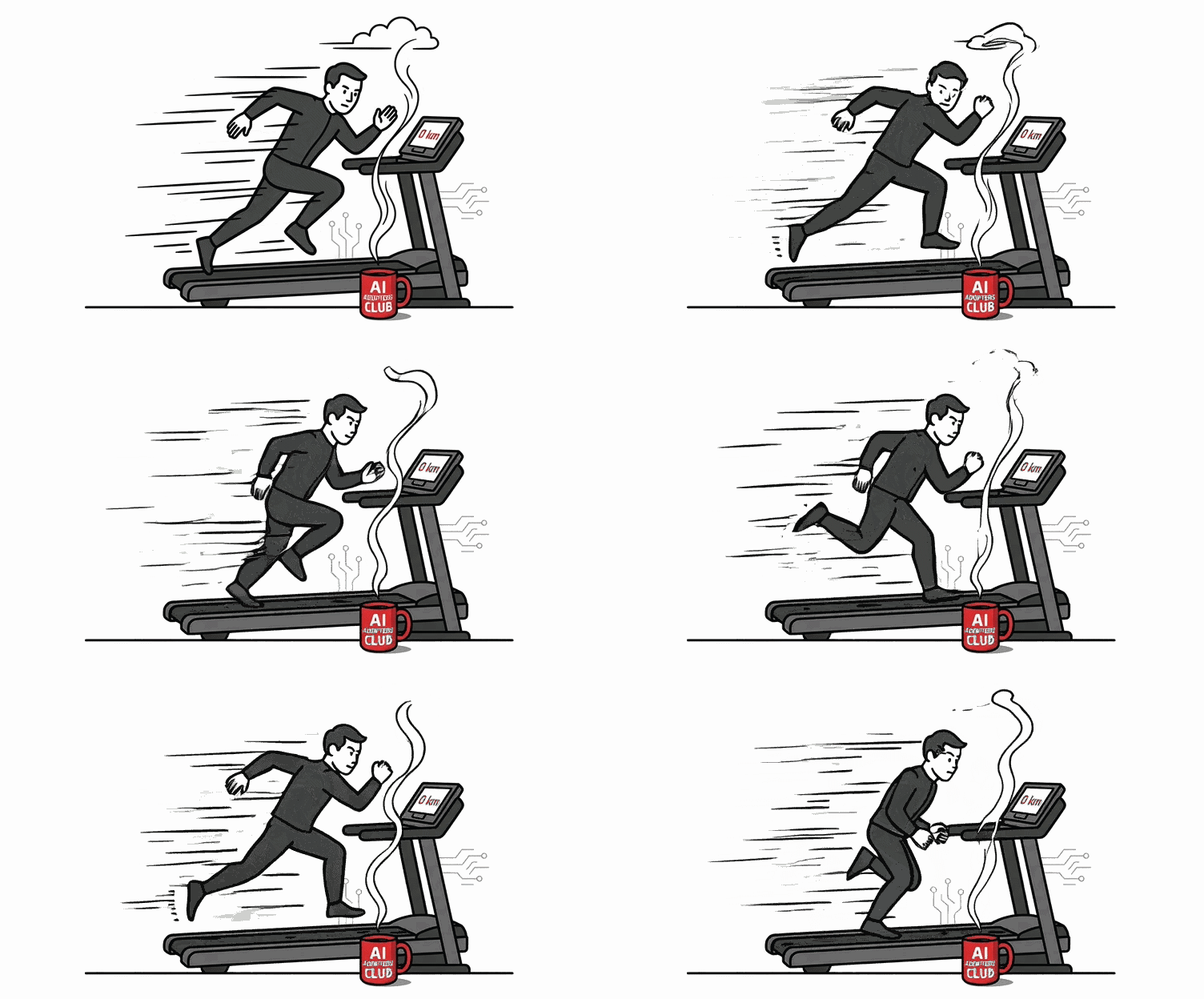
Fast.ai calls this dark flow, a state where AI tools generate the feeling of productivity without the output. Code appears, checkmarks go green, your brain logs progress. The clock runs the other way.
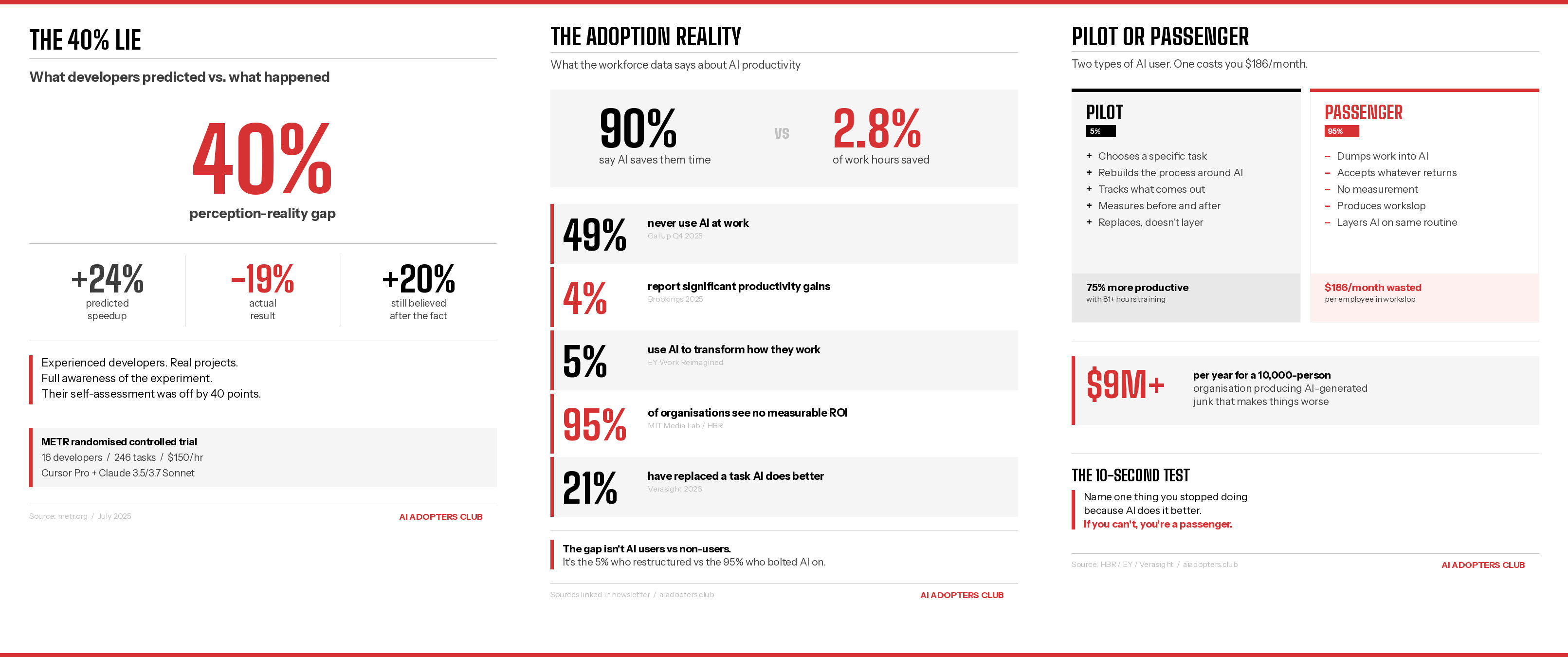
Here’s the good news. The 5% who do see real gains aren’t smarter or more technical. They did one thing the rest didn’t: they picked a task, handed it to AI completely, and stopped doing it themselves. Not faster. Gone. HBR calls them pilots, people who use AI with intent and measure what comes back.
The EY data shows the gap in sharp relief. Workers who invested 81+ hours in deliberate AI training reported 75% higher productivity. Same tools, same company. The only difference was treating AI as a skill to build, not a button to press.
So here’s your move for this week. Pick the most boring, repetitive task on your plate. Status reports, data formatting, meeting summaries. Hand it to AI completely. Don’t polish. Don’t hover. Run it for five days, then measure two things: time saved and whether the output survived without you.
That single experiment puts you ahead of 79% of AI users who’ve never replaced anything. It’s a small bet with an outsized answer, and it’s the same one the 5% made before they pulled away.
Adapt & Create,
Kamil