


Hey Adopter,
A senior engineer handed BCG’s researchers the perfect description of a problem most leaders haven’t named yet. A dozen browser tabs open behind his eyes, all fighting for attention. He’d added a second AI tool expecting a speed boost. What he got was a brain working overtime to manage the tools instead of the work.
Sound familiar? You have people doing this right now. Might be you.
Become The Local AI Expert In Your Area!
The rollout playbook got one thing badly wrong. We sold AI as the thing that does the work. What it delivers is a mountain of output to check, and the checking never clocks off. Drafts land looking polished, finished, board-ready, and that’s the trap. Nobody’s workload shrank. It grew a second shift nobody put on the org chart.
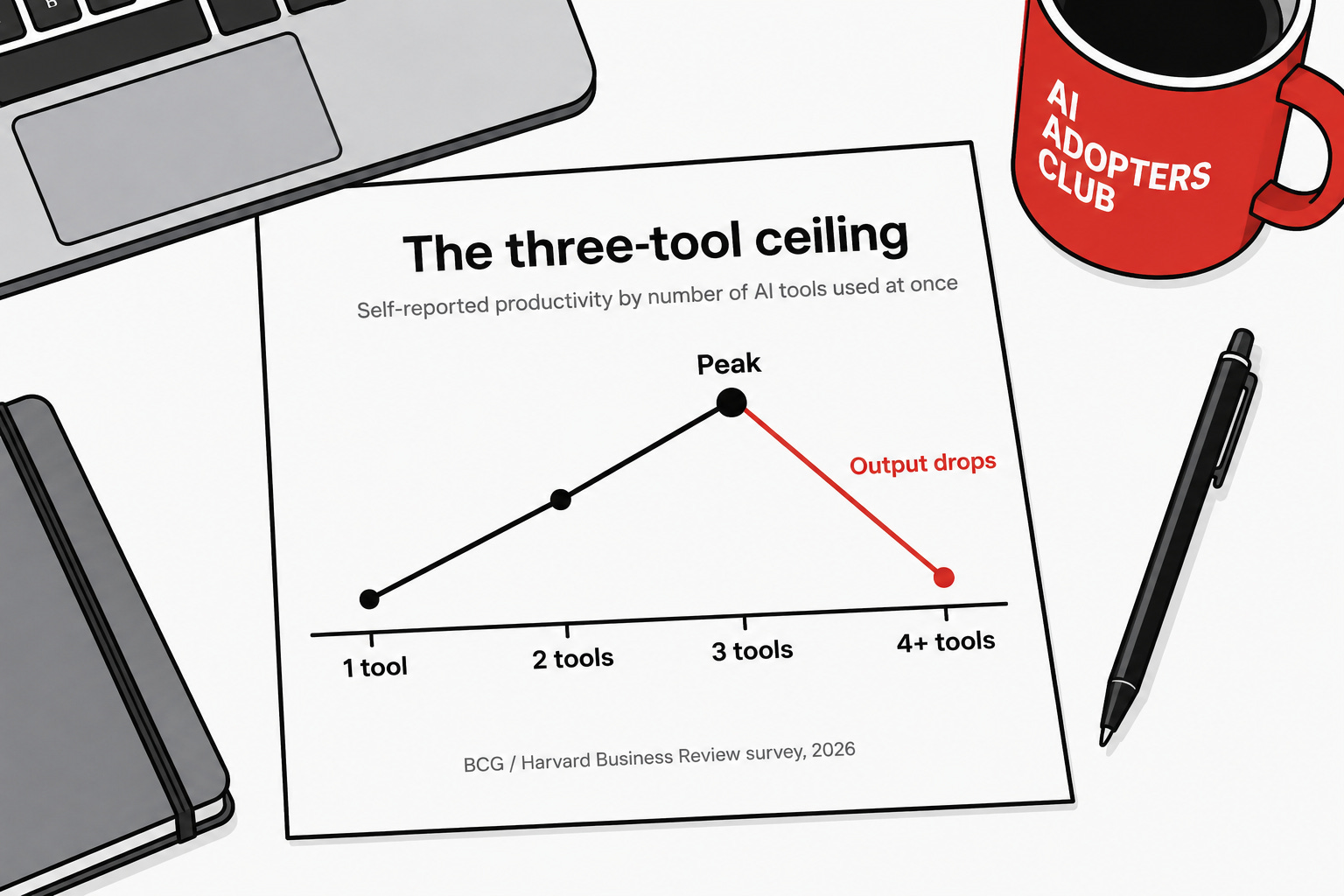
Push past the fourth tool and the productivity line stops climbing and bends back on itself. Your sharpest operators, the ones flexing five or six tools at once, are parked right in the dip and calling it mastery.
And they’re the ones eyeing the exit. A quarter of workers without this fatigue are already looking. Among the ones carrying it, a third.
The bigger question is what you do before they walk.
Why the watching wears people down
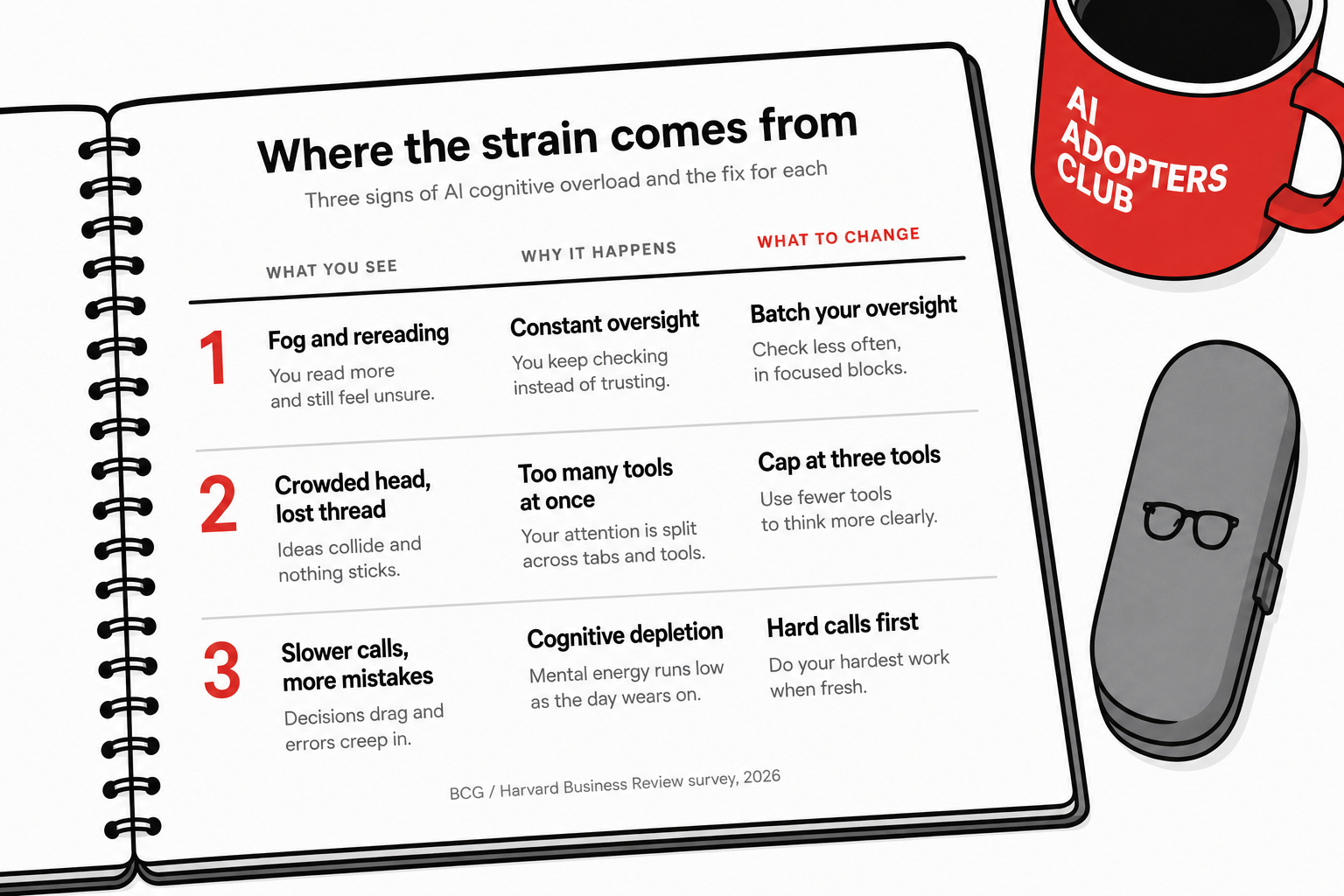
Polished output is harder to police than rough output. You can’t skim a clean paragraph. You read it like an editor hunting for the one confident sentence that’s quietly wrong. Now run that gauntlet across five tools, forty times a day. BCG’s study of 1,488 workers exposed oversight as the single most draining mode of AI work, and this isn’t fresh science. Lisanne Bainbridge flagged it back in 1983. Babysitting a machine taxes the brain harder than doing the job yourself. We handed that ironic burden to every knowledge worker with a login.
What the fix looks like
Cap the stack at three tools, one per workflow you can hold in your head. Batch your oversight into two or three review windows instead of flinching at every ping. Then sort AI output by stakes. Cheap mistakes run unsupervised. Expensive ones earn a hard look. Not every line deserves the same paranoia.
What moves the dial
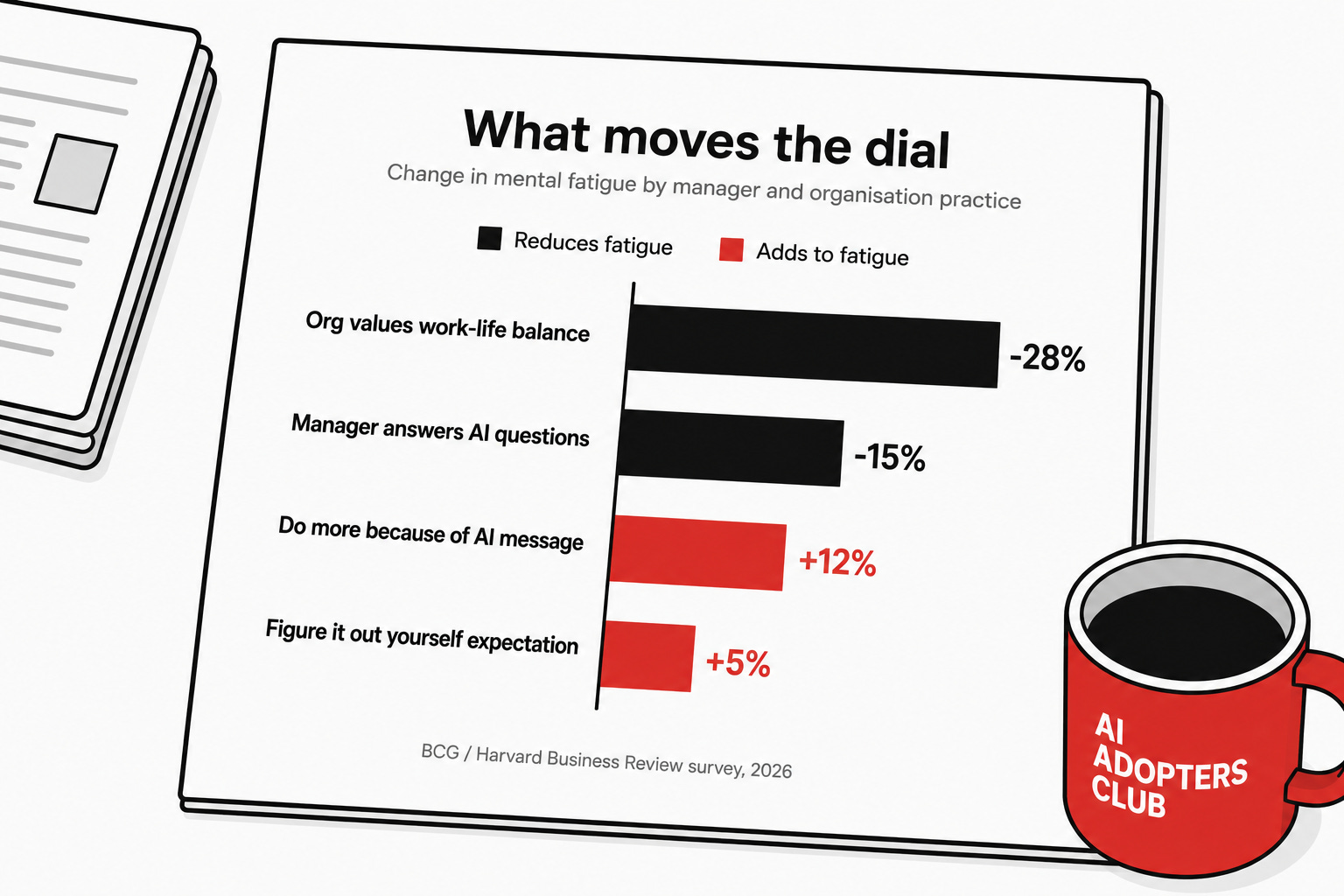
The cheapest lever you own costs nothing. Be reachable when your team has AI questions. The most powerful one is a signal from the top that the pace is allowed to stay human.
And watch your metrics like a hawk. The second you reward volume, tokens burned or lines of AI code shipped, you’ve told everyone the job is feeding the machine. That’s how you manufacture burnout on a spreadsheet.
What to do this week
Pick one team. Ask three blunt questions. How many AI tools are they juggling at once. How much of their AI time goes to checking versus creating. Has AI added to the pile or cleared it. The answers point straight at the strain.
The number that gets leadership to listen
Lead with retention, because that’s the line item the C-suite feels. This fatigue concentrates in your heaviest AI users, the people you spent two years and serious money training. Lose one and replacement runs half to twice their salary once you tally hiring and the work that stalls in the gap.
There’s an upside hiding in the same data. When companies aimed AI at genuine drudgery, the boring repetitive grind nobody fought to keep, burnout dropped 15% and engagement climbed. Microsoft’s workplace research now treats the number of agents one person can guide as a design decision, not an infinite dial. And METR’s controlled trial caught experienced developers running 19% slower with AI while they swore they were 20% faster. Build your AI case on what people feel and you’ve built it on sand.
So the play is easy to say and hard to run. Point AI at the work you want gone, not at the output you now have to inspect. Cap the tools. Batch the checks. Guard the attention of the people doing the watching, because that attention has become the rarest resource you manage.
Get it right and you keep your best people and the gains that made you buy in. Get it wrong and you’re left with a flawless dashboard and an empty chair. So which version of this rollout will you run?
Adapt & Create,
Kamil
AI should make the job lighter, not add another job on top of it.