


Hey Adopter,
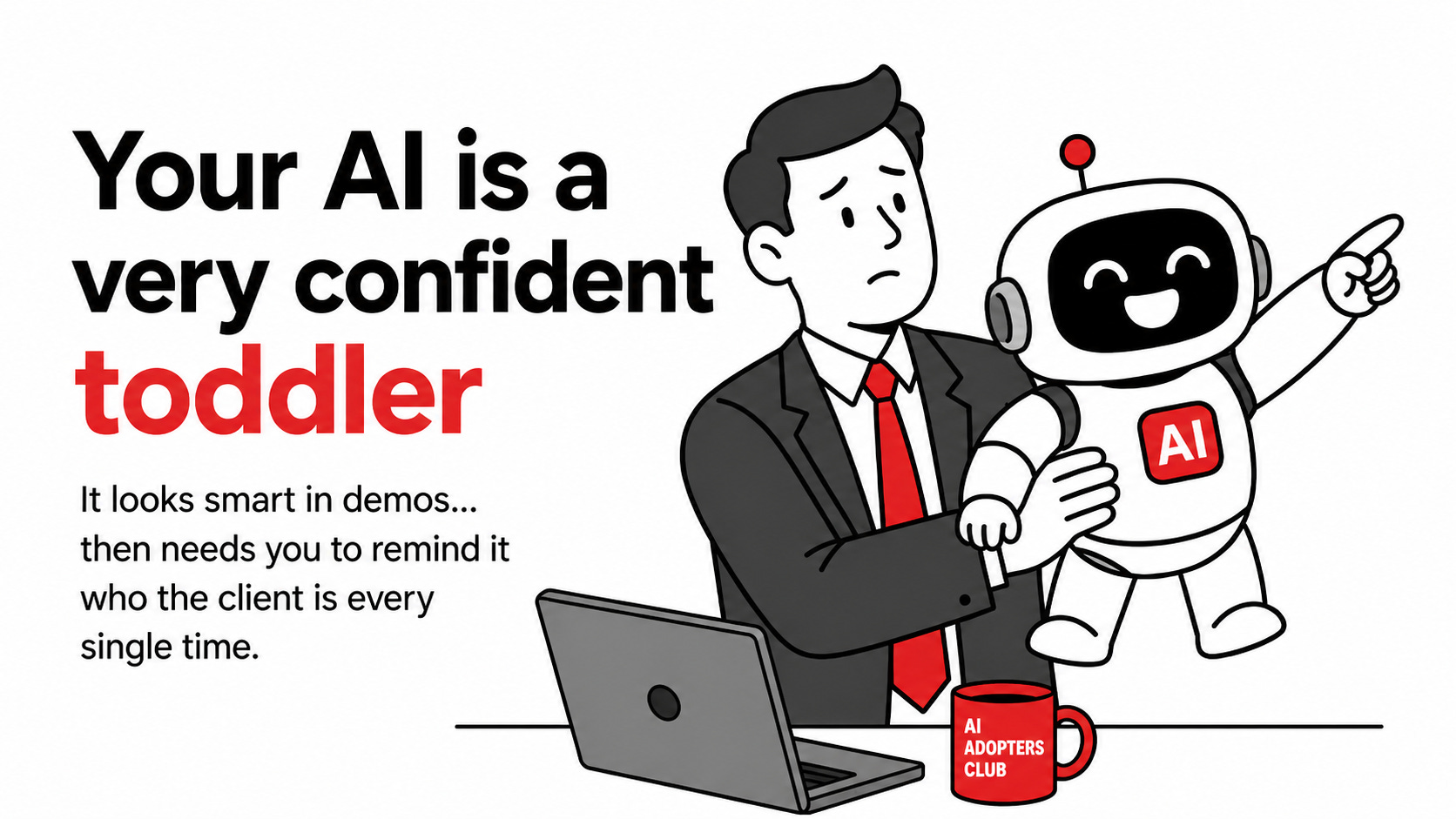
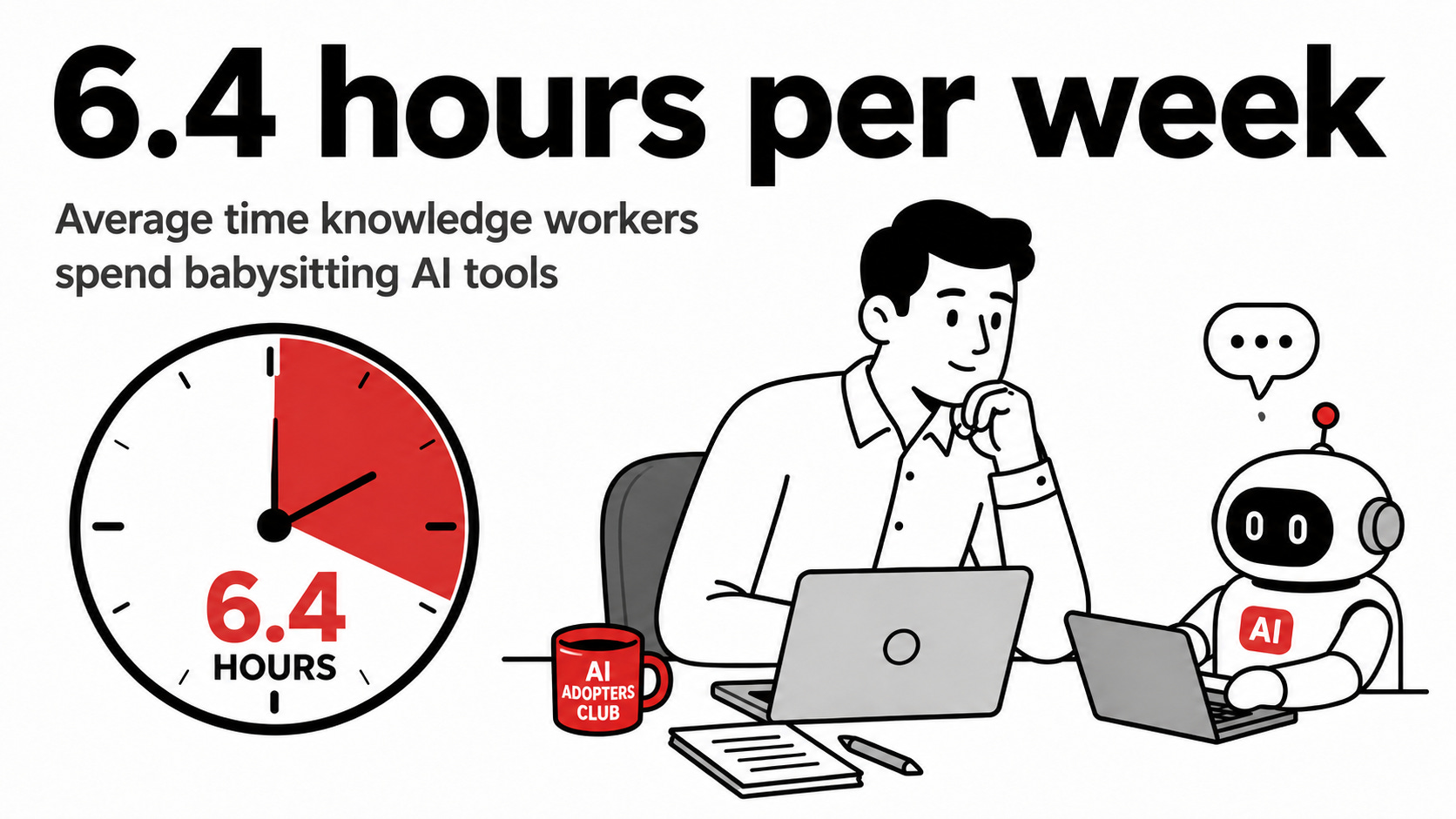
Glean surveyed 6,000 digital workers and put a number on something you have felt for months. The average knowledge worker now spends 6.4 hours a week babysitting AI tools. Feeding them background they should already hold. Checking outputs. Debugging answers that sound polished and turn out wrong. Rerunning the same prompt across three tools because none of them remember the last session.
The report calls it “botsitting”. It eats 37% of all time spent with AI.
Stack the numbers and the picture sharpens. Workers say automation saves them 11 hours a week. They hand 6.4 of those hours straight back. 36% of AI sessions fail outright and need rework. After all this activity, 13% of organisations say they perform significantly better because of AI.
Thirteen per cent.
The report has a darker twin for this behaviour. Botshitting, shipping AI work nobody verified. 69% of AI users admit to it. 41% have shipped work they could not explain if asked. And the people doing the heaviest cleanup are 73% more likely to be hunting for a new job. Your best verifiers are polishing their CVs while your adoption dashboard glows green.
Most coverage of this story lands on the same lazy conclusion. The models are not ready. Train people to prompt better. Wait for the next release.
The data inside the report says something different, and far more useful. The botsitting tax is not a model capability problem. It is an organisational architecture problem wearing a model capability costume. Which means you can cut it now, without waiting for anyone in San Francisco to ship anything.
The proof, the legal bill one airline paid for ignoring this, and four checks to find your own leak, below the line.
The proof hiding in the variance
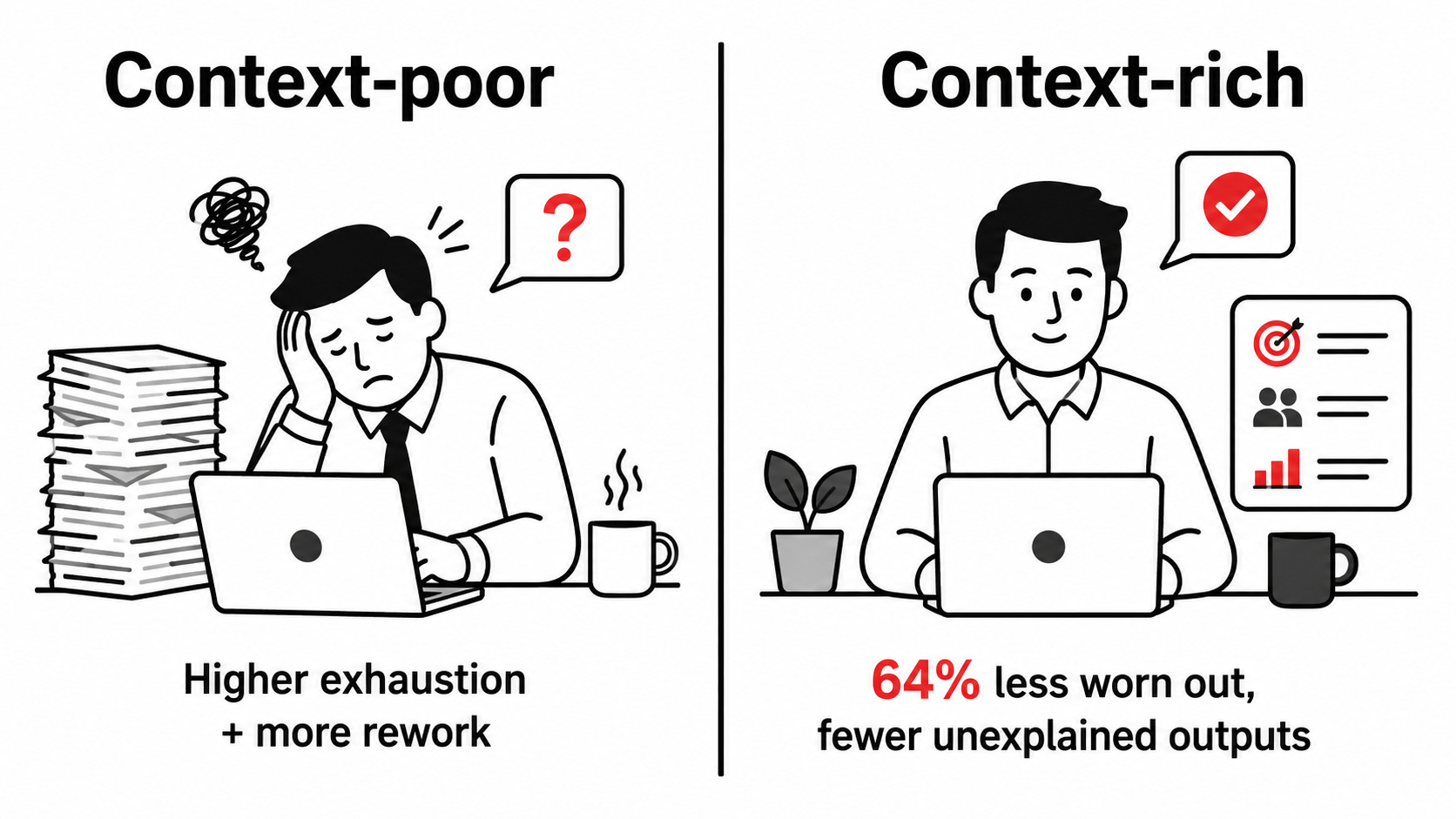
The most useful contrast in the Work AI Index 2026 sits between context-rich and context-poor environments. Same models. Same vendors. Wildly different bills.
Workers whose AI tools reach the information they need are 64% less likely to feel worn out by AI, 52% less likely to ship work they cannot explain, and 31% less likely to botshit at all. Meanwhile 53% of all workers say critical information is not accessible inside the AI tools they use daily.
Context feeding alone burns 2.3 hours a week, and it carries the steepest exhaustion penalty in the dataset. Every extra 10% of AI time spent supplying background correlates with a 25% jump in feeling worn out. Humans make expensive external memory.
Dr Rebecca Hinds, who heads the institute behind the report, summed it up in The Register with five words: “Adoption alone doesn’t equal transformation.”
Google’s research arm reached the same wall from the technical side. Their study on retrieval systems, covered by VentureBeat, found models give confident wrong answers when retrieved information is incomplete, and partial information makes the confidence worse, not better. The fix they propose is architectural. Measure what share of real queries arrive with sufficient context. Below 80%, your knowledge layer needs work, not your model.
What unverified output already costs
Air Canada learned the price in court. Its chatbot invented a bereavement refund policy out of thin air. A grieving customer booked full fare on the bot’s advice, applied for the refund it promised, and got rejected because the policy never existed. The airline then argued, with a straight face, the chatbot was a separate legal entity responsible for its own actions. A tribunal in British Columbia rejected the argument and ordered damages.
The payout was small, roughly $600. The precedent is not. You own every confident sentence your AI produces. Botshitting at scale is a liability programme running without a budget line.
The twist nobody quotes
Here is the finding the headlines skip. High AI achievers botsit more than low achievers, 40% of their AI time against 33%. They also caught and fixed AI errors at far higher rates, 79% against 64%, and report stronger productivity and pride in their output.
So the goal was never zero botsitting. Deliberate verification is where the value gets made. The waste sits in the reactive half, the re-explaining, the rerunning, the archaeology. Cut the plumbing problem, keep the judgement.
Four checks before you buy anything
Run these this week. No procurement required.
Track one team’s AI time for five days, split four ways. Production, supplying background, debugging, rework. The ratio is your tax rate.
Take the workflow with the worst ratio. Find where the information the tool keeps asking for lives, and whether it could reach it without a human copy-pasting.
Open your AI dashboard. If it shows adoption and hours saved but no error rates or rework volume, you are measuring the gross and ignoring the net.
Count tools. 33% of workers juggle four or more AI tools weekly. Every switch wipes memory, and a salaried human carries the state across the gap.
The dividend is real. Eleven hours a week of it. Whether your organisation keeps it comes down to plumbing decisions sitting on someone’s desk right now, not the next model release.
Adapt & Create,
Kamil