


Hi Adopter,
Kroger spent seven years building robotic warehouses. Then it closed three, paid a $350 million penalty, and wrote off $2.6 billion. The robots worked. The business model did not.
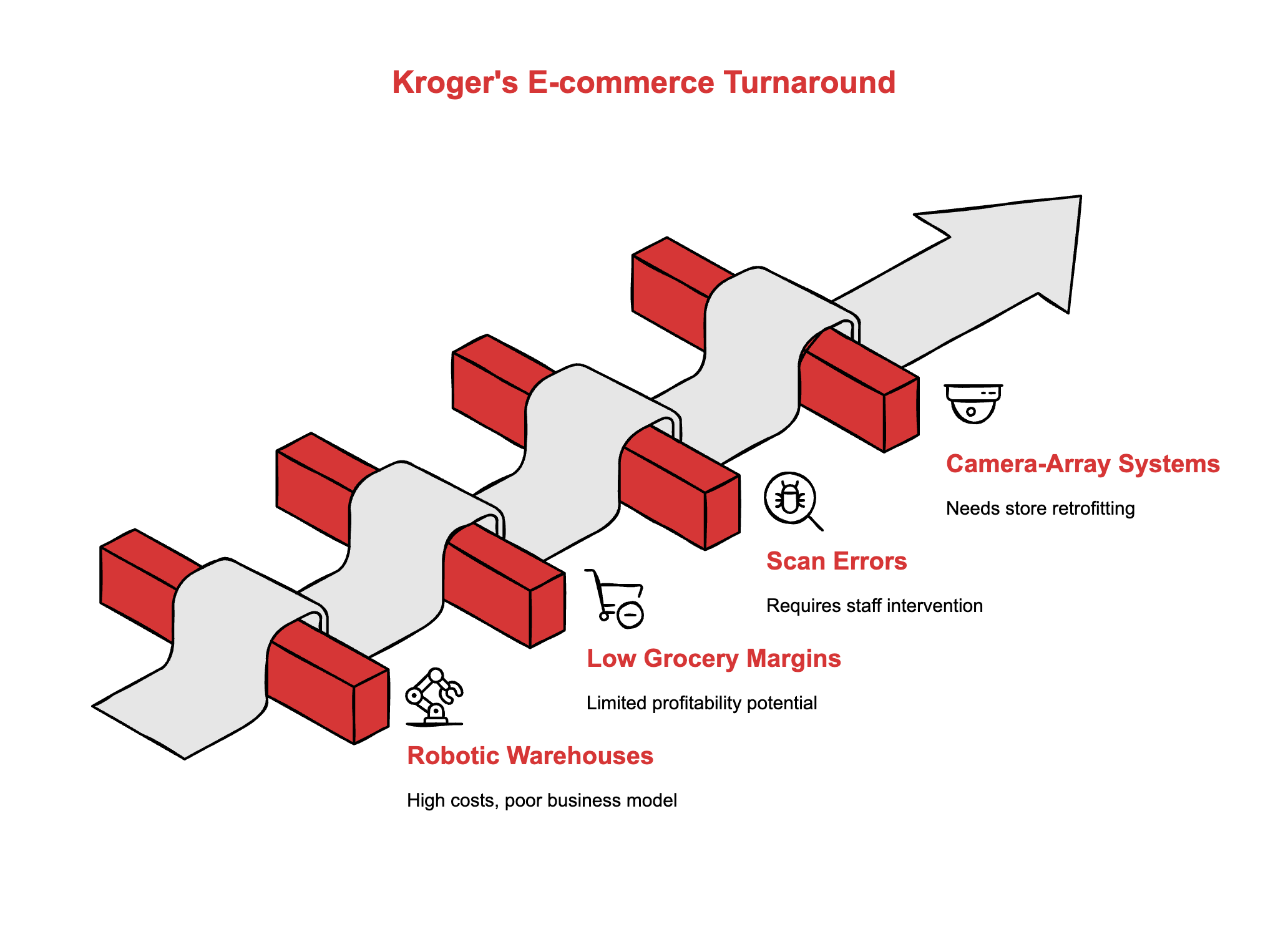
This case study shows how America’s largest traditional grocer pivoted from hardware to software, and why the data science division is now driving margin expansion.
The result that changes the SMB playbook
Kroger targets $400 million in e-commerce profitability improvement by 2026. The path: kill high-overhead warehouses, use retail media to subsidise delivery, and embed AI into existing stores.
Download the full report for the stack, timelines, and measured impact.
Retail media margins exceed 50%, compared to 1-2% grocery margins
Visual AI at self-checkout corrects 75% of scan errors without staff intervention
Smart carts need no store retrofitting, unlike camera-array systems
The data division holds 20 years of purchase data from 60 million households
What SMBs can learn this week
Start with data governance, not AI tools. Kroger monetised customer data through retail media only because it had two decades of clean purchase records. AI adoption without data hygiene is expensive experimentation.
Watch for the hardware trap
Prefer modular, software-defined solutions. If a pilot fails unit economics, kill it fast. Kroger’s warehouse model optimised for next-day delivery in a market demanding same-day.