

Hi Adopter,
In 2012, a federal judge approved a plan for lawyers to teach software which documents deserved a closer look. By 2023, a lawyer could ask CoCounsel to suggest questions for a witness. Now, in November 2026, a tool can help write the argument a lawyer takes to court. You can check whether the software found the right document and still miss the fact that the document doesn’t say what the draft claims.
I wrote this for the partner deciding whether to buy AI for a law firm, and for anyone whose team signs off on work an AI helped write. We’ll look at three firms using Harvey, CoCounsel, and Legora. The case study PDF gives you two public deal documents, an answer key, and a scorecard. In ten business days, you can find out whether the tool still saves time after somebody checks the answer and fixes it.
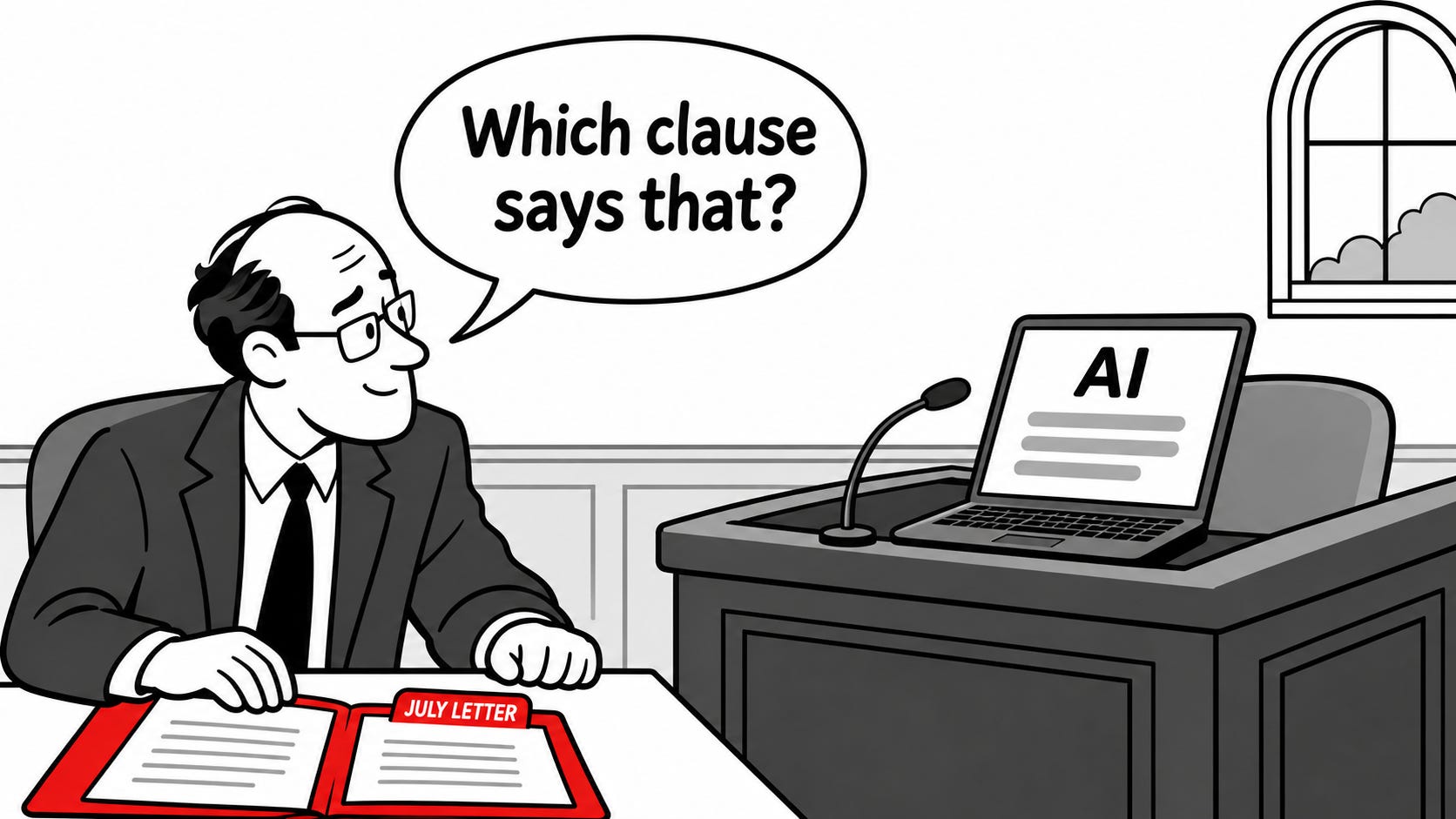
Ross DiBono had waited months for the other side in a lawsuit to hand over its records. When they arrived, he needed to tell his client what they meant.
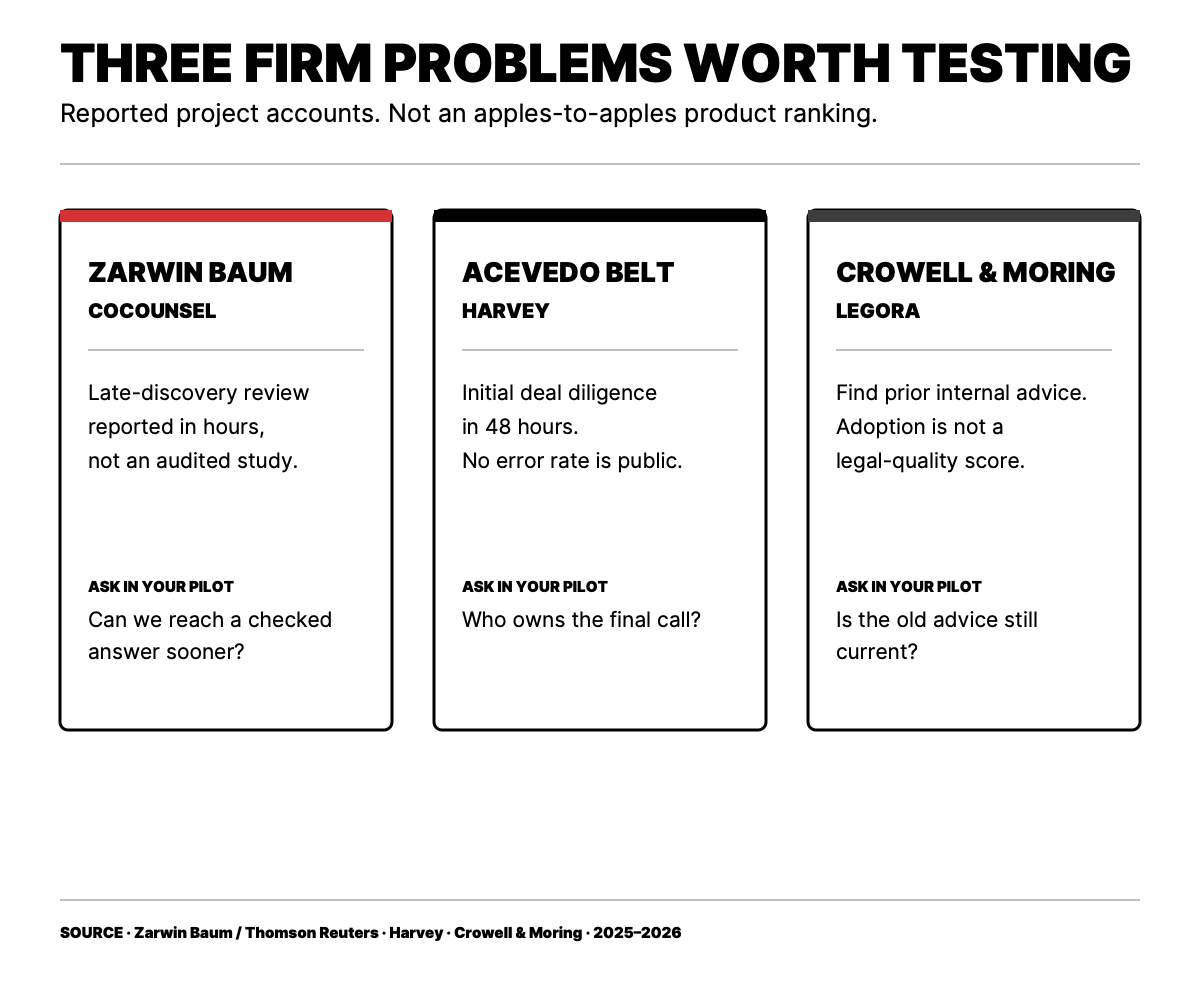
The Zarwin Baum lawyer says he put the material into CoCounsel, received a report, and evaluated the case within hours. He estimates the usual work would have taken a week. His colleague Lisa Slotkin describes turning thousands of pages of medical records into work she could use in 20 to 30 minutes instead of her estimated day.
Those are the lawyers’ estimates from a vendor interview. We don’t have their time sheets. What I find useful is that DiBono can tell you exactly what his client was waiting for: his assessment of the case.
In Miami, an investor gave Acevedo Belt 48 hours to check the paperwork on a deal worth at least $100 million. Terms kept changing across hundreds of documents. The firm, whose public roster lists four lawyers, used Harvey to read and summarize the deal documents and met the deadline.
At Crowell & Moring, partner Jason Crawford suspected someone at the firm had already answered a question like his. He says Legora helped him find advice his colleagues had given on similar facts. Finding it the old way could take days.
I’d start with one question your clients ask all the time. Give the tool a file with one awkward detail in it. Does it find the detail before your lawyer gives it a hint? You can try this outside law, too. Give it a supplier’s quote and the later email that changed the delivery fee. Would you send your customer the right price?
If you know a lawyer who runs a firm, forward this to them now,
before their next AI demo.
Below the paywall: the intake note three tools reportedly missed, the filing a judge called out, and the deal amendment I’d use to test a vendor before the next partner meeting.