



Hi Adopter,
Somewhere in your building, someone’s scoping an AI agent to run a process nobody’s ever written down. You’d expect that to get rarer as the tools mature. It’s doing the opposite, and somewhere a steering committee is meeting about it right now, which is usually where these things go to die.
Before you scope an agent team, or sign off on the budget for one, there are four questions worth answering first, the same four that separate the agents that make it to production from the ones quietly shelved along the way.
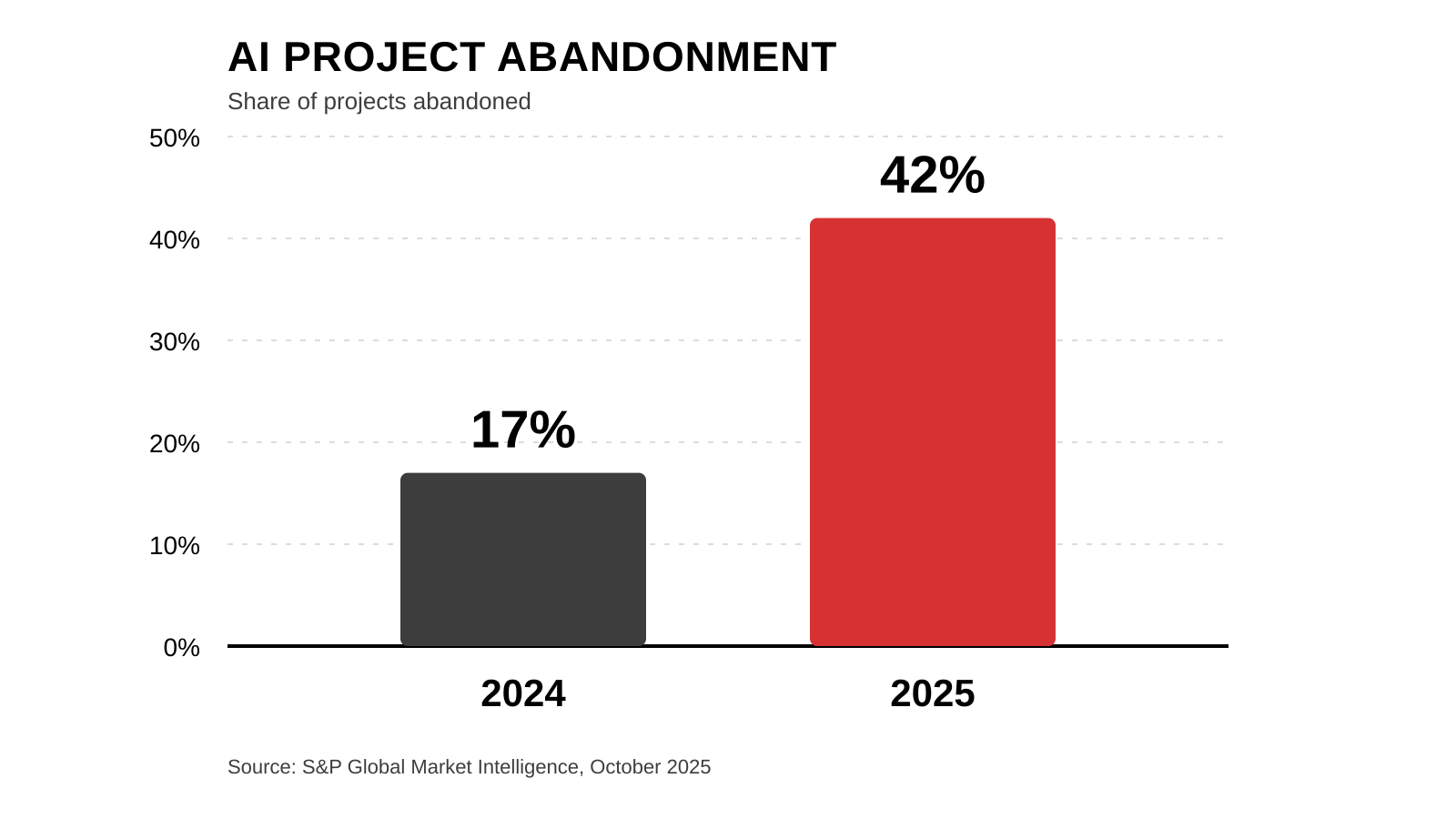
The share of companies abandoning most of their AI initiatives before they ever reach production nearly tripled this year, from 17% to 42%, according to S&P Global Market Intelligence. RAND has the likely reason: it interviewed 65 people building AI systems inside real companies, and 84% pointed to the same root cause, leadership and the technical team misunderstanding, or flat-out miscommunicating, what problem the project was supposed to solve. Not compute. Not data quality. Not the model.
If you’re the one greenlighting an agent team this quarter, sit with that for a second. The thing you’ve been worried about is rarely the thing that sinks it.
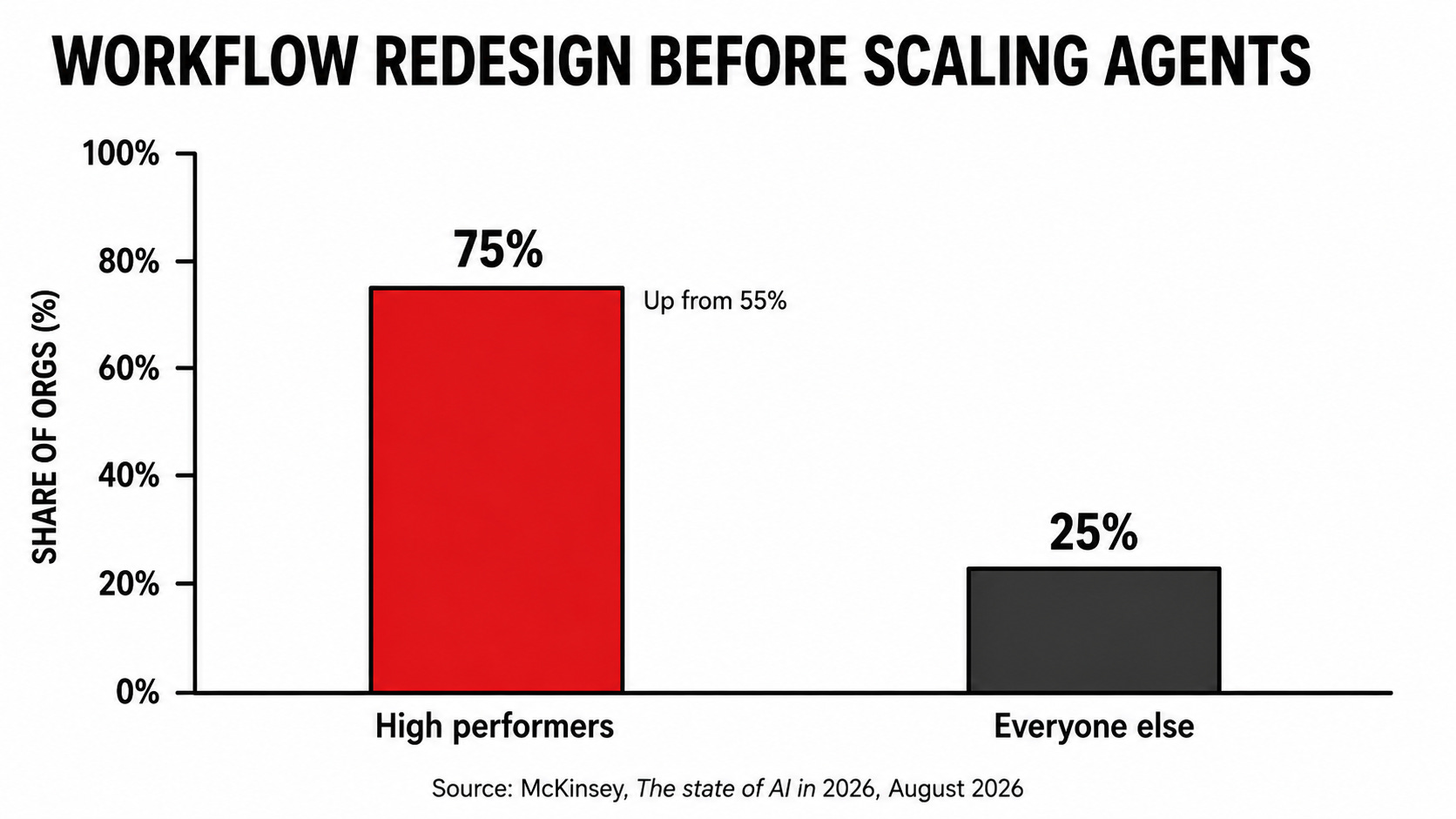
McKinsey’s newest survey, published this week, backs it up with a number: nearly three-quarters of the highest-performing companies redesigned their workflows before scaling agents on top of them, up from 55% a year ago. Everyone else? One in four. Gartner expects the gap to keep punishing everyone else, forecasting over 40% of agentic AI projects canceled by the end of 2027.
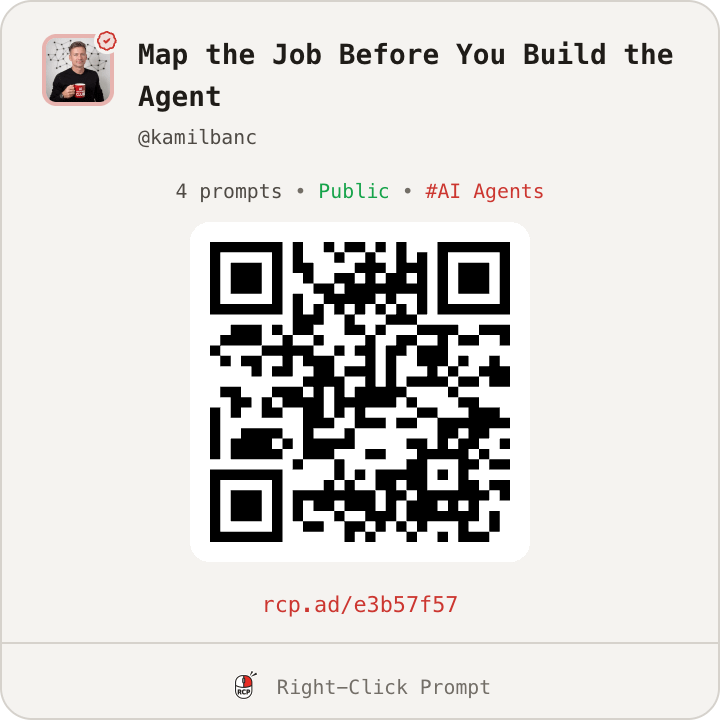
So before you scope anything, map it. Four questions, run in order, before you write a single line of an agent’s instructions. I put the exact prompts in a free pack on Right Click Prompt instead of pasting them below, save it once and they’re one right-click away every time you scope something new, instead of digging through an old newsletter for the version you liked.
Get the pack: rightclickprompt.com/s/e3b57f57, free, no card required, or scan the QR code below.
Here is what the prompts are for:
1. Define the initiative in one sentence
Most AI pitches die from vague scope before anyone even argues about the model. This prompt interviews you until the fog clears, then calls out whether what you’ve described is a real outcome or just activity wearing one. Run it from the pack →
2. Pull the real stakeholder language
Skip this and you’re writing requirements from your own head instead of the people who’ll actually fund or use the thing. This one builds a stakeholder profile from real conversations, and refuses to fake one from thin material. Run it from the pack →
3. Turn the process into an owned, timed sequence
This is the actual map. If a process only lives in one person’s head, no agent can run any part of it, this prompt interviews you phase by phase until every step has an owner and a time attached. Run it from the pack →
4. Stress-test it before AI touches it
Run this on what question three gives you, before anything runs unsupervised. It hunts for the single point of failure, the handoffs that lose information, and anything touching money or compliance that shouldn’t run without a human checking it first. Run it from the pack →
You don’t need a better model this month. You need one process, mapped well enough for a stranger to run it, before you assign any part of it to something that doesn’t ask before it acts.
Pick the one your team’s already arguing about for an agent. Grab the pack, run the four questions on it. What does question one alone tell you that nobody’s said out loud yet?
Adapt and Create, Kamil
Sources
S&P Global Market Intelligence (451 Research), Generative AI shows rapid growth but yields mixed results, October 27, 2025
RAND Corporation, The Root Causes of Failure for Artificial Intelligence Projects and How They Can Succeed, August 13, 2024
McKinsey, The state of AI in 2026: On the road to ROI, August 25, 2026
Gartner, Gartner predicts over 40 percent of agentic AI projects will be canceled by end of 2027, June 25, 2025
About the author
Kamil Banc is an AI culture and adoption advisor. He helps organizations put AI to work through corporate advisory, coaching, and assessments, and writes AI Adopters Club.