


Hey Adopter,
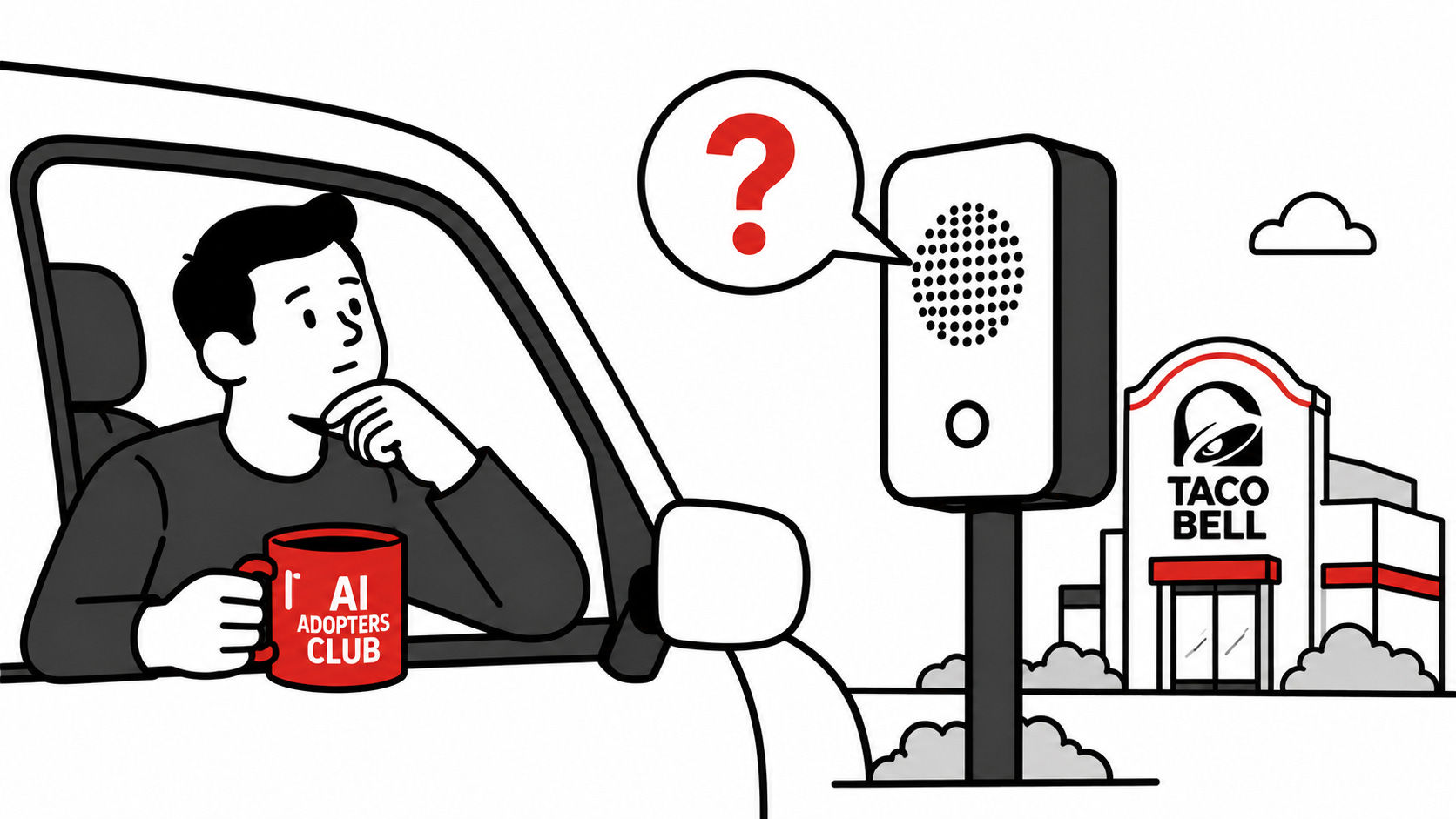
Wendy’s AI handles 86 percent of drive-thru orders without human help. The other 14 percent get handed cleanly to a person. That handoff is why Wendy’s keeps scaling. Taco Bell paused after going viral on TikTok. McDonald’s pulled the plug after thirty months. Same era. Same vendor pool. Different architecture.
The decision that splits Wendy’s from Taco Bell is not the model. It is whether you build the human escalation path before customers can use the system, or after viral failures force you to. If you sponsor a customer-facing AI deployment in 2026, the worst minute of your rollout is going to be a TikTok, not a press release. The architectural call you make right now decides whether that minute kills the rollout or stays inside the percentage of orders the system was built to absorb.
The four-point gap that broke the promise
In January 2024, Yum Brands announced voice AI was ready for hundreds of Taco Bell drive-thrus. Improved order accuracy. Reduced wait times. Easing of task load for team members. Two years of fine tuning, the company said.
By August 2025, the same Chief Digital and Technology Officer told the Wall Street Journal it was “really, really early.” Five months earlier, Yum had announced going one hundred percent digital across drive-thru lanes as NVIDIA’s first AI restaurant partner. Five months between the investor pitch and the operator’s admission.
The data caught up faster than the rollout. The 2025 InTouch Insight QSR Drive-Thru Study ran 120 mystery shops across three AI-equipped chains. AI accuracy averaged 83 percent. Human accuracy averaged 87 percent. The clean number is the four-point gap. The harder one: staff intervened in 62 percent of AI errors. The promised easing of task load did not arrive. Employees were repositioned from taking orders to supervising AI taking orders. Same headcount on the floor. Different job description.
On the Q3 2025 earnings call, the only voice-AI metric that reached the analysts was that voice AI stores were up 14 percent quarter over quarter. No accuracy. No customer satisfaction. No labour cost movement. Deployment count.

The number that changes the conversation
Wendy’s launched FreshAI in 2023 with the explicit counter-architecture. AI as assistant. Human escalation built in from day one, not bolted on after viral failures.
86 percent of orders completed autonomously. Approximately 99 percent accuracy when staff escalation is included. An 80 basis point improvement in restaurant-level margin. Expansion from 160 to 500-plus locations through 2025.
The 14 percent of orders Wendy’s escalates to a human are not failures. They are the system working correctly. They are the design.
Taco Bell ran a similar autonomous completion rate but framed every human intervention as a problem to be eliminated. McDonald’s hit the same accuracy ceiling and pulled the plug after two and a half years rather than restructure around the gap. The architectural decision is the line. Hybrid systems with mandatory escalation, published thresholds, and labour repositioned around the AI scale. Full-autonomy systems with reactive monitoring, no public threshold, and labour savings that never arrive retreat.
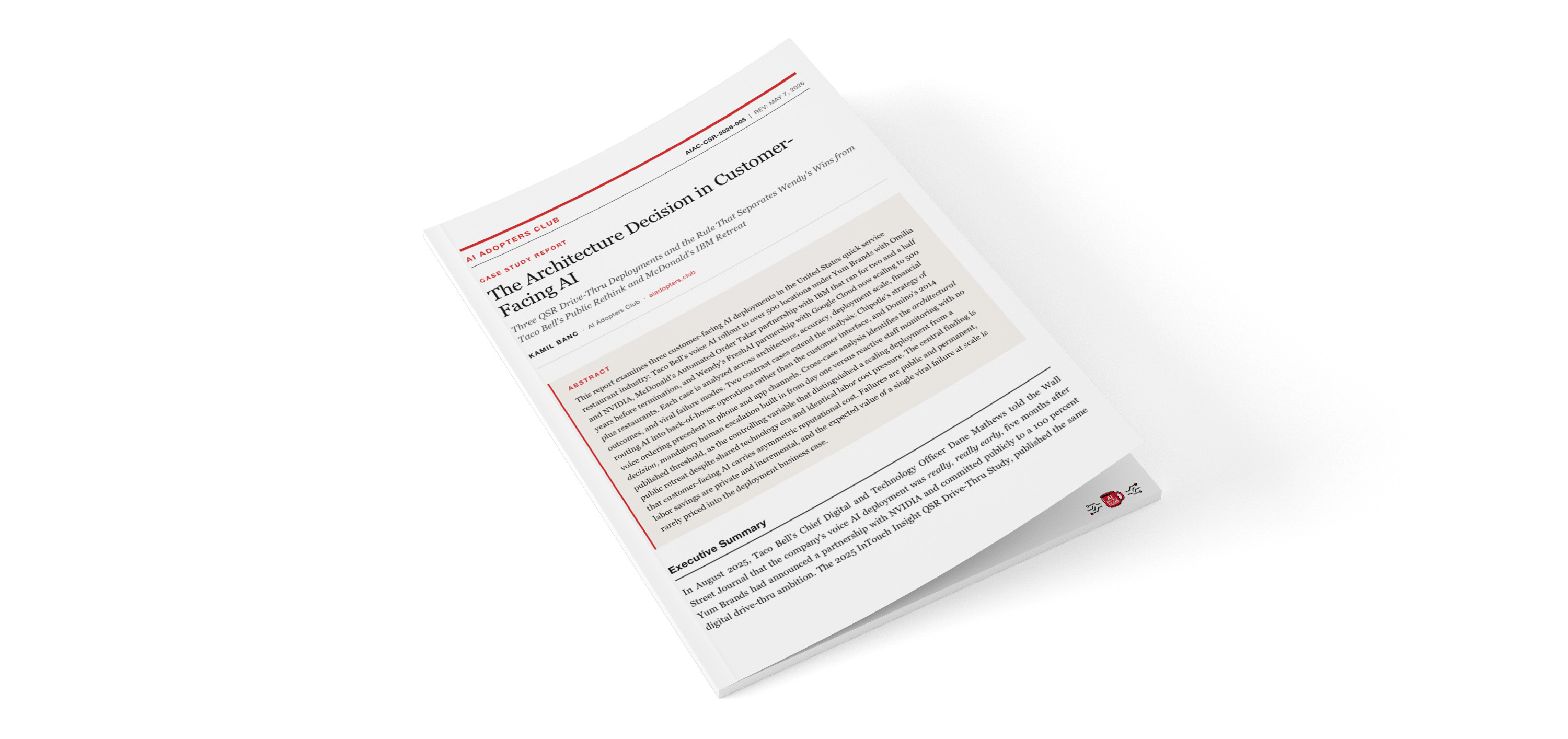
Below the paywall, premium subscribers get the full breakdown:
Three architectures, three results. What Taco Bell, McDonald’s, and Wendy’s actually built, with the disclosed numbers each side put on the record.
Three patterns that explain why customer-facing AI rollouts retreat at the same accuracy threshold regardless of vendor or chain.
The viral math vendors leave out of every ROI deck.
The adopter’s playbook. Six moves to make this quarter, lifted from Wendy’s architecture and Chipotle’s contrarian behind-the-counter strategy.