


Hey Adopter,
This week I built you a tool. Not a template, not a framework diagram. An actual AI-powered diagnostic that finds the exact leak in your sales funnel costing you the most money, then tells you how to fix it.
But first, let me explain why I built it this way.
The audit trap
Most funnel optimization produces 47-slide decks and zero revenue lift.
I’ve seen this pattern repeatedly: a team spends weeks auditing every stage, benchmarking against industry averages, colour-coding a spreadsheet with “opportunities.” They end up with a prioritised list of 15 improvements. Six months later, they’ve implemented two of them, half-heartedly, and can’t measure whether either one worked.
The problem isn’t the analysis. The problem is the output. A buffet of recommendations is worse than no recommendations at all because it creates the illusion of progress while paralysing action.
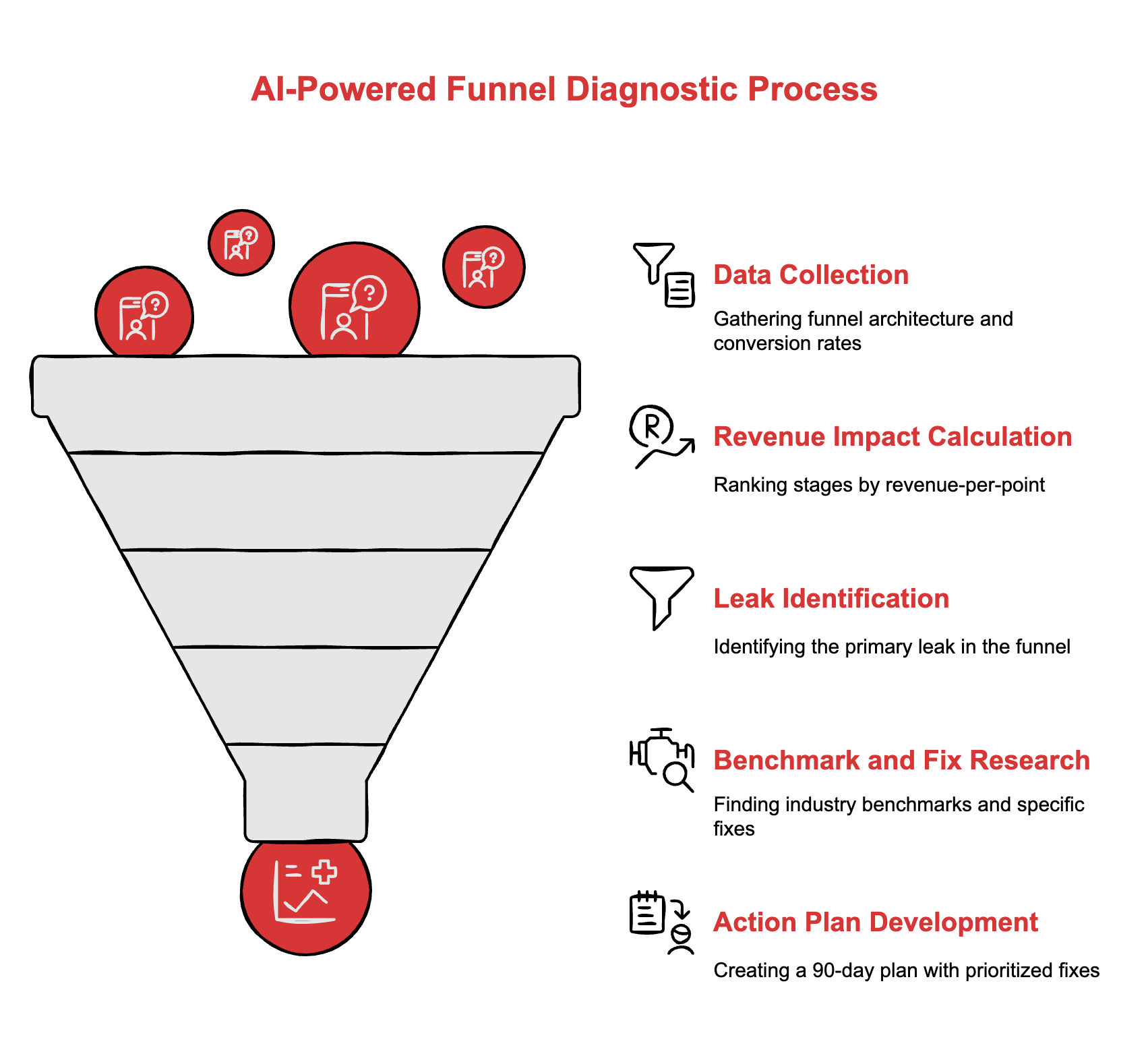
The companies that move fast do something different. They find one leak, fix it, measure, then repeat. Not because they lack sophistication, but because they understand how resources work.
Which raises a question: how do you find the one leak worth fixing first?
The math that identifies your primary leak
Here’s what most funnel analysis gets wrong: it treats all conversion rate improvements as equal.
They’re not. A 2% lift at one stage might be worth 10x more than a 5% lift at another, depending on volume and deal size. The math is simple once you set it up correctly.
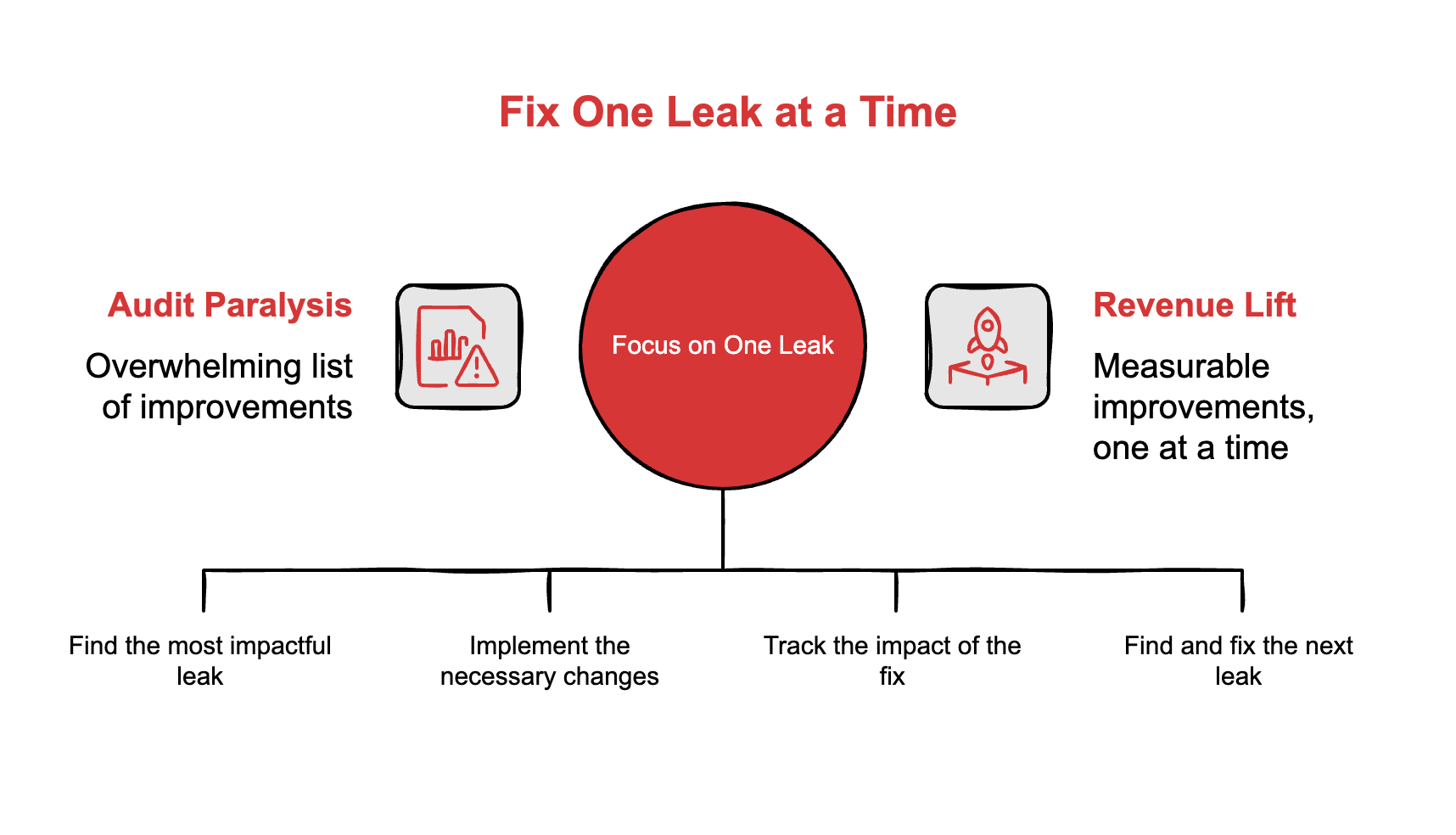
For each stage in your funnel, calculate the revenue impact of a 1-point improvement. The formula:
Additional monthly revenue = (current customers × improvement factor) × deal size
Where improvement factor = (new rate / old rate) - 1
Run this for every stage. Rank them. The stage with the highest revenue-per-point is your primary leak. Everything else waits.
This sounds obvious when written out, but I’ve watched smart operators spend months optimising a stage that moves $3,000/month per point while ignoring one that moves $50,000.
The ranking changes your entire focus. And once you have the ranking, you need specific fixes for that specific leak type, not generic “improve your landing page” advice.
That’s what the tool does.
What I built for you this week
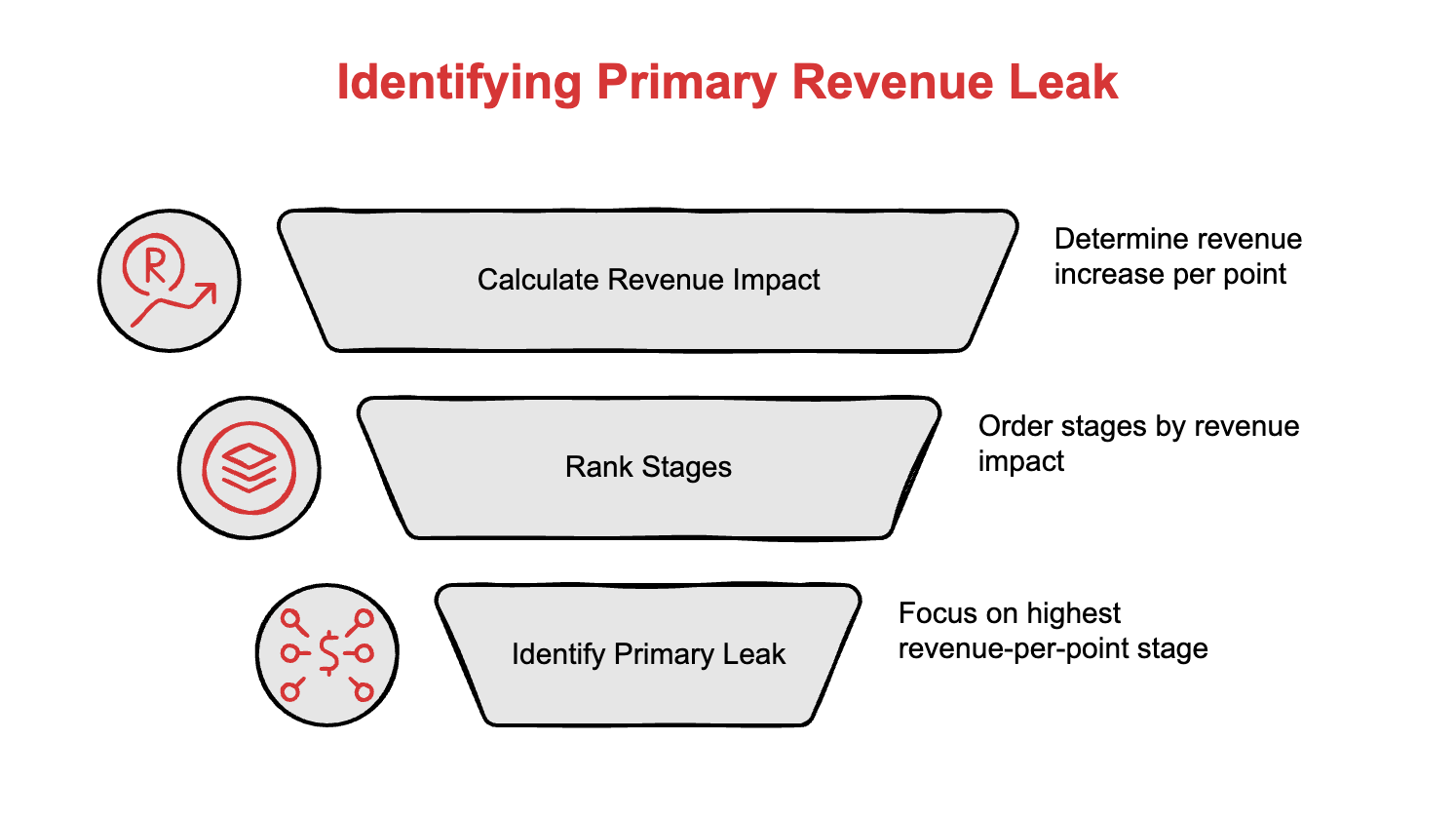
I created an AI-powered funnel diagnostic that does three things:
1. Runs a guided diagnostic interview Instead of dumping a form on you, it asks structured questions about your funnel architecture, conversion rates, and context. It catches gaps before calculating anything.
2. Calculates revenue impact automatically You give it your numbers. It ranks every stage by revenue-per-point, identifies the primary leak, and shows conservative/realistic/optimistic projections for fixing it.
3. Searches for industry benchmarks and specific fixes It pulls comparison data for your industry, then researches tactics specific to your leak type. Not generic advice. Fixes that match your situation.
The output is a diagnostic report with the primary leak identified, the math table, a recommended fix, a 90-day action plan, and, this is the part that builds trust, a list of what NOT to fix yet.
That last section matters. When you tell someone “ignore these three things until you’ve closed the primary leak,” you sound like a senior advisor, not a checklist generator.
How to use it
Option 1: The prompt
Premium members get the full mega-prompt below. Copy it into Claude, ChatGPT, or your AI of choice. It runs the guided interview, calculates the math, and produces the diagnostic report.
Option 2: The Claude skill (bonus)
I also packaged this as a Claude skill, a reusable module you add to any Claude project. Once installed, you say “diagnose my funnel” and it runs the full workflow automatically, including web searches for benchmarks and fix tactics.
The skill includes:
A Python calculator script that runs the revenue-per-point math
Industry-specific benchmark search queries
An Excel model structure for client-ready spreadsheets
If you’re a consultant, this becomes a client deliverable generator. Run the diagnostic with your client, export the report and spreadsheet, present it as your methodology.
Both the prompt and the skill file are waiting for you below.
The one-leak principle
The deeper lesson here isn’t about funnels. It’s about resource allocation.
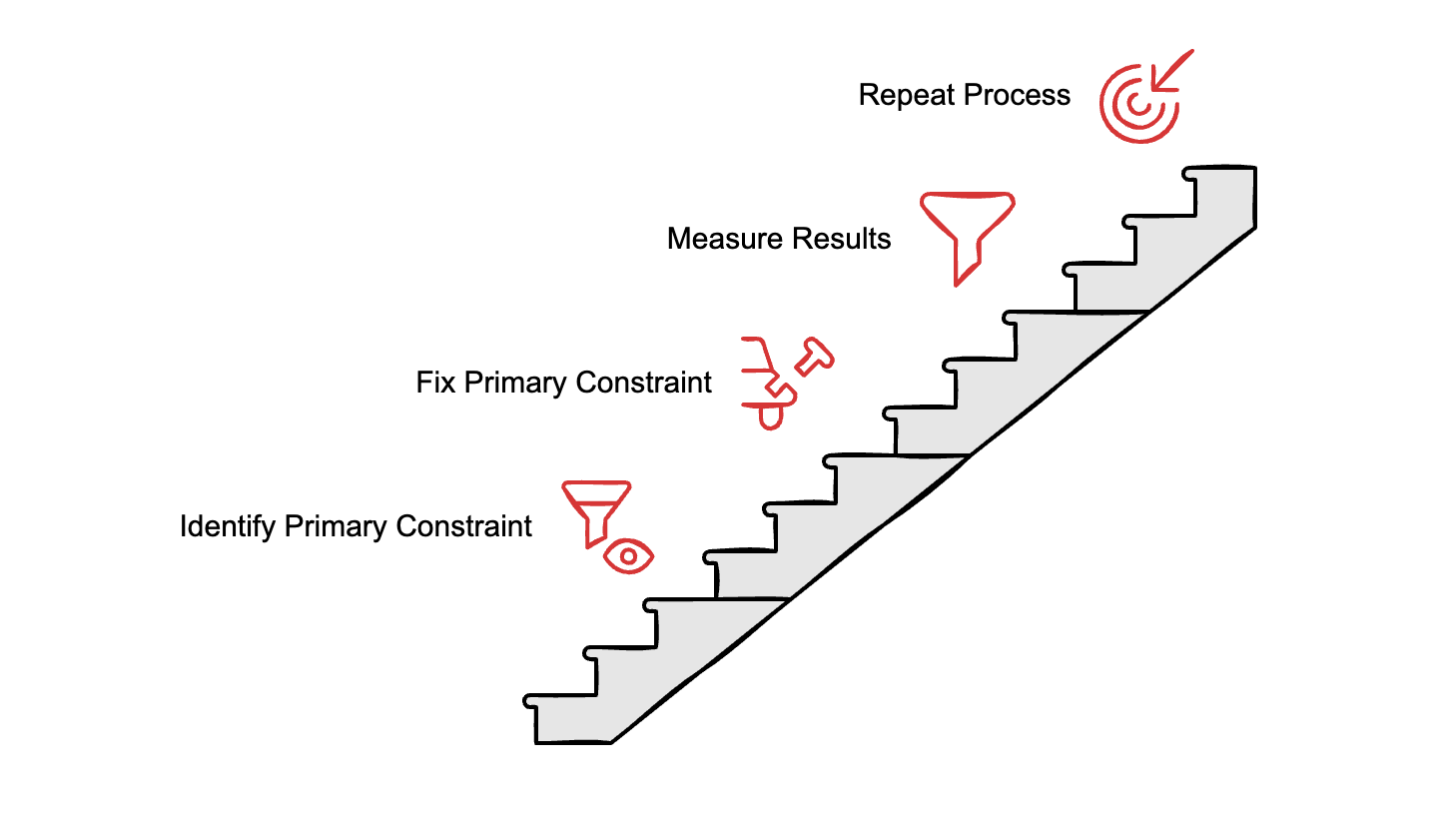
Every system has a primary constraint. Fixing secondary constraints before the primary one wastes effort and obscures results. You can’t measure what worked because too many variables changed.
Find the one leak. Fix it. Measure. Then find the next one.
The diagnostic does the finding for you. The fixing is still your job.
Premium: The funnel diagnostic prompt
Copy this into Claude, ChatGPT, or any capable AI. It will guide you through the diagnostic and produce a full report.