Hi Adopter,
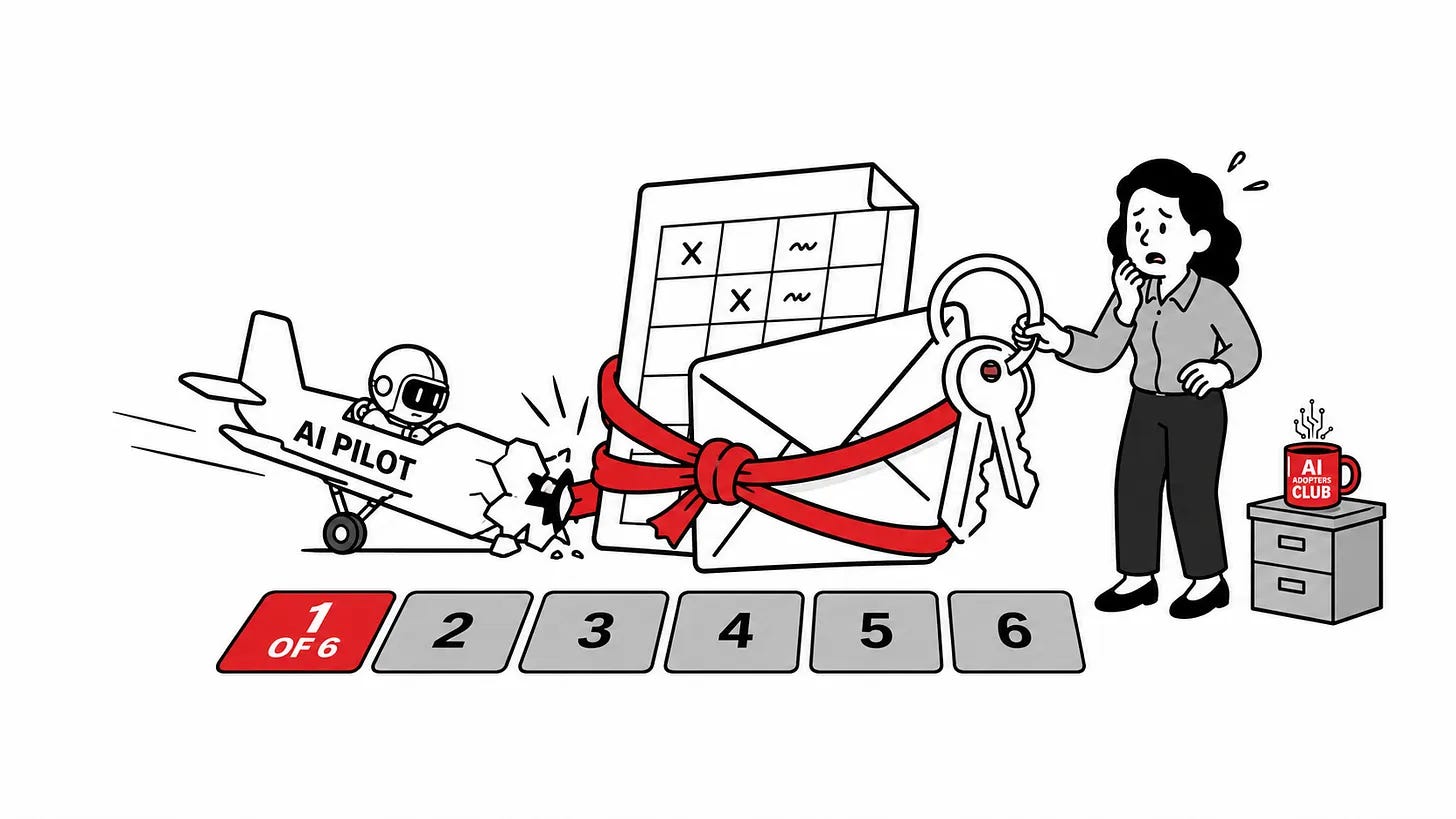
Here’s the long sung problem: Your AI pilot works in the demo. Then it meets the real process.
One team uses a different spreadsheet. An approval still lives in email. Exceptions go to the employee who has handled them for years, because nobody else knows the workaround. The AI didn’t create that confusion. It walked into it.
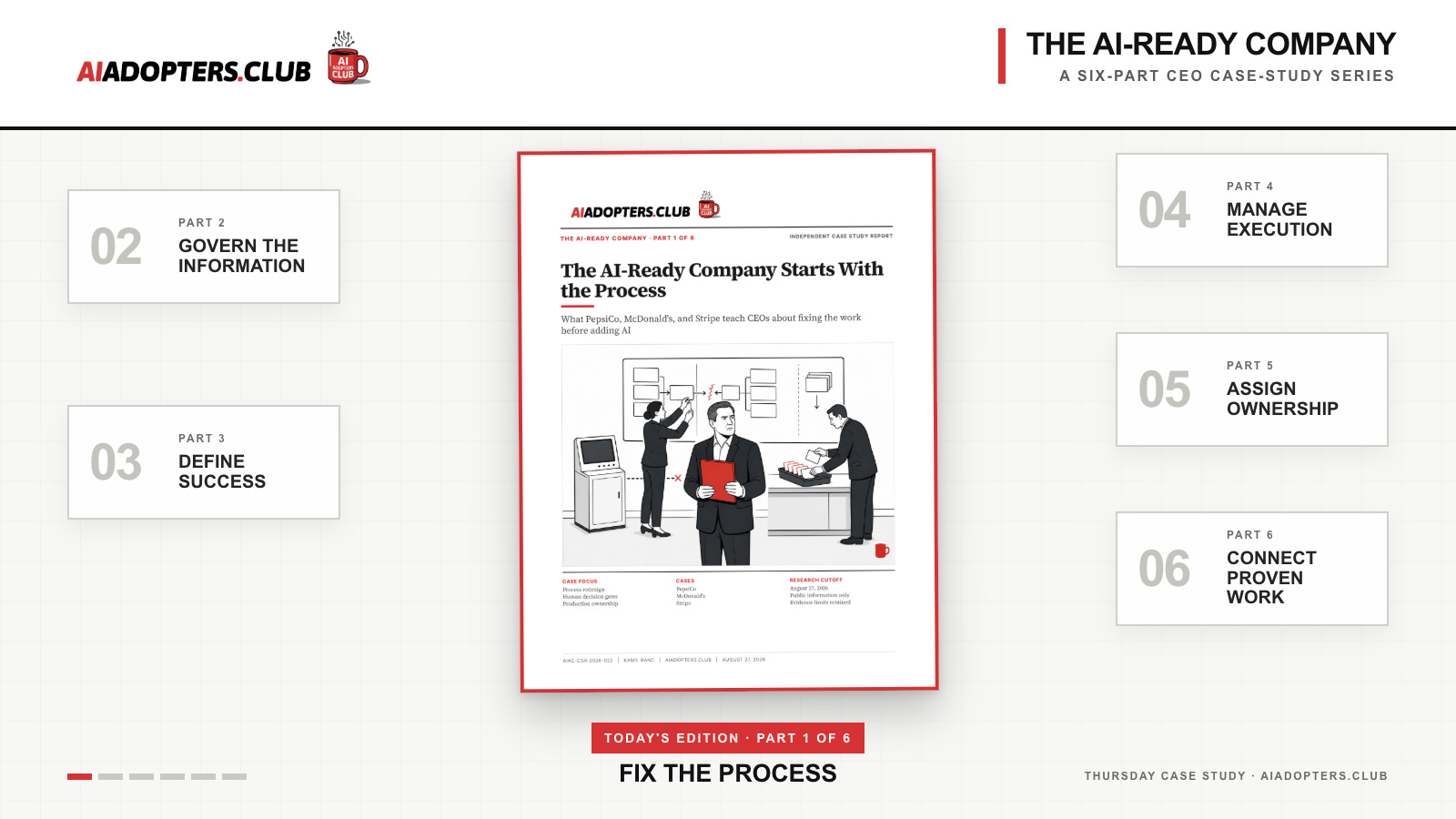
This is Part 1 of The AI-Ready Company, a six-part Thursday case-study series for CEOs. The goal is to move from scattered AI experiments to company-owned operations that are measurable, inspectable, and able to continue when one employee is unavailable.
The series follows six business decisions:
Fix the process before adding AI.
Give AI reliable company information.
Define success and failure before choosing the system.
Move important AI work into managed company systems.
Assign an owner, limits, and a way to stop or recover the work.
Connect workflows only after each one works on its own.
Part 1 starts with a two-week handoff test:
If the person who knows how this process works were unavailable for two weeks, could the rest of the team still run it?
If the answer is no, you’re not ready to automate the process. You’re about to automate one person’s memory and hope they never take a vacation. Bold continuity plan.
The problem is widespread. In Deloitte’s August 2026 survey of 501 U.S. leaders at organizations already piloting agents, only 5% said their business processes were highly prepared. Just 21% called them prepared or highly prepared.
Three company cases show what this looks like in practice.
PepsiCo moved expensive engineering decisions into simulation before changing a physical facility. McDonald’s put voice automation into a live drive-through and ended the IBM test without publishing final operating results. Stripe broke compliance reviews into small questions, let AI gather evidence, and kept people responsible for every answer.
Three different uses of AI. One operating question: where should the software enter the work, and what decision must still belong to a person?
Below the paywall:
The decision PepsiCo moved before committing physical capital
Why McDonald’s early 85% accuracy figure does not describe its final test
How Stripe redesigned a white-collar review without automating the final judgment
The CEO approval test to run before funding another AI pilot
The complete 15-page case-study PDF
Paid members also get the combined 15-page case-study PDF with the three timelines, evidence limits, six-part series map, decision tree, 90-day pilot plan, and printable process-redesign worksheet.