Aloha Adopter!
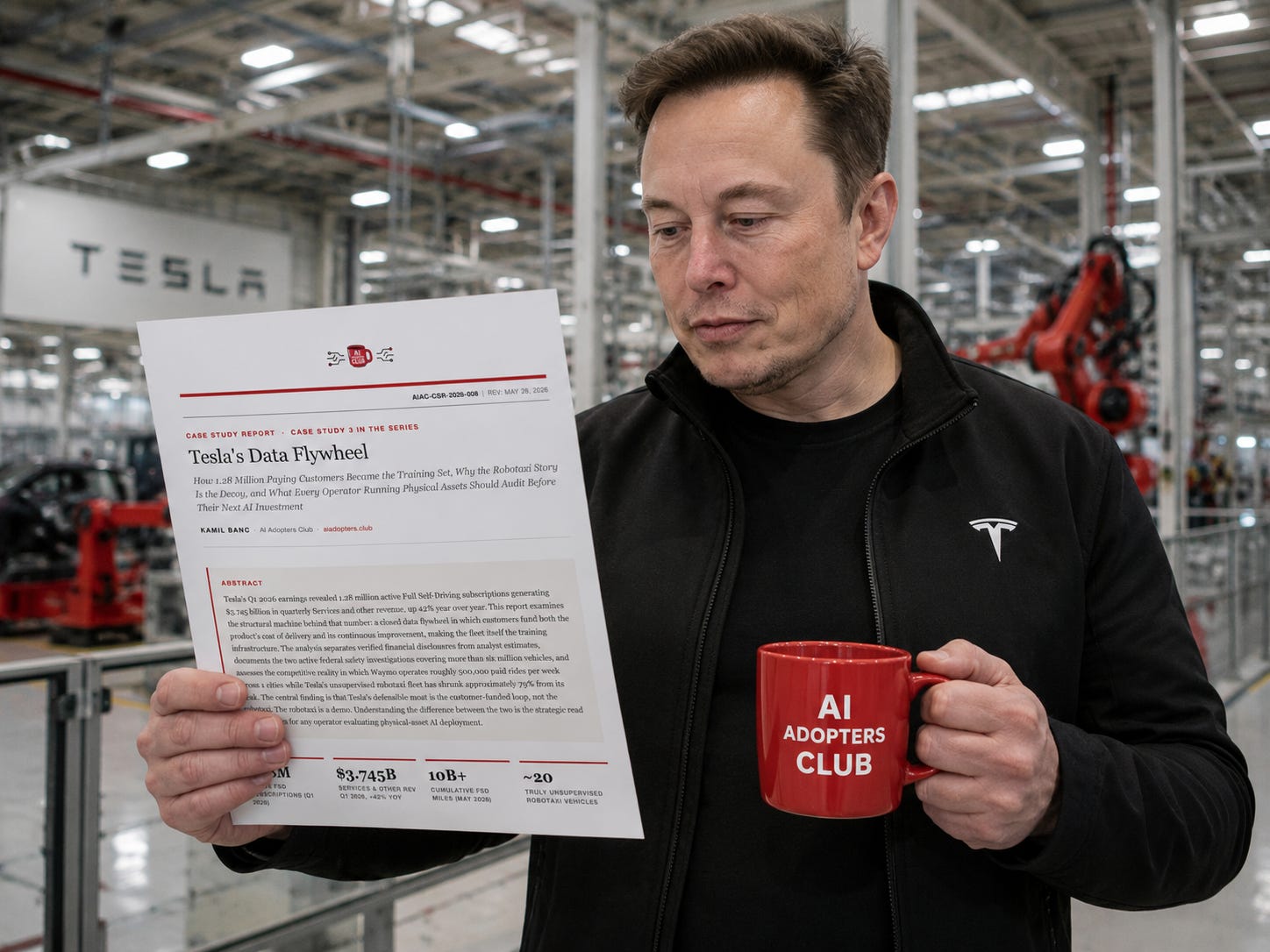
Tesla reported Q1 on April 22, and the number worth your attention was not the one on the chyron. Not deliveries, which missed. Not the $477 million in net income, up a polite 17%. The number was this: 1.28 million active Full Self-Driving subscriptions, up 51% year over year, attached to a fleet that just crossed 10 billion cumulative miles of real-world driving. At $99 a month, with the one-time purchase option killed off in February so subscription is now the only door. Services and other revenue hit $3.745 billion for the quarter, up 42%, and that is the line where this money lives.

Here is the part that should make every operator sit up, and it has nothing to do with robotaxis. Tesla turned its paying customers into its workforce. Every one of those cars is a sensor. Every mile someone drives to the grocery store is a labeled training example the company did not pay a vendor to collect, did not stage in a demo, did not beg a regulator for permission to gather. The customer bought the car, then pays monthly for the privilege of improving it. That is not a product. That is a meat grinder with a subscription attached, and the customers are feeding it voluntarily.
The Data Moat Meat Grinder
You have sat through the pitch. Some autonomy startup, a beautiful deck, a sizzle reel of a car gliding through a sunny intersection with nobody touching the wheel. Then the Q&A, and you ask the only question that matters: where does the data come from. And the answer is always some version of we have a test fleet, we are scaling our operations, we are in conversations with the city.
Translation: we rent the miles. We pay drivers, we pay for permits, we pay to map a few square miles, and we burn money on every single one of those miles whether the demo works or not.
That is an open loop. Money goes out, miles come in, and the loop only closes if you eventually launch a paid service big enough to cover the burn. Most never get there.
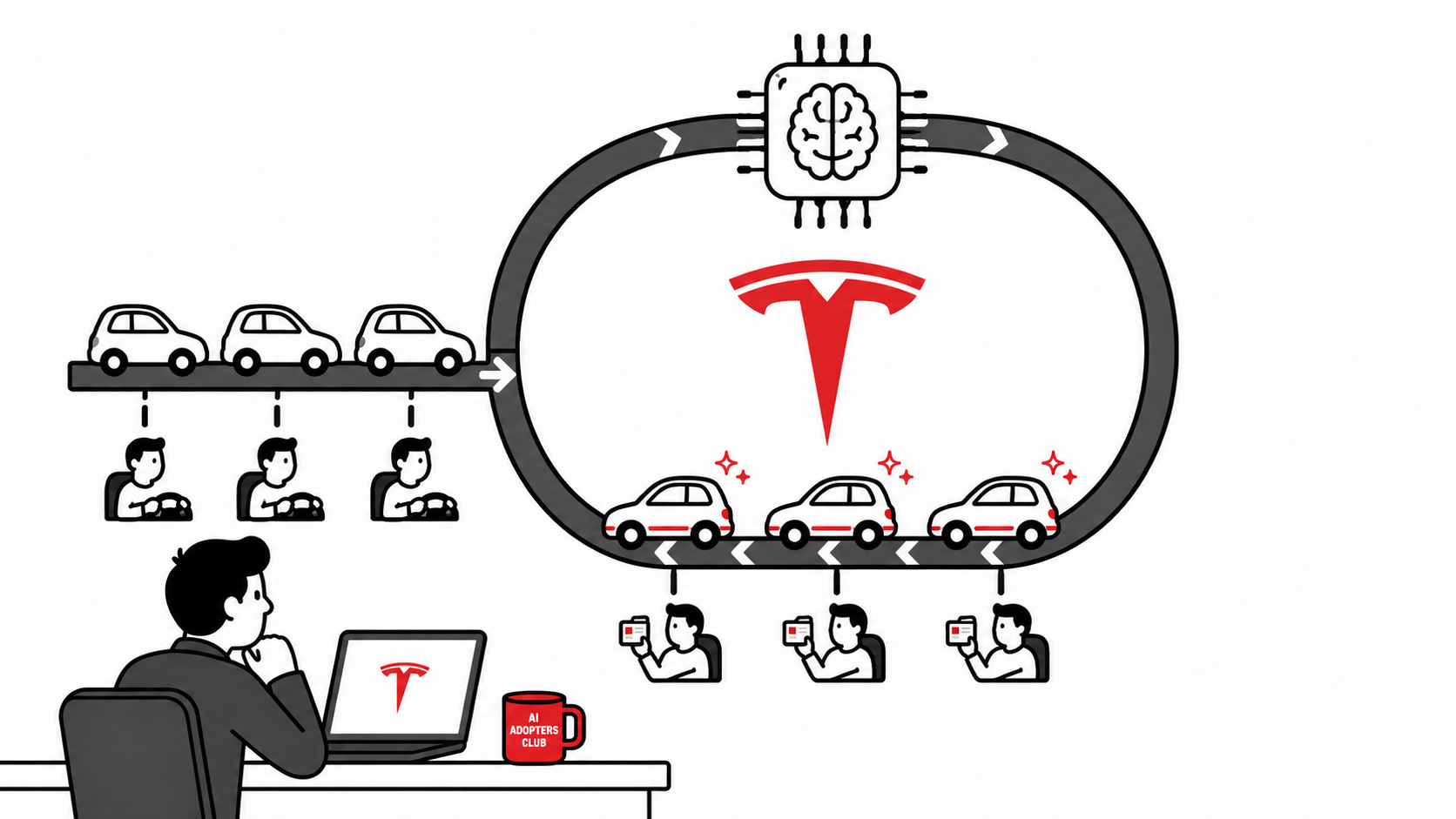
Tesla runs the loop the other direction. The miles come in with a check stapled to them. Look at the mechanics, because the mechanics are the whole point:
The fleet collects for free. Roughly 9.2 million Teslas have been delivered. They are on the road regardless. The marginal cost of harvesting another driving scenario from a car someone already owns is close to zero. The fleet is now logging around 29 million FSD miles a day, up from 14 million at the start of the year. No vendor invoice. No safety-driver payroll.
The training stack turns miles into product. The v12 software in early 2024 famously deleted more than 300,000 lines of hand-written C++ and replaced it with a single neural net trained on video clips. The April release, v14.3, rewrote the AI compiler and cut reaction time about 20%. That improvement ships back to the entire fleet over the air, overnight, for free.
The customer pays to receive it. $99 a month. The same customer who generated the data pays to get the upgraded version of the thing they already bought. Then they drive more, generate more data, and the grinder turns again.
Collect for free, improve for cheap, charge to deliver, repeat. Every competitor without a million-car fleet is standing outside this loop trying to buy their way in one expensive mile at a time. That is the moat. Not the cars. The loop.