


Hey Adopter,
By the time you finish this piece, you’ll have a single test that tells you whether your AI adoption is heading somewhere real or burning subscription fees. You’ll also have three steps you can run this week to fix it.
I keep having the same conversation
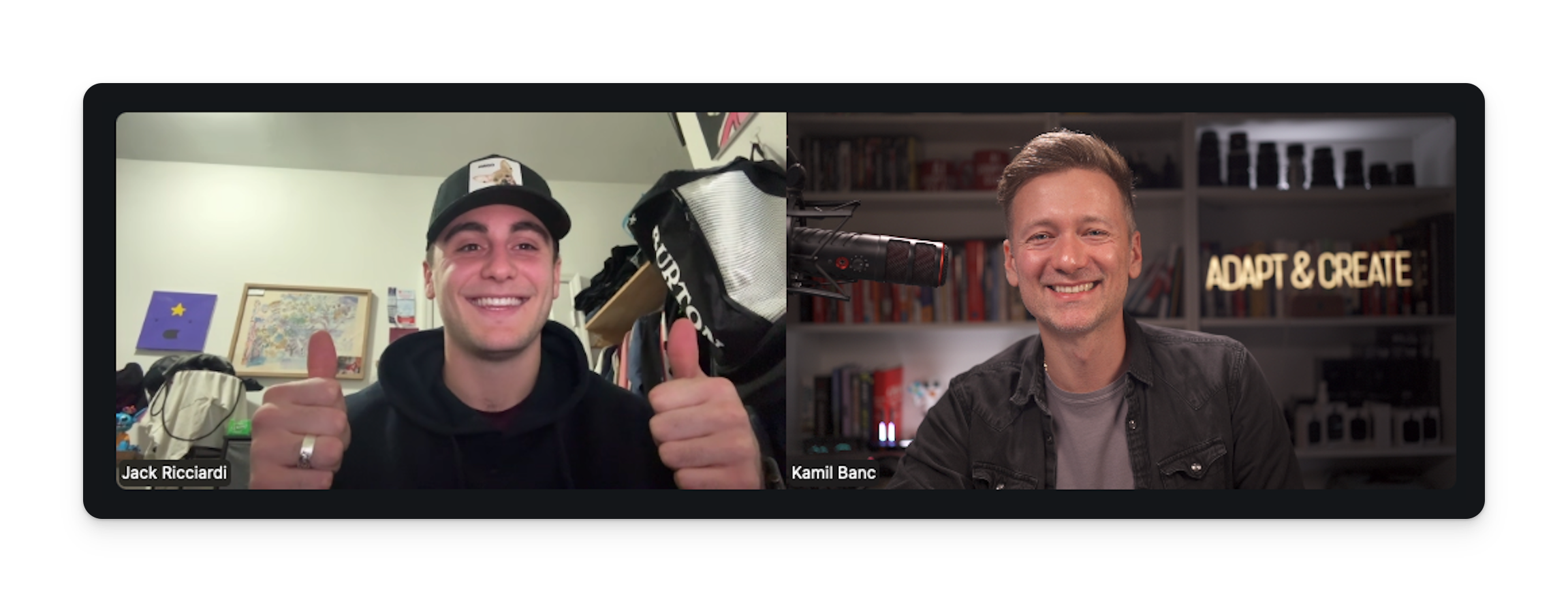
A media analyst from Gary Vaynerchuk’s agency called me today. He works in advertising, runs media for St. Jude, sits inside a company that holds weekly AI office hours with a dedicated team building approved workflows. He’s surrounded by AI at work. He gave me the green light to share our conversation.
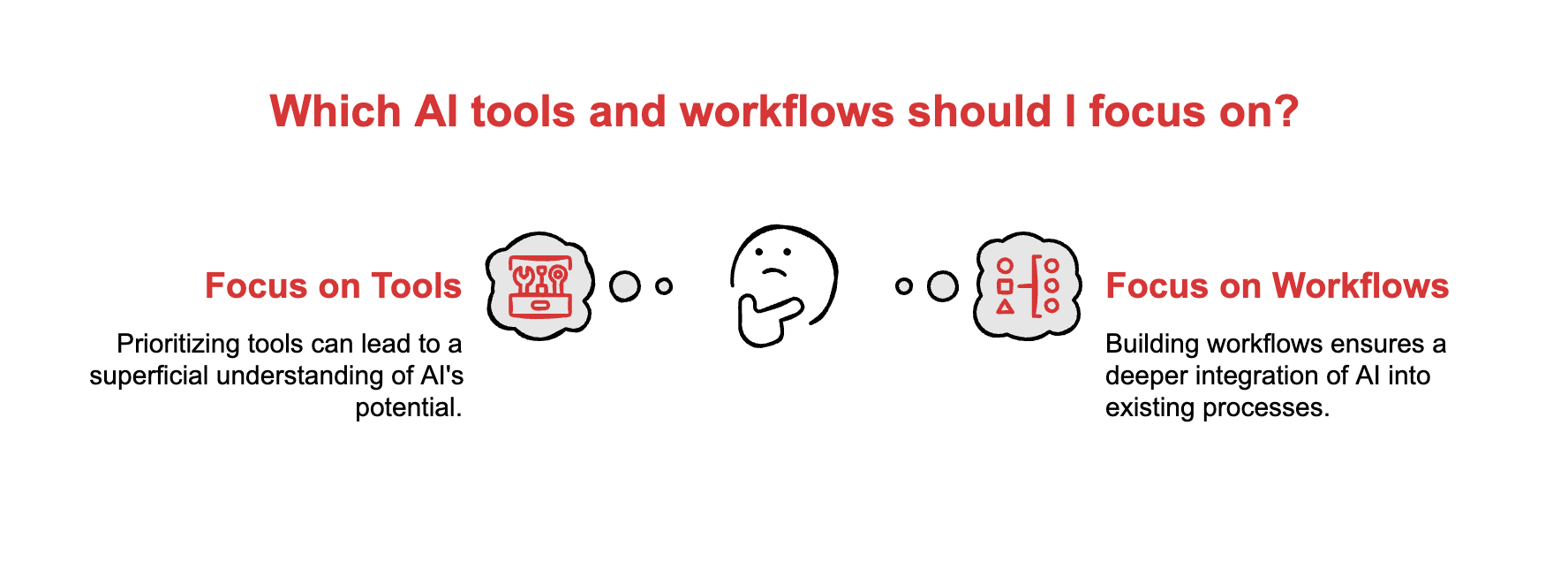
His question: which tools should I learn? What workflows should I build?
Credit where it’s due. Most people in his position consume AI content passively, nod along in meetings, and never pick up the phone. Jack Ricciardi did. He’s early, he’s asking the right kind of questions, and he’s doing it before his peers have even started thinking about it. That puts him ahead of ninety percent of professionals I talk to.
But the question itself is one I’ve heard from directors, team leads, consultants, and business owners throughout the past year. The opening move is always the same. They start with tools.
His exact words: “I was like, okay, how can I use AI to do it? Instead of picking what that process is looking like.”
That one sentence captures a pattern I see everywhere. And it starts with a few things people get wrong about AI adoption.
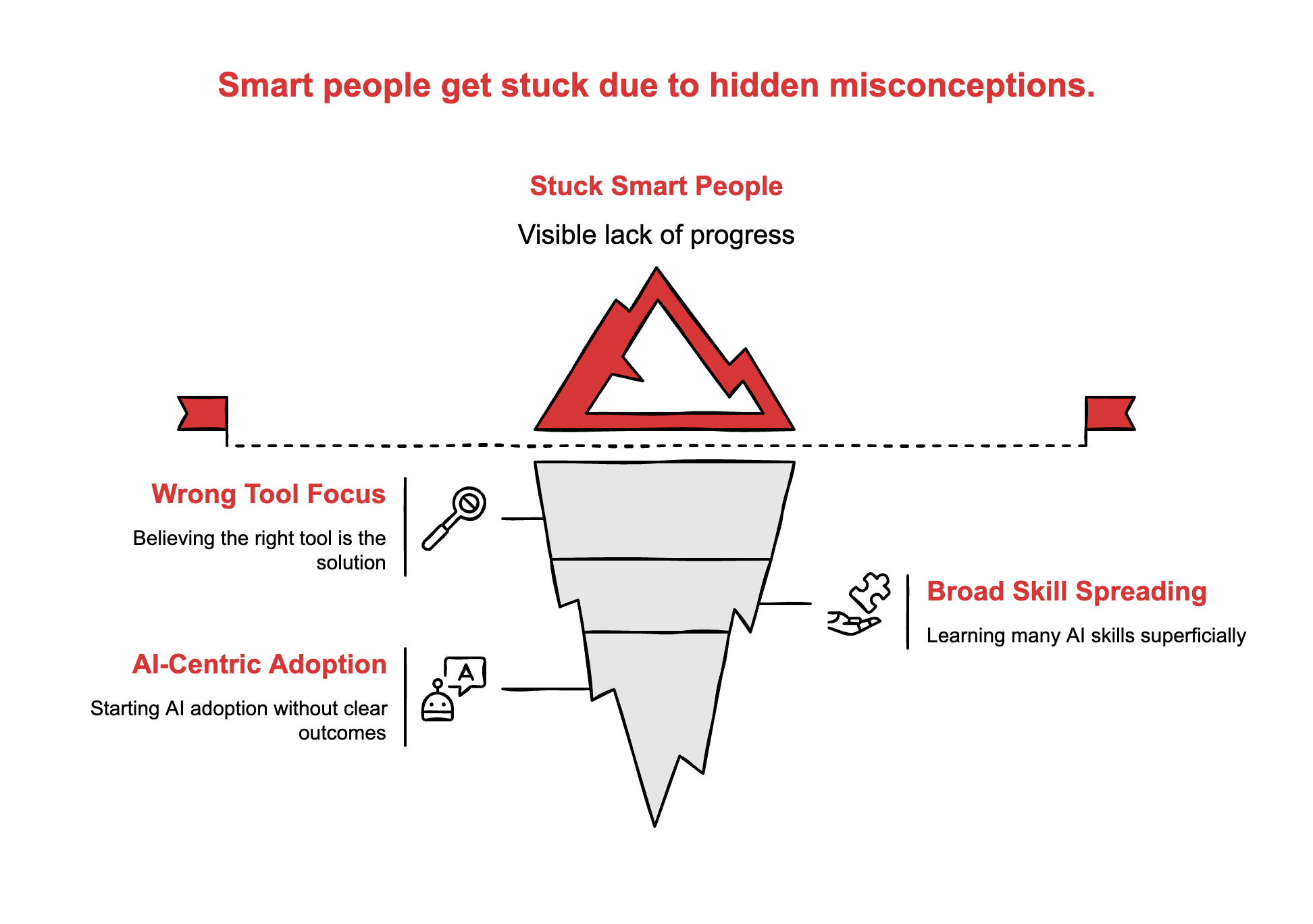
Three misconceptions that keep smart people stuck
“I need to find the right tool.” No. You need to find the right bottleneck. I’ve been tracking how I spend my time with AI, and 80% of my productive output flows through four tools. Not fifteen. Not fifty. Four. The stack got smaller as my thinking got sharper. Tools don’t create direction. Direction filters tools.
“I should learn as many AI skills as possible.” Broad knowledge feels productive. It isn’t. The professionals gaining traction with AI pick one application, go deep, and build a track record around it. Spreading across five use cases at once means you’re a tourist in all of them.
“AI adoption starts with AI.” It starts with the outcome you’re chasing and the process you already run. I told the analyst the same thing I tell every client: where do you want to be in twelve months? Work backwards from that to the process, then identify where AI removes friction. Outcome first. Process second. AI third.
Once those misconceptions are out of the way, there’s one question that changes the entire game.
The one-word test
I asked the analyst what he wanted to be known for. He said helping people and sports. Too broad. I told him straight.
My brother Jeremy built his career around a single word. Fragrance. When people hear it, they think of him. In my world, among non-technical business professionals, when someone says “AI,” my name comes up. Not because AI is small, it’s massive, but because my audience is specific enough for the association to stick.
Your brain stores shortcuts, not directories. For any given category, people hold one name. Two at most.
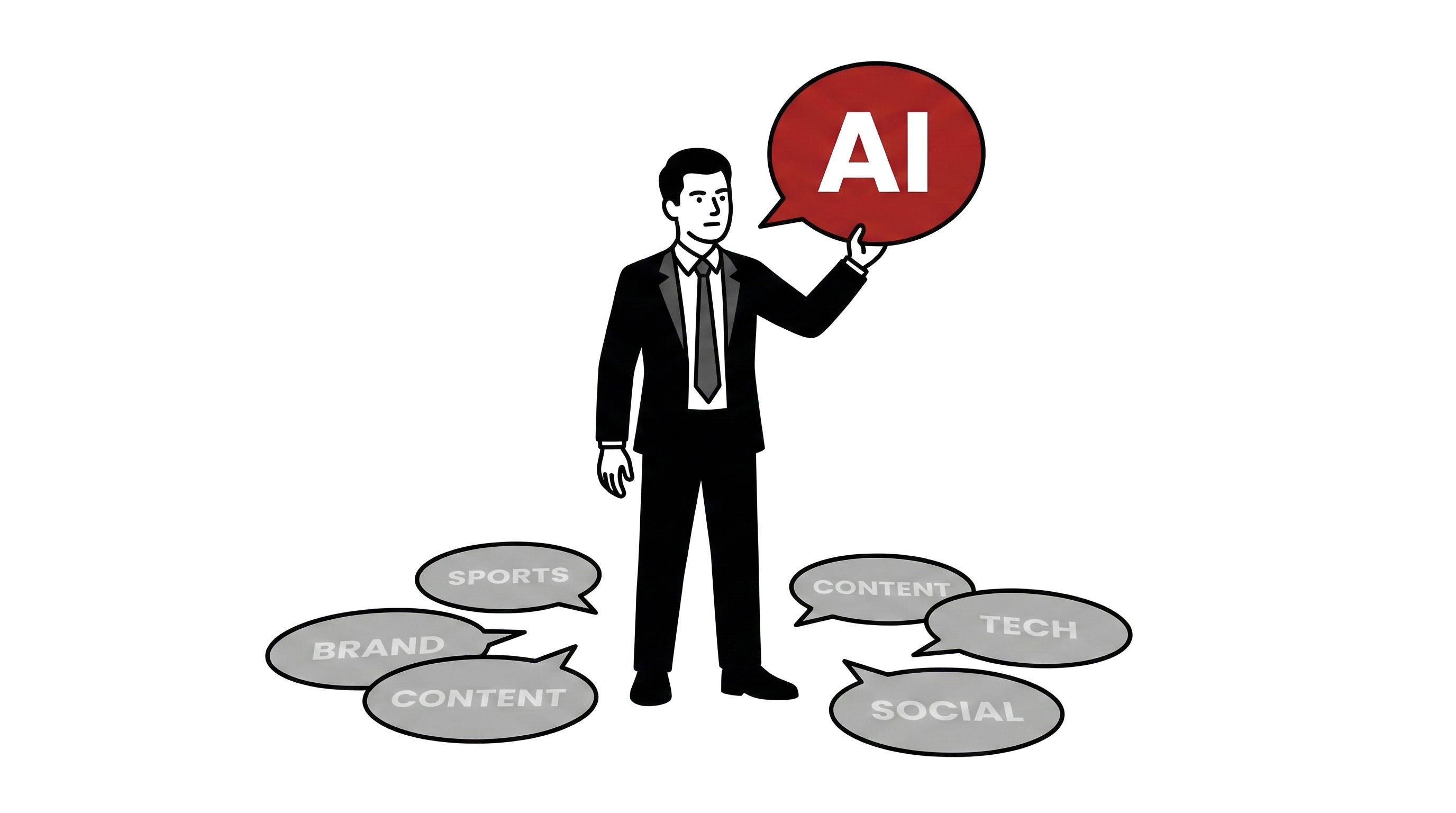
The one-word test: what single word do you want your audience to associate with your name?
This isn’t a branding exercise for people starting out. It’s the constraint experienced professionals resist the most. The more domains you’ve built across, the harder it is to choose. But that single word is how you stop being “interested in AI” and become the person people hire, promote, or call when AI needs to be applied to a real problem.
The analyst left the call focused on one thing: live shopping education, with sports cards as his personal entry point. Five scattered interests compressed into one word.
Apply the same filter to your positioning inside your organisation. If you’re championing AI for marketing, operations, HR, and finance simultaneously, you’re championing nothing.
If the answer makes you uncomfortable, good.
Three steps to run this week
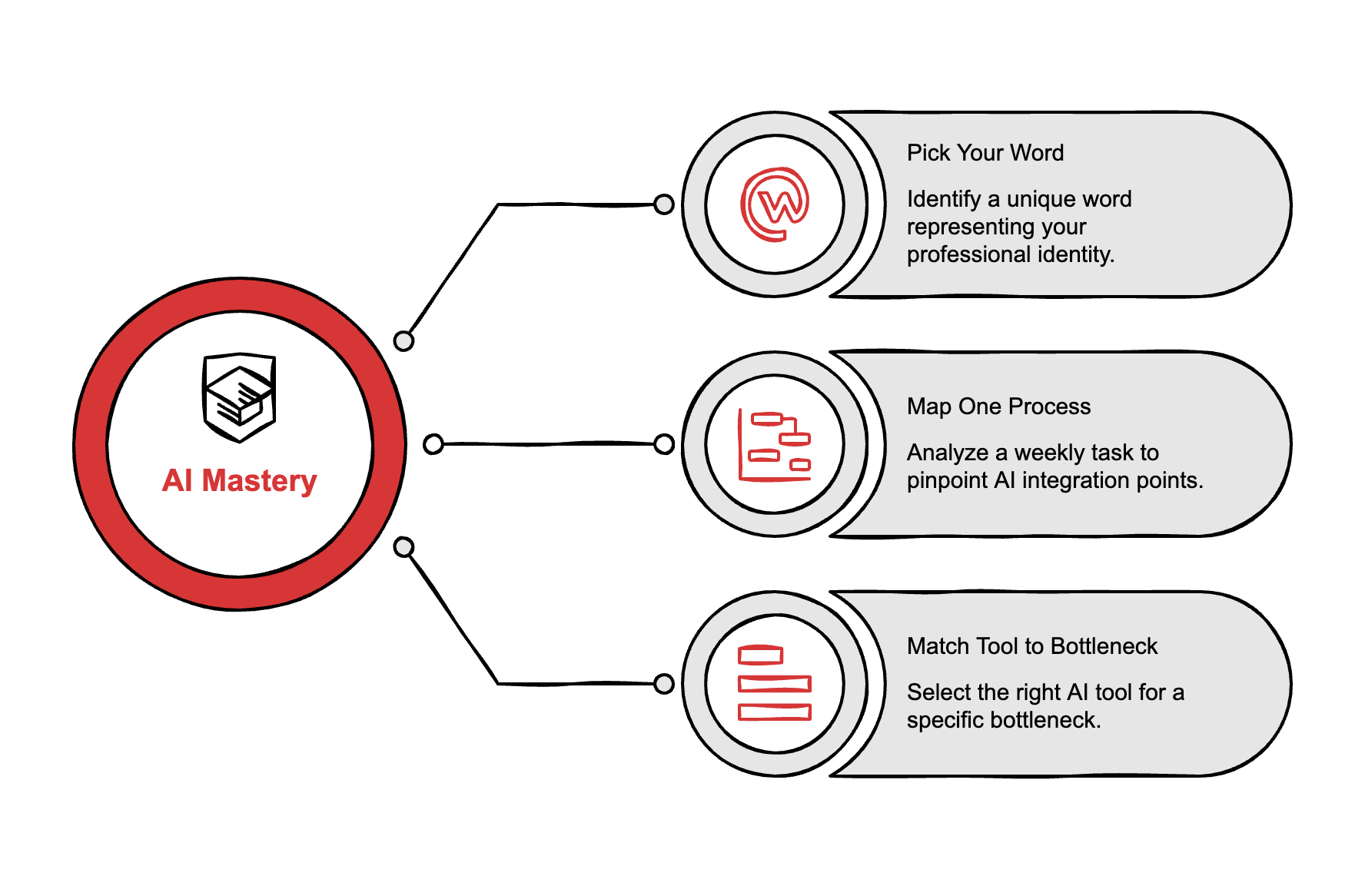
1. Pick your word. Write down the single word you want to own in your professional world. Not your industry. Not your job title. The word that, when someone in your audience hears it, makes them think of you before anyone else. If you can’t pick one, that’s the problem you solve before touching another AI tool.
2. Map one process end to end. Choose one task you do weekly. Write out each step, from start to finish. Writing a newsletter? The steps are idea generation, research, drafting, editing, distribution. Circle the slowest point. That circled step is where AI belongs. Everything else is a distraction.
3. Match one tool to one bottleneck. Claude for writing and analysis. Grok for trend research and live commentary. Gemini for document review. Stick to the primary models. Skip the wrappers launching every week. One tool, one problem, one week of testing. Expand only after you’ve seen results.
Before I launched AI Adopters a year ago, I was a professional newsletter ghostwriter. That gave me an execution edge, I could write with AI and publish without it eating into my consulting hours. One year on, I onboarded Fortune 500 clients, serving as their AI culture advisor. Not because I found the right tool. Because I picked one word, found my edge, and published every week without exception.
The tools sorted themselves out once the thinking was done. Yours will too.
Adapt & Create,
Kamil
I just came to say that I cannot believe that your brother is Jeremy Fragrance. I love him!! When I first got into watching fragrance videos on YouTube I watched him continually ❤️❤️