


Hey Adopter,
A client asked me last month what I pay to get an NDA reviewed. I told her I don’t. I showed her how to draft one herself in under four minutes.
She’d already paid a lawyer $475 for an NDA two weeks prior. Same boilerplate. Same fill-in-the-blank sections. The only difference was the signature at the bottom.
Most legal documents aren’t complex. They’re formulaic. The complexity is manufactured by an industry that bills hourly and benefits from your confusion.
The template trap
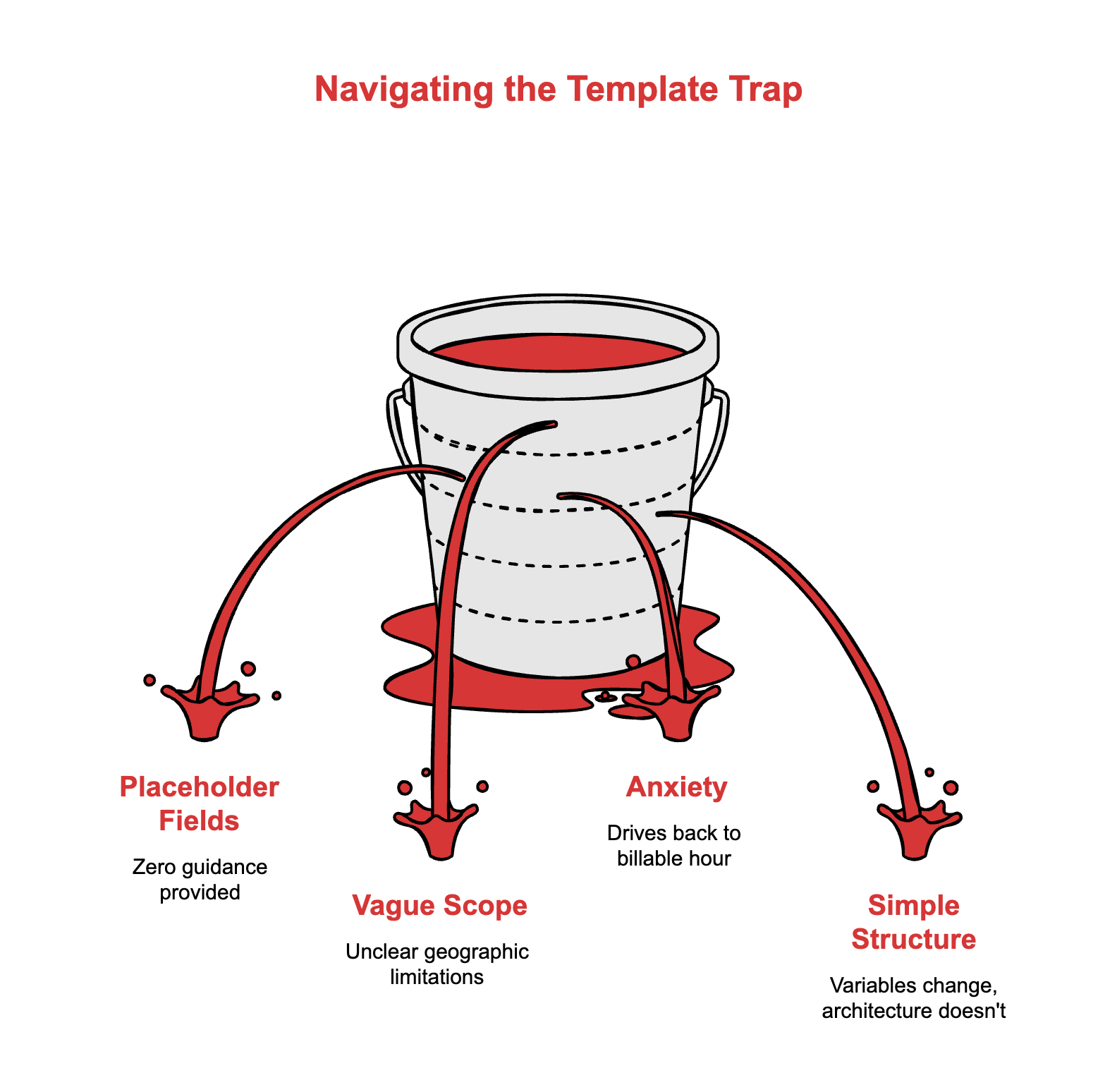
Legal templates solve the wrong problem. They give you a skeleton and expect you to know which bones matter.
Download an NDA template from the internet. You’ll get 47 placeholder fields, zero guidance on what “reasonable geographic scope” means in your state, and a vague sense that you’re about to mess something up.
That anxiety is the product. It drives you back to the billable hour.
The documents themselves are not sophisticated. Party A agrees not to share Party B’s secrets. Party B agrees to the same. Both parties acknowledge consequences for violations. Sign here.
Ninety percent of NDAs follow this structure. Non-competes are similar. The variables change. The architecture doesn’t.
When you need which document
Before the prompts, the decision.
Use an NDA when you’re sharing sensitive information with someone who might misuse it. New vendors, contractors, potential partners, employees with access to trade secrets. The NDA protects information.
Use a non-compete when you’re worried about someone taking your business model, client relationships, or competitive advantage to a rival. Departing employees, co-founders, key hires with deep operational knowledge. The non-compete protects position.
Sometimes you need both. A senior hire who will see your client list and your pricing strategy needs an NDA for the information and a non-compete for the relationship risk.
Sometimes you need neither. A freelance designer making your pitch deck probably just needs a standard contractor agreement with a confidentiality clause.
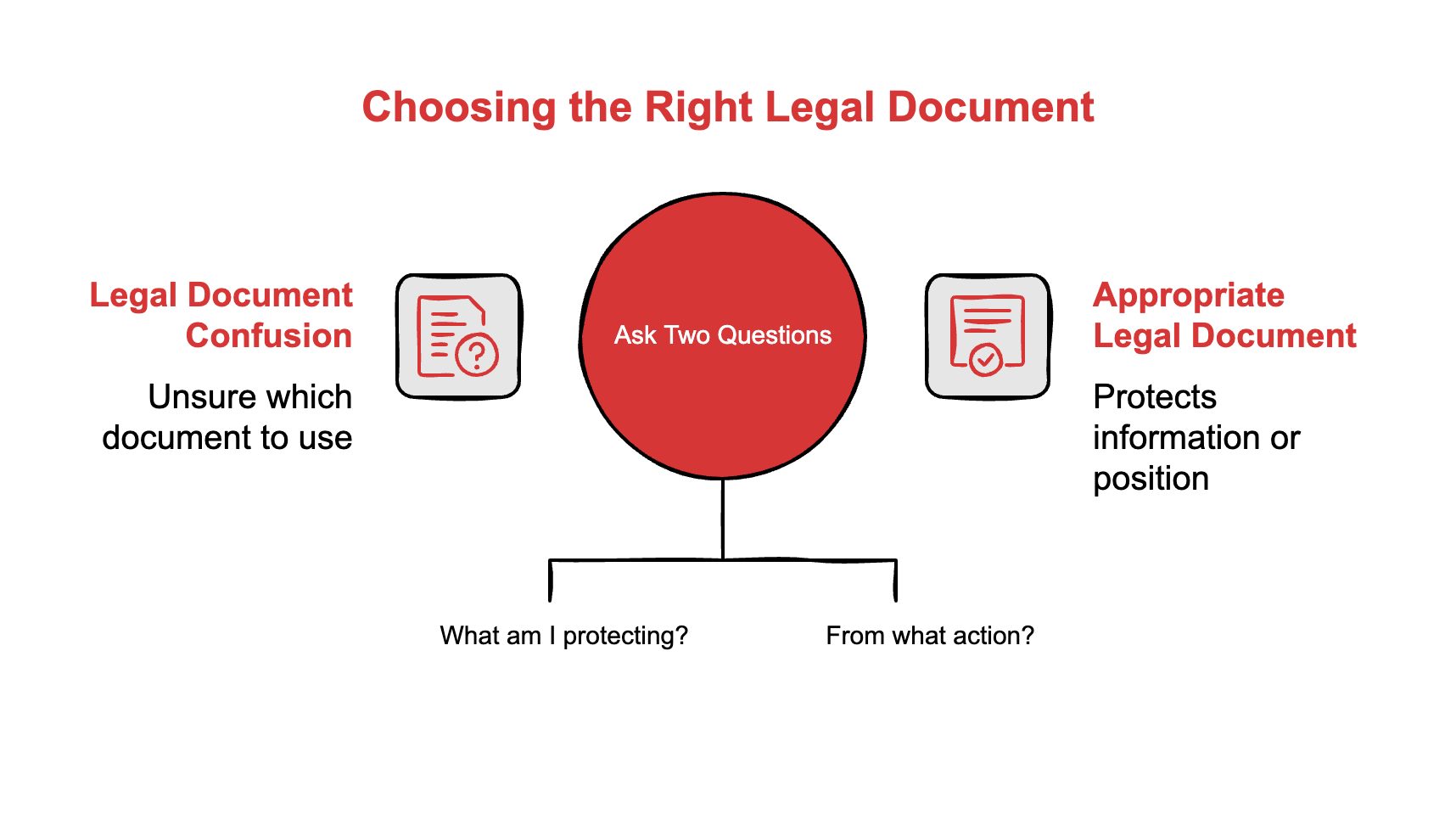
Ask two questions. What am I protecting? From what action?
Information leakage points to NDA. Competitive defection points to non-compete. Both risks present means both documents.
These two prompt frameworks can easily save you more in legal fees than you’ll ever pay for a year of AI Adopters Club Premium👇