


Your AI tools work. Your people don’t.
Hey Adopter,
I spend a lot of time advising organizations on AI adoption. The conversation almost always starts with tools. Which model, which platform, which vendor. It almost never starts with people. And that’s the problem, because the data across thirteen of the world’s largest companies says the same thing: the bottleneck is never the technology. It’s human readiness.
This piece is built from a new case study report I published today covering JPMorgan Chase, KPMG, McKinsey, IBM, Amazon, PwC, AT&T, Accenture, Genpact, Walmart, DBS Bank, Siemens, and Microsoft. Every claim below is sourced from that report, which draws on earnings calls, analyst research, verified programme data, and public disclosures. If you lead a team, run a department, or advise businesses on AI, forward this to whoever owns the training budget. They need to read it before the next quarter starts.
The say-do gap
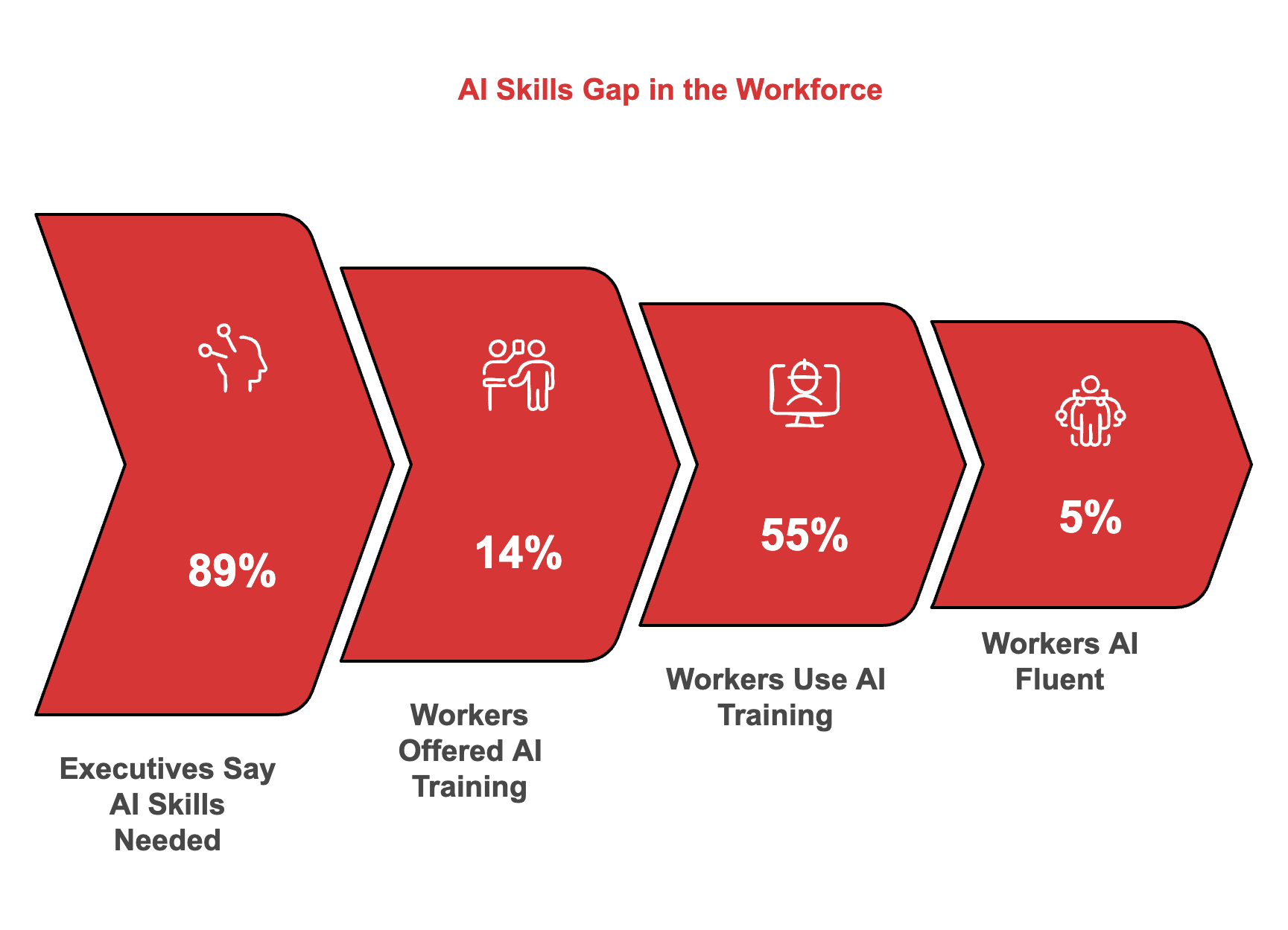
Eighty-nine percent of executives say their workforce needs improved AI skills. Six percent have started upskilling in a meaningful way. Of U.S. workers, 5% are considered AI fluent. Those 5% report 4.5 times higher wages and 4 times higher promotion rates. And 14% of workers have been offered AI training by their employer in the past year.
That gap between stated urgency and actual investment is the story of 2026. The World Economic Forum projects that 59% of the global workforce will need reskilling by 2030. McKinsey Global Institute estimates up to 30% of current U.S. work hours could be automated in a midpoint scenario. Goldman Sachs puts 300 million jobs globally at exposure. The scale of the problem is settled. What’s not settled is whether anyone is doing anything serious about it.
Nine in ten employers say they offer AI upskilling benefits. Fifty-five percent of workers use them. The organisations most in need of reskilling, the ones where workers haven’t engaged with training, face the highest resistance. Workers who don’t participate in upskilling are more likely to disengage entirely, creating a retention paradox where the people you most need to reach are the ones walking out the door.
The number that changes the conversation
McKinsey analysed 300 enterprise AI deployments and found one ratio that predicted success.
“Organisations achieving the highest productivity gains invest two to three dollars in workforce reskilling for every dollar spent on AI tooling. Companies that skipped reskilling saw AI adoption plateau at just 34 percent of intended use within six months.”
Two to three dollars in training per dollar of tools. Organisations hitting that ratio reached measurable productivity gains at 90 days and over 80% adoption at six months. Those inverting the ratio, spending more on tools than people, plateaued at 34%.
That ratio applies whether you’re a 40,000-person consulting firm or a 200-person manufacturing company. If you spent $50,000 on AI tools last year and $5,000 on training, you now know why adoption stalled.
AI-specific upskilling budgets dropped from 42% to 36% of organisational spending between 2025 and 2026, even as AI deployment accelerated. The investment is moving in the wrong direction. Only 5% of custom AI projects reach full deployment. The limiting factor is not the software.
Which raises the question: among the companies spending billions, who’s getting this right, and how?
Below the fold, premium subscribers get the full breakdown and the pdf case study:
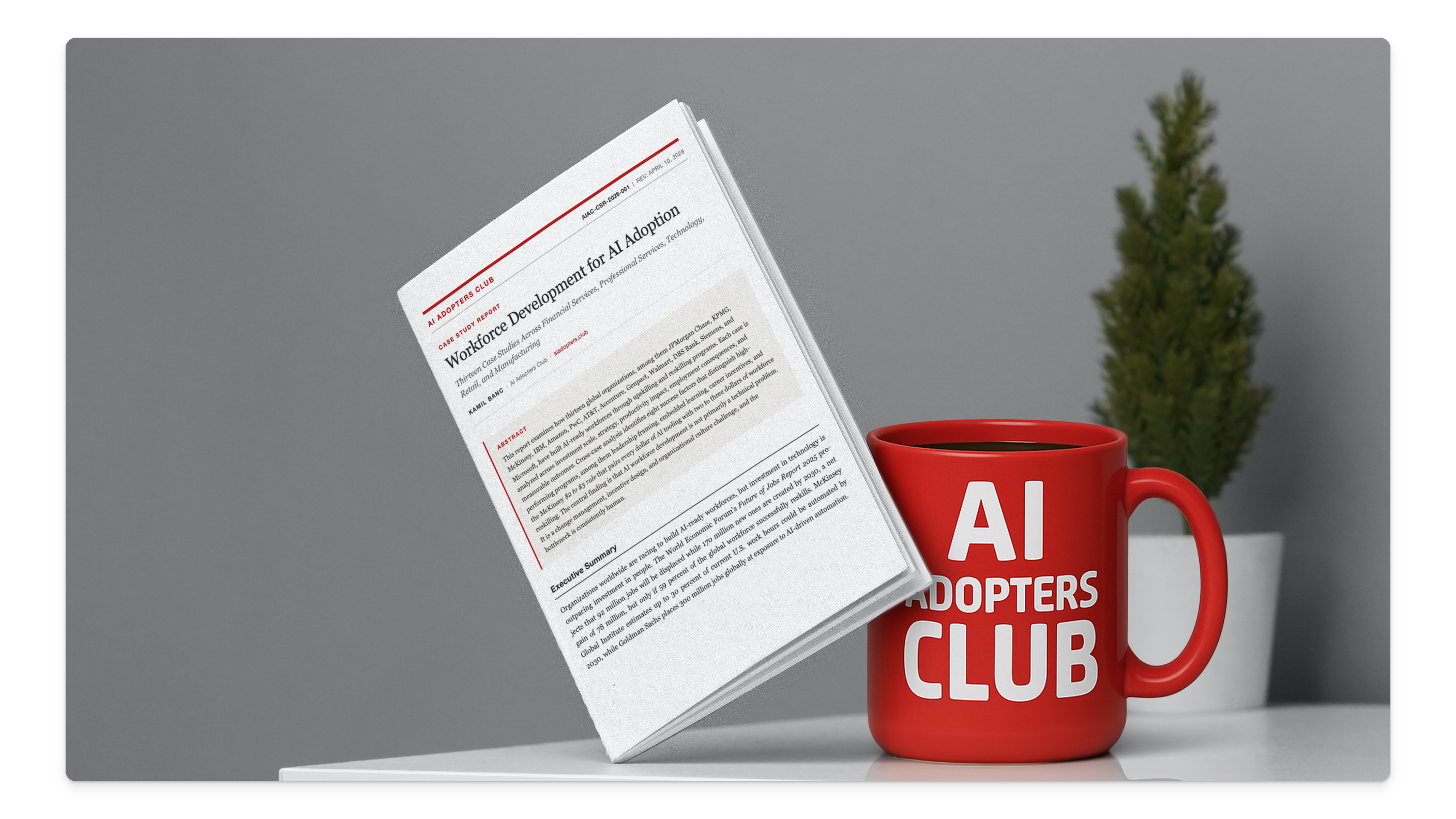
Four companies, four playbooks. How McKinsey redeployed $12 million per month in consultant labour through a single AI tool. How PwC hit 95% voluntary adoption, then laid people off anyway. How KPMG turned an internal AI tool into a client revenue stream. And how Genpact tripled engagement without a single external hire.
Five cross-industry patterns that separated the programmes that worked from those that produced completion certificates and nothing else.
The uncomfortable truth about what happens when successful reskilling programmes run alongside workforce restructuring, and why 55% of AI-trained employees at one bank left anyway.
The adopter’s playbook. Three moves you can make this quarter, stolen directly from billion-dollar programmes and translated to mid-market budgets.
🔒 The rest of this post is for premium subscribers