


Hey Adopter,
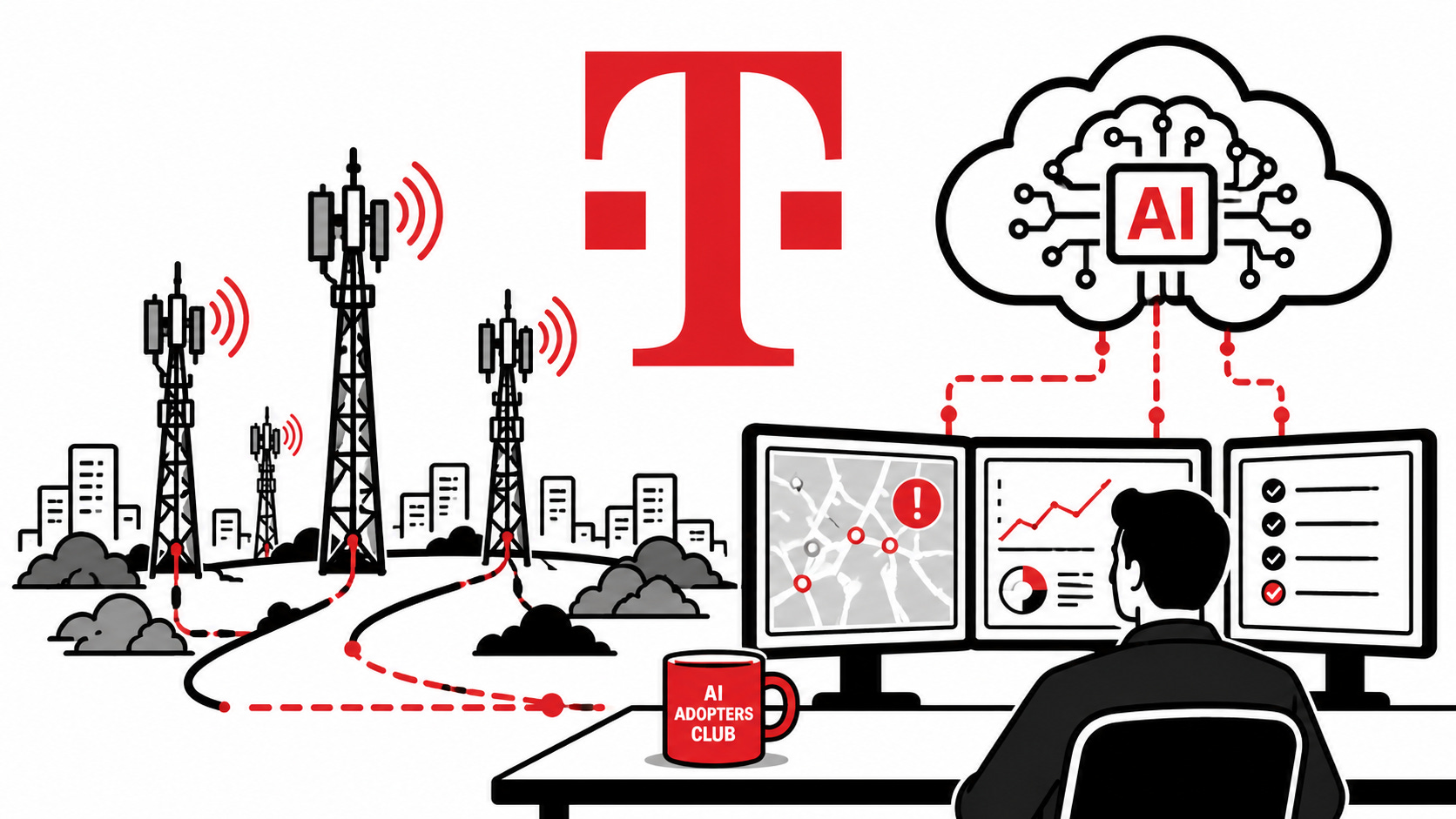
Deutsche Telekom handed its mobile network to a team of AI agents. Response time on major events fell from an hour to a minute. First month, the system fixed more than a hundred problems on its own, nobody touching the controls. An outside analyst checked the maths, so this is not the usual press-release confetti.
Most people read that and clap for the AI. The AI was ordinary. What did the work were three decisions so dull your competitors will skim right past them. Which is the good news, because dull is copyable.
Every AI pilot dies in the same ditch
The model almost never fails. Your data does. It sits in six systems with field names one person in accounting still remembers, nobody wrote down what a finished job looks like, and the second the tool tries something with consequences, everyone learns at once that no one knows who signs off.
The World Economic Forum studied hundreds of companies running this in production and said it flat: data quality is the number one barrier to AI success. Deloitte found the same wall from the other side. Three-quarters of companies want AI agents inside two years. One in five has any real way to govern them. Everyone is flooring the accelerator. Almost nobody bolted on brakes.
So drop the question of which AI to buy. The better question is which small job you can hand off tomorrow while keeping a hand on the wheel.
Steal this one move
Telekom did not aim AI at “the network.” That is how you buy a six-month failure and a bad board meeting. It aimed at one job with clean edges: spot the public events that flood the towers, check whether the towers nearby can take the crowd, adjust before your call drops at the Christmas market.
One job. Clear input. A win you can measure against a real before.
That is the whole trick. Smallest job that still matters. Define good before you build. Let the machine own only the part you can undo.
You have a job like that sitting in your week right now. The report someone rebuilds by hand every Monday. The invoices that rot for three days waiting on one person’s eyeballs. The tickets a human sorts when they would rather do almost anything else.
Pick one. The how is below.
You just read the why. Premium is the how.
Below: the three patterns that split the companies scaling this from the ones stuck running demos forever, a stage-by-stage build plan sized for a mid-size company with normal data and no AI department, and the full 15-page case study as a download.
If you are the person your boss looks at when they ask “so how do we actually use AI here,” this is the section that hands you a plan instead of a shrug. Upgrade, and the next 20 minutes become something you can put on one page and defend in a room full of people waiting to poke holes in it.