


Hi Adopter,
You’re sitting in a budget meeting when someone puts two lovely, clean numbers on the screen. A hospital AI voice assistant cut staff workload by 43% and lifted patient satisfaction by 28%. The case study names Memorial Healthcare System, a six-hospital public system in South Florida.
That’s the sort of slide that gets a pilot approved before anyone asks an annoying question like, “Where did those numbers come from?”
The answer is an AI vendor’s blog post. No link, because it doesn’t deserve the click. It doesn’t name Memorial’s deployment owner, the measured population, or the method behind either percentage.
Memorial does have a credible AI story. It’s just not that one.
What Memorial actually did
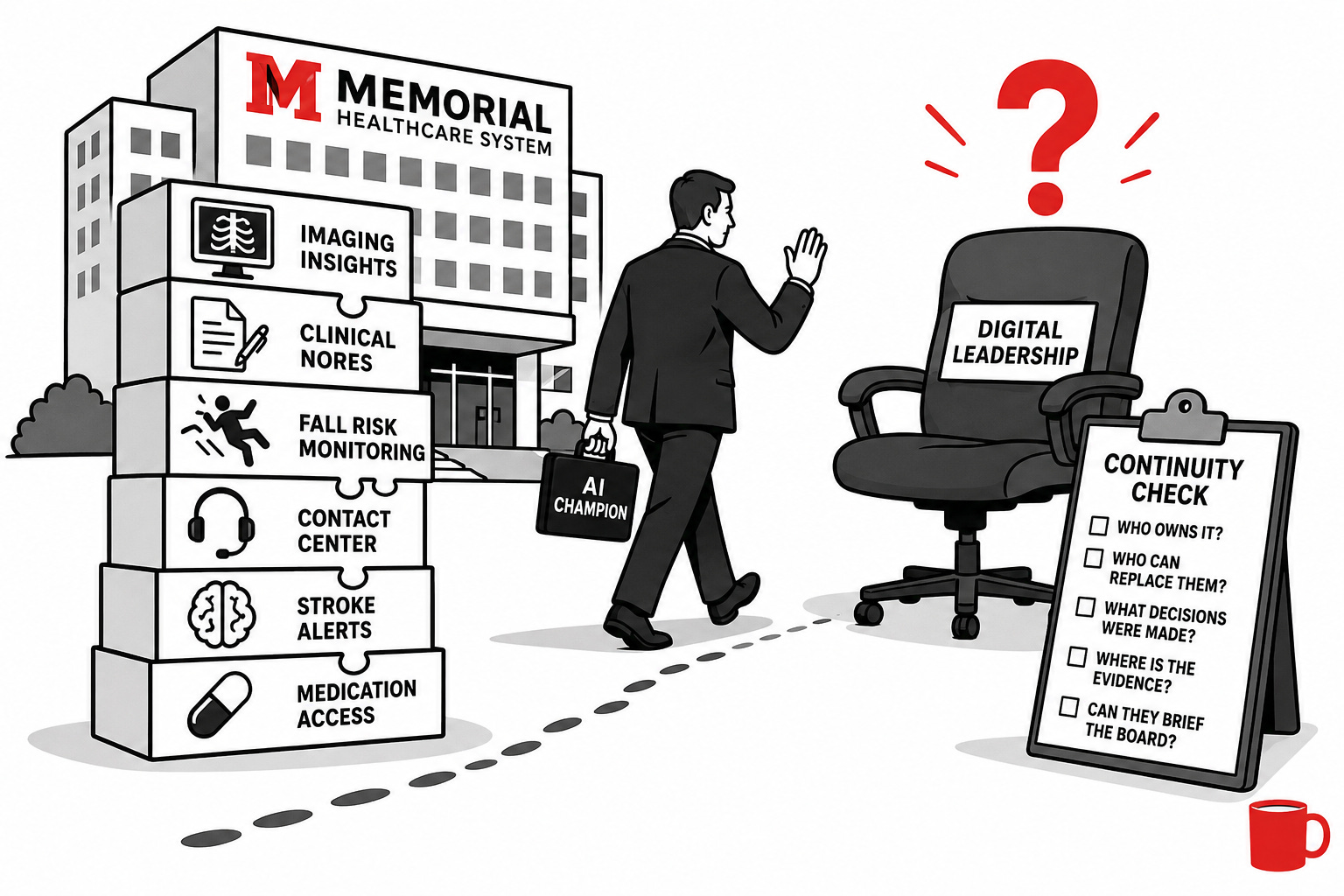
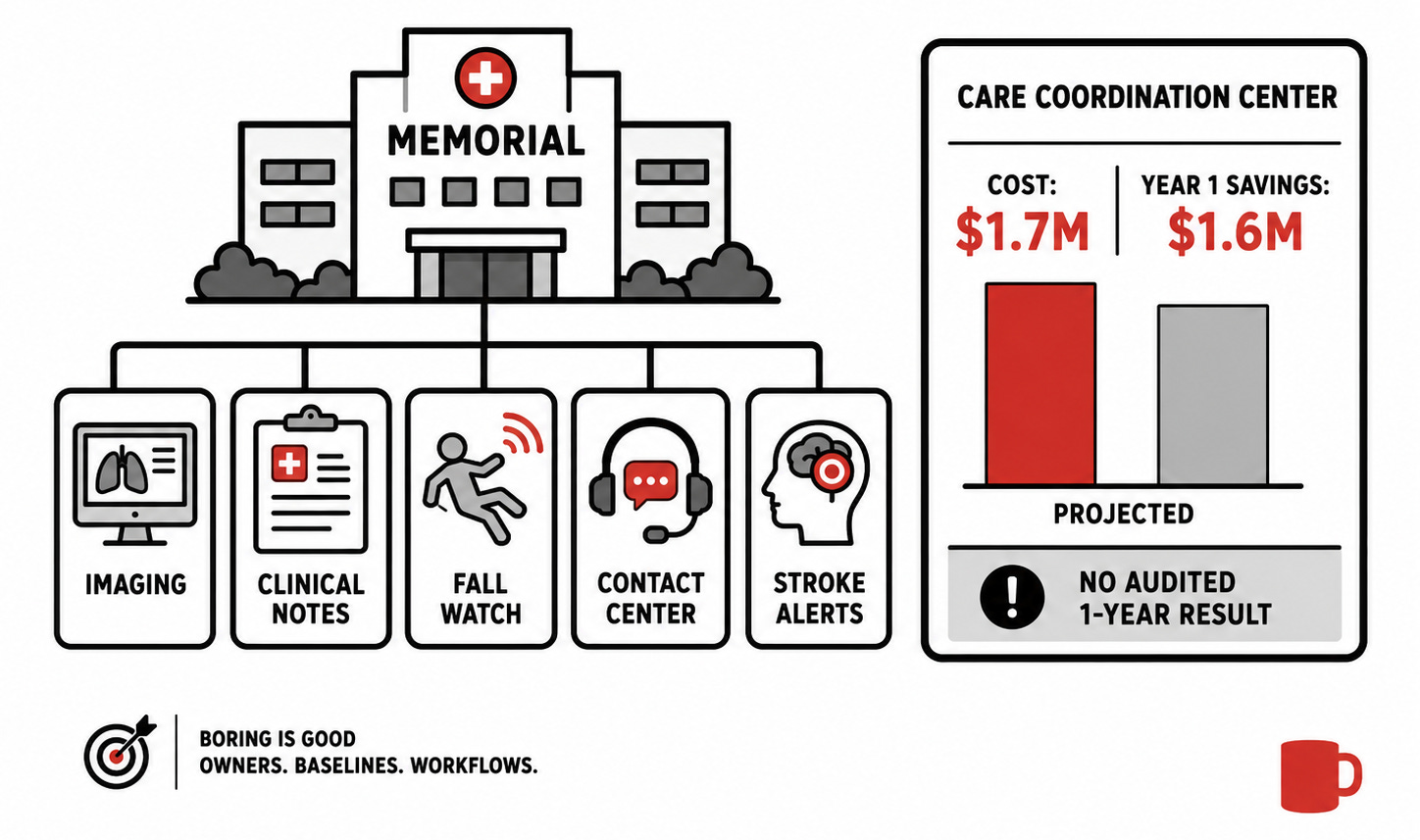
Memorial bought focused tools for work people could already name: flagging missed issues in medical images, drafting clinical notes, watching high-fall-risk patients, routing contact-center work, and alerting stroke teams. It didn’t build a custom moonshot. It put vendors into real workflows.
Honestly, that sounds almost boring. Good. Boring systems with owners, baselines, and a place inside the workflow tend to survive after the launch photos are filed away.
Its Care Coordination Center cost $1.7 million and was projected to save $1.6 million in its first year. That’s a serious test case, not a victory lap. Memorial hasn’t published an audited one-year result.
Then the owner left
Jeff Sturman, the digital chief who publicly narrated and led the program, left Memorial in September 2025. As of late June 2026, Becker’s still listed Memorial among health systems without a permanent CIO. The seat was still empty.
That’s the real story. The tools may be useful, but could the operating model keep moving when its most visible champion walked out the door?
Here’s the free question from the continuity check: who’s the deputy who could brief the board tomorrow if the sponsor got hit by a bus? If nobody has a name, you don’t have a two-deep bench. You have a fire drill nobody scheduled.
Below the paywall this week:
The five deployments Memorial can actually substantiate
The near-payback project and the caveat hidden inside its headline number
The vendor claims worth testing without copying them into your board deck
The other four continuity questions, the deployment table, and the evidence ledger
Paid members get the operator playbook and full case study PDF, with the economics, evidence grades, governance risks, and source ledger.