Hey Adopter,
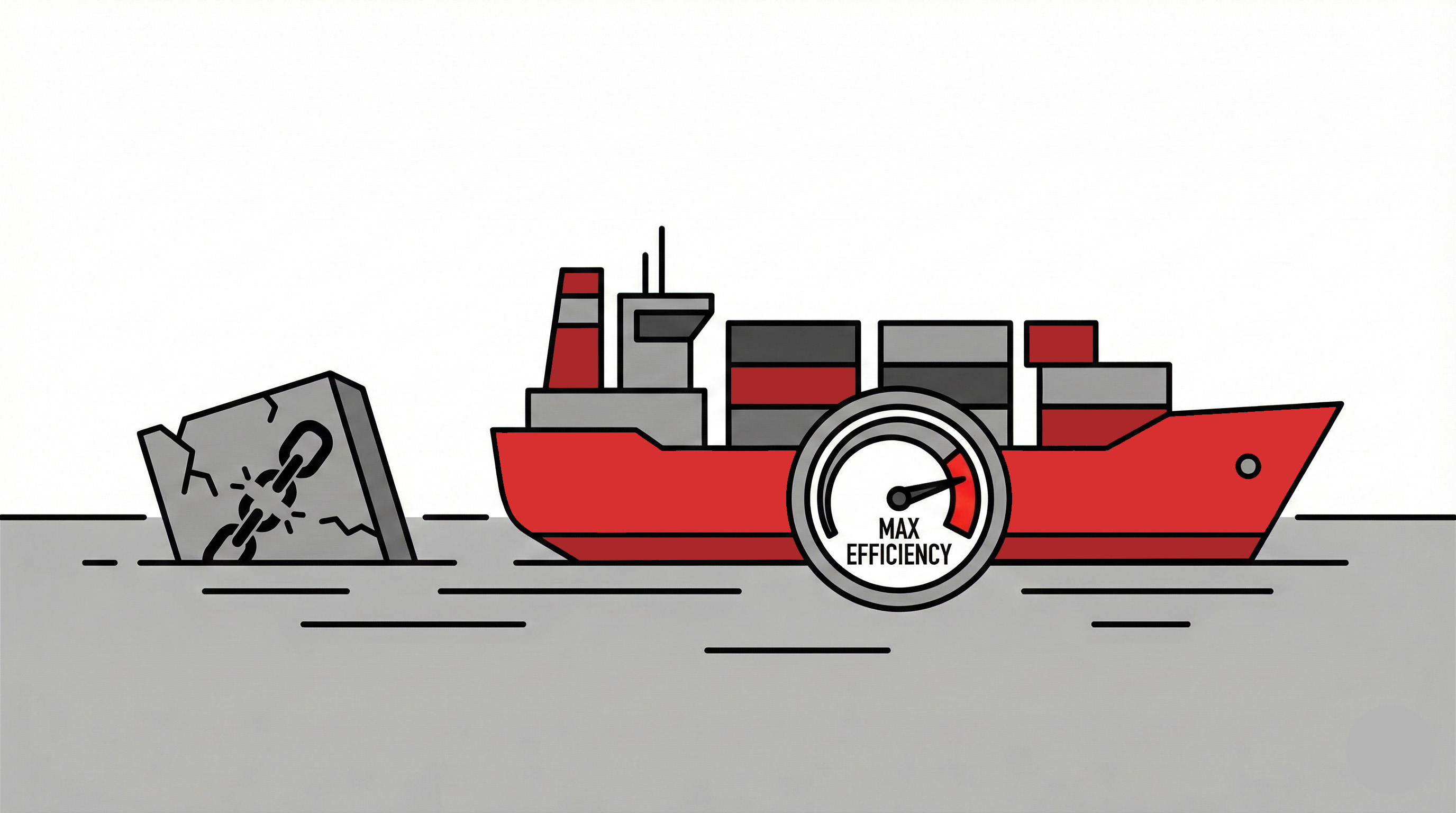
Maersk built a blockchain-powered shipping platform with IBM called TradeLens. The pitch: one digital ledger for the entire world’s supply chain. Every carrier, every customs office, every freight forwarder, all connected.
Their competitors said no.
MSC refused to put sensitive data on a platform co-owned by its biggest rival. CMA CGM did the same. TradeLens never hit commercial viability. Maersk shut it down in early 2023.
That failure changed everything.
The pivot nobody talks about
Maersk stopped trying to be the operating system of global shipping. Instead, they pointed AI inward, at their own ships, their own fuel bills, their own network schedules.
The result is Star Connect, an edge-computing platform running directly on Maersk vessels. It processes 2.5 billion IoT data points from onboard sensors, engine performance readings, weather feeds, and current data. The machine learning models run locally on each ship’s server because satellite bandwidth at sea is too expensive and too slow for cloud processing.
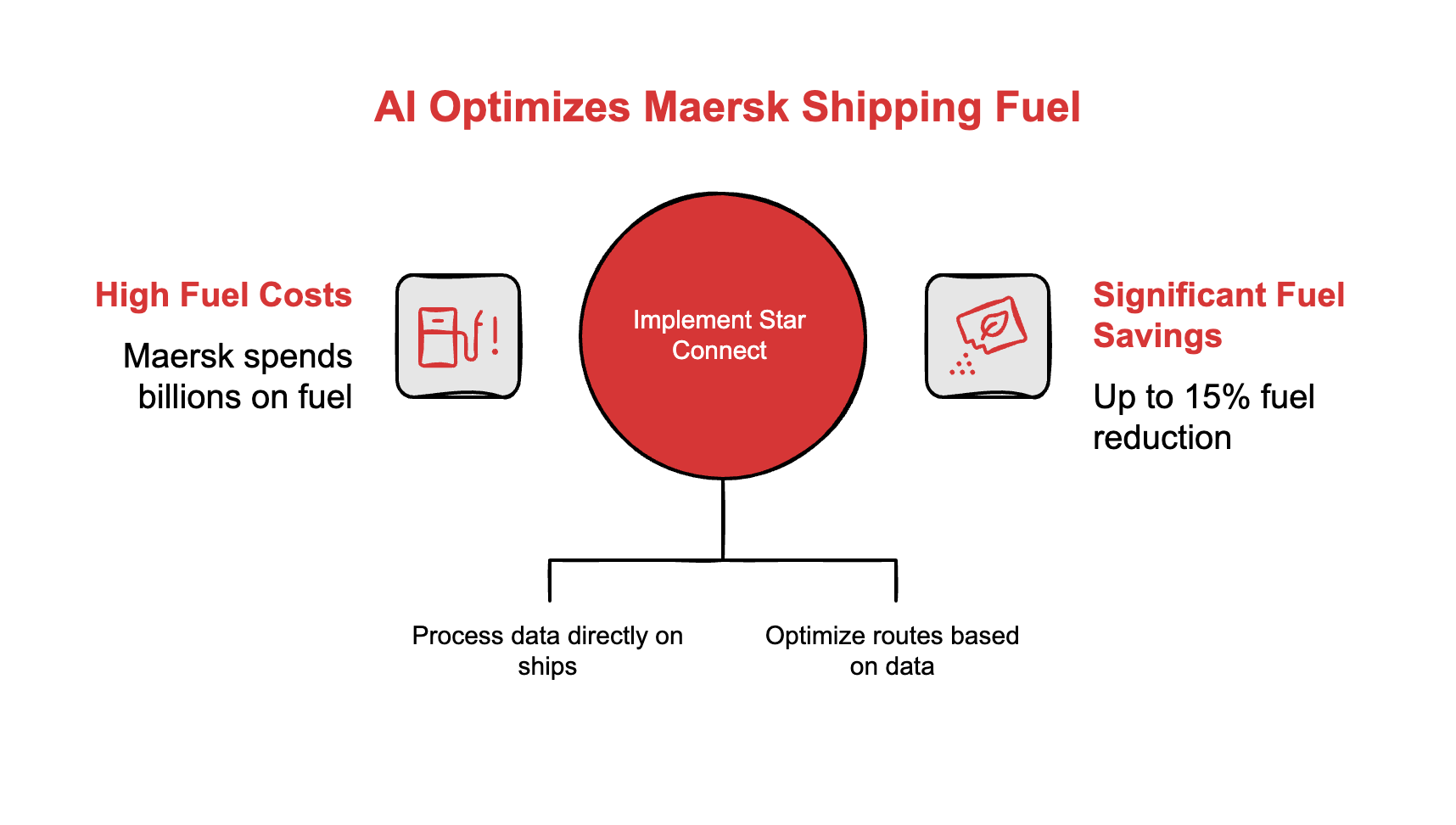
The payoff: up to 15% fuel savings on optimised routes. Maersk spends between $5 billion and $7 billion a year on bunker fuel. Even applied to half the fleet, that saving sits somewhere between $375 million and $500 million annually. One AI use case, likely paying for the company’s entire 2,900-person tech centre in Bengaluru multiple times over.
When the AI works on machines but fails on people
Star Connect proves Maersk can build production-grade AI for physical assets. Their Gemini alliance network planning engine targets 90% schedule reliability, nearly double the industry average. That is real.
But the customer-facing AI tells a different story. Gartner Peer Insights reviews from late 2025 flag rigid systems and broken invoicing flows. Trustpilot feedback mentions poor response times and difficulty reaching a human when the bots fail.
Then in February 2026, Maersk announced 1,000 corporate layoffs explicitly linked to AI-driven automation, targeting $180 million in annual savings. They cut the humans before the AI was ready to replace them.
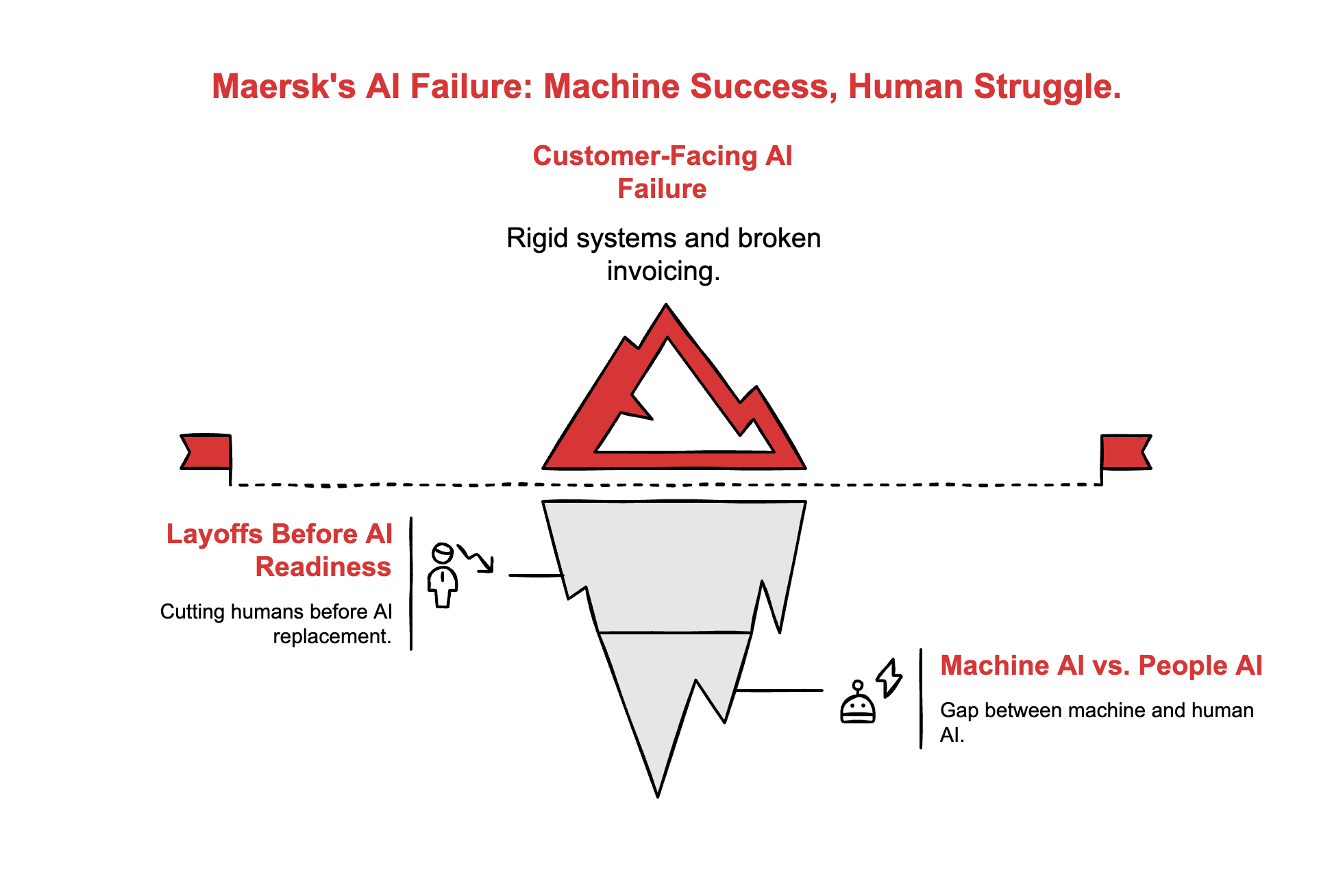
That gap between machine AI and people AI is where the real lesson lives for any operator building their own stack.
Download the full report for the complete breakdown of Maersk’s tech stack, economics, failure patterns, and a 30-60-90 day action plan you can adapt
The exact “edge-first” data strategy that turns your biggest cost line into your biggest saving
Why Maersk’s data lakehouse architecture killed vendor lock-in and how a team of 10 replicates the principle
The TradeLens post-mortem and three failure patterns every SMB should avoid
A 30-60-90 day plan for pointing AI at your own unit economics before anything else
The “shadow mode” rule for AI agents that prevents the support vacuum Maersk walked into
Download the full report for the detailed source analysis, vendor breakdown, and implementation playbook behind every finding below.