Hi Adopter,
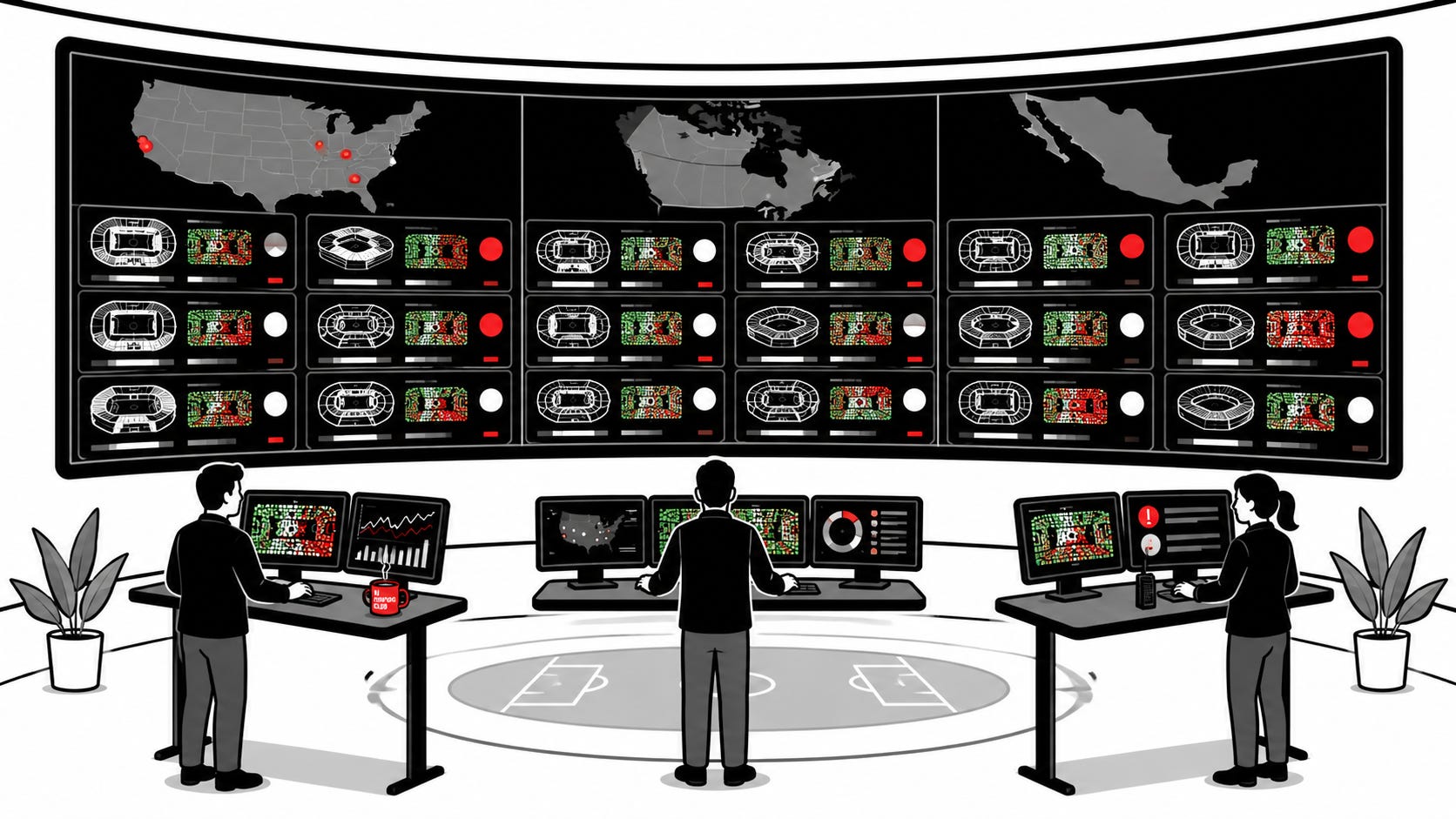
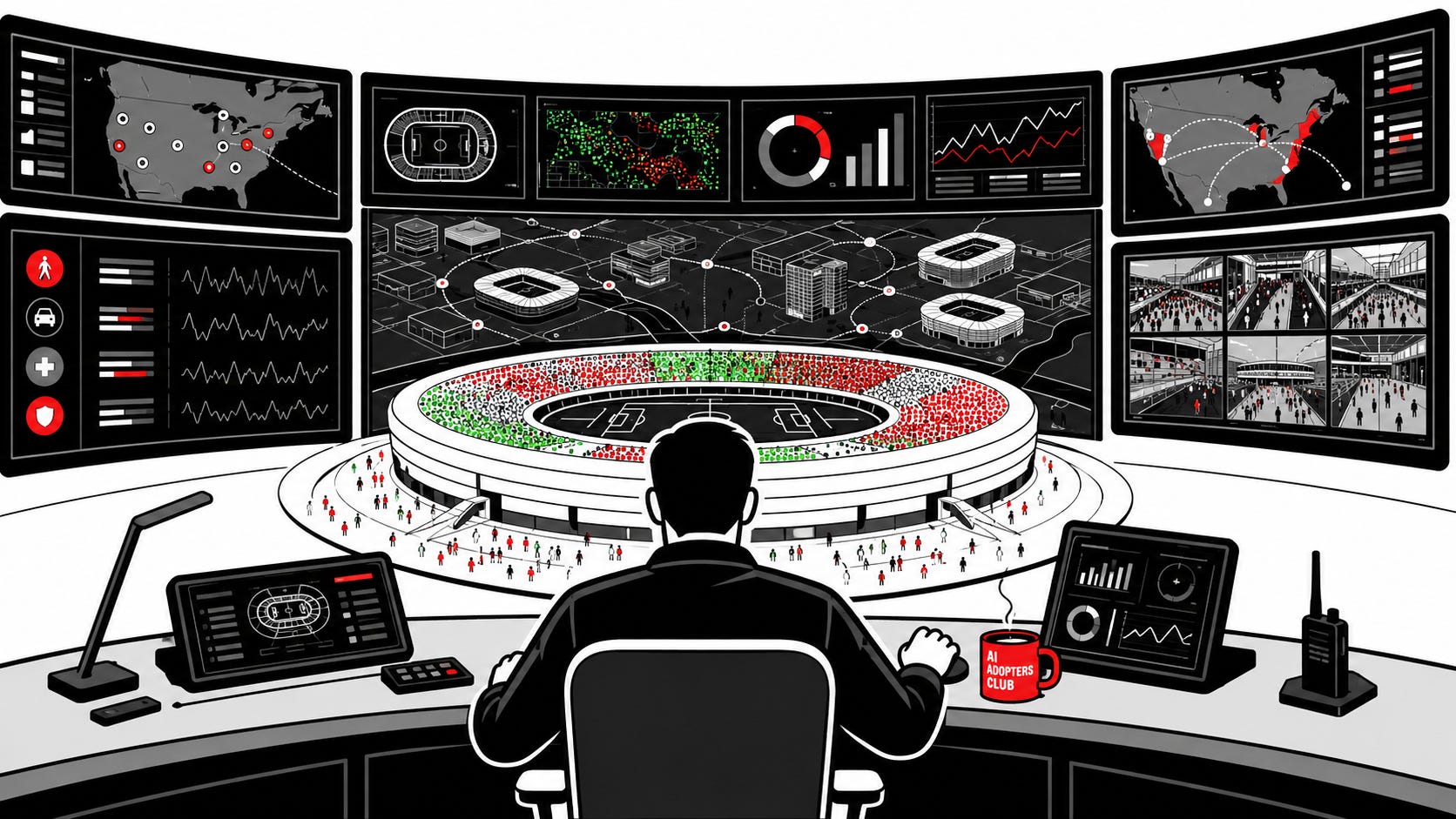
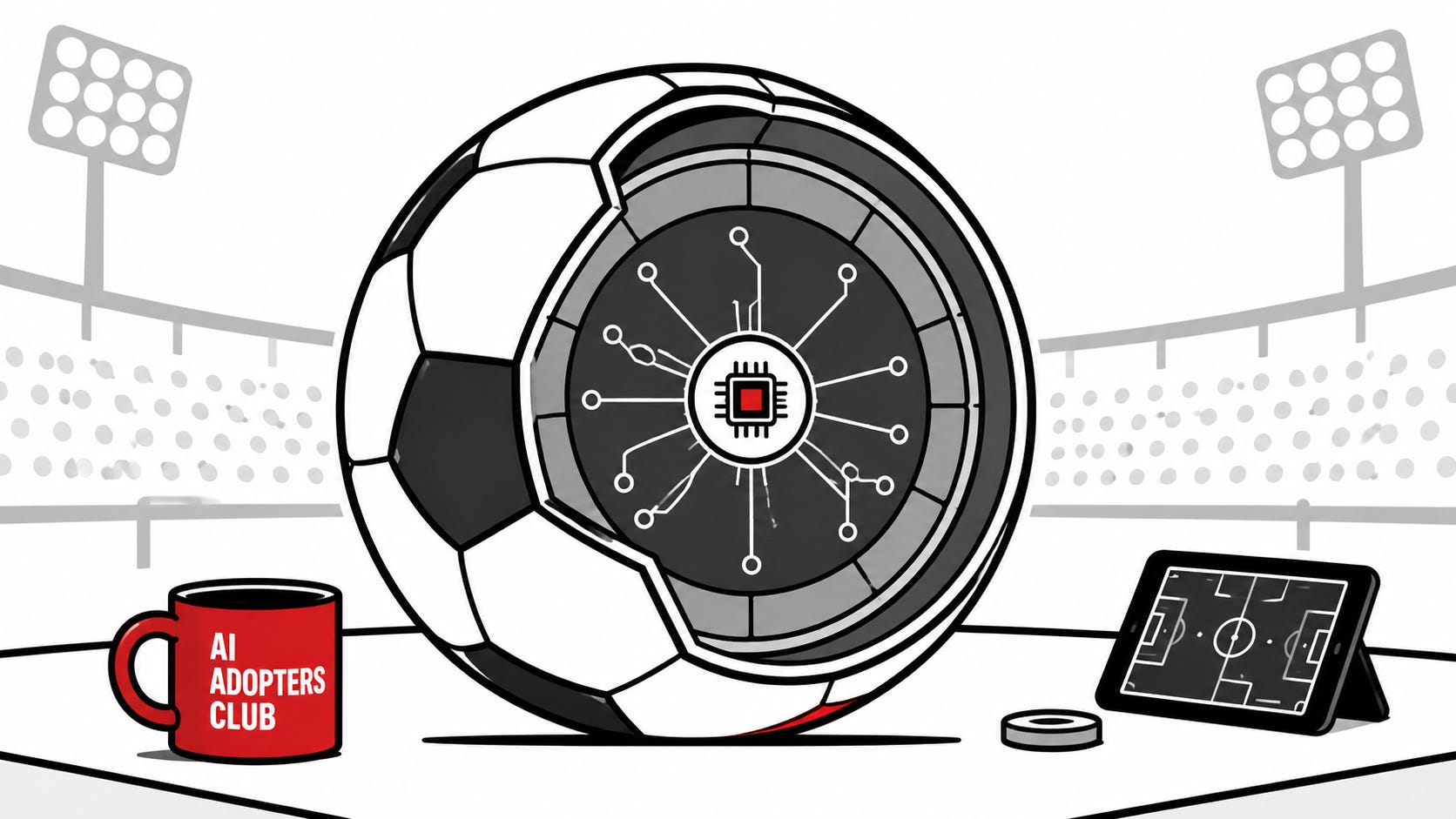
the 2026 World Cup is two weeks old. Forty-eight teams, sixteen stadiums spread across the United States, Canada, and Mexico, 104 matches to be played. The tournament’s AI stack has been running continuously since June 11, and by most measures it is working. Offside calls that used to take several minutes of VAR review now resolve in near real time. A social media protection system has reviewed more than 5.5 million comments and removed 530,000 toxic posts since kickoff, most of them gone before any player or staff member saw them. The Adidas Trionda match ball reports its own position and the exact moment of player contact to tracking systems 500 times per second. A Technology Command Center in Miami holds digital twins of all sixteen venues, updating continuously from gate scans, camera feeds, and system status monitors across three sovereign nations.
None of this is AI as marketing. It is AI as operational infrastructure. The distinction matters because infrastructure has to work every time, at full load, in public, with no restart option. And that design constraint, more than the technology itself, is what makes the FIFA case worth studying if you are responsible for deploying AI inside an organization.
The Officiating Stack Is a Single Integrated System
The Semi-Automated Offside Technology deployed at 2026 is an upgrade from what ran at Qatar 2022. The threshold for triggering an offside alert dropped from 50cm to 10cm. What changed beneath that number is more instructive. Sixteen optical tracking cameras per stadium feed player body-part positions into the system. The Trionda ball’s 500Hz sensor supplies precise kick-point data the moment a pass is played. The system cross-references both data streams and sends an automatic alert directly to on-field assistant referees when the position is clearly offside, bypassing VAR as an intermediary for straightforward calls.
FIFA Director of Innovation Johannes Holzmuller described the effect plainly: “So, that means, instantly, the assistant referees can flag for positional offsides, allowing a much quicker decision.” The whole system produces over 150 million tracking data points per match, according to FIFA.
The component that translates this into something fans can see is the 3D avatar system. All 1,248 players from 48 nations were digitally scanned before the competition, each scan taking approximately one second. During VAR reviews, those models sync with live tracking data to generate photorealistic 3D reconstructions displayed on stadium screens and broadcast globally. The AI did not replace the human official. It removed the information deficit the official had always been operating under, then made the reasoning behind each decision visible to everyone watching.
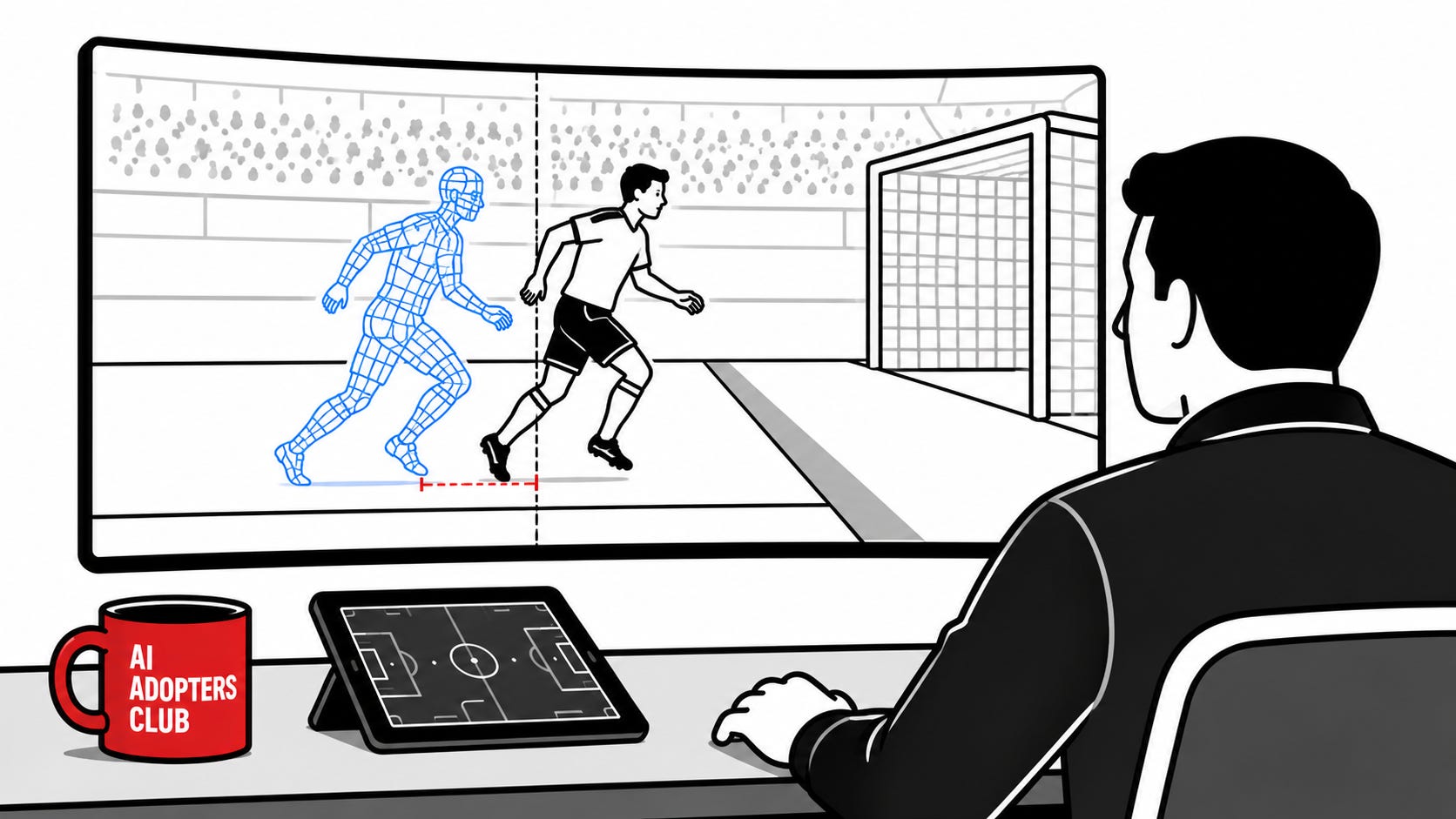
That last part is not incidental. The 3D avatar system was not built because the old calls were wrong. It was built because they looked wrong to fans. That distinction separates a correct decision from an accepted one, and at a tournament watched by billions, acceptance is a product requirement as demanding as accuracy.
Football AI Pro and the Data Moat
The piece of FIFA’s AI stack that fans do not see on the pitch may be the most strategically significant. Football AI Pro is a generative AI knowledge assistant built on what FIFA describes as its Football Language model, trained on hundreds of millions of FIFA-owned football data points accumulated across decades of organized play. It generates outputs in text, video, graphs, and 3D visualizations. It supports queries in multiple languages. It analyzes over 2,000 performance metrics per match.
Ken Wong, EVP at Lenovo, summarized the architecture: “FIFA is one of the world’s most data-rich sports organisations in the world, capturing thousands of matches, players and teams across the globe. Mining and making sense of all that data is a huge challenge. Football AI Pro addresses that need.”
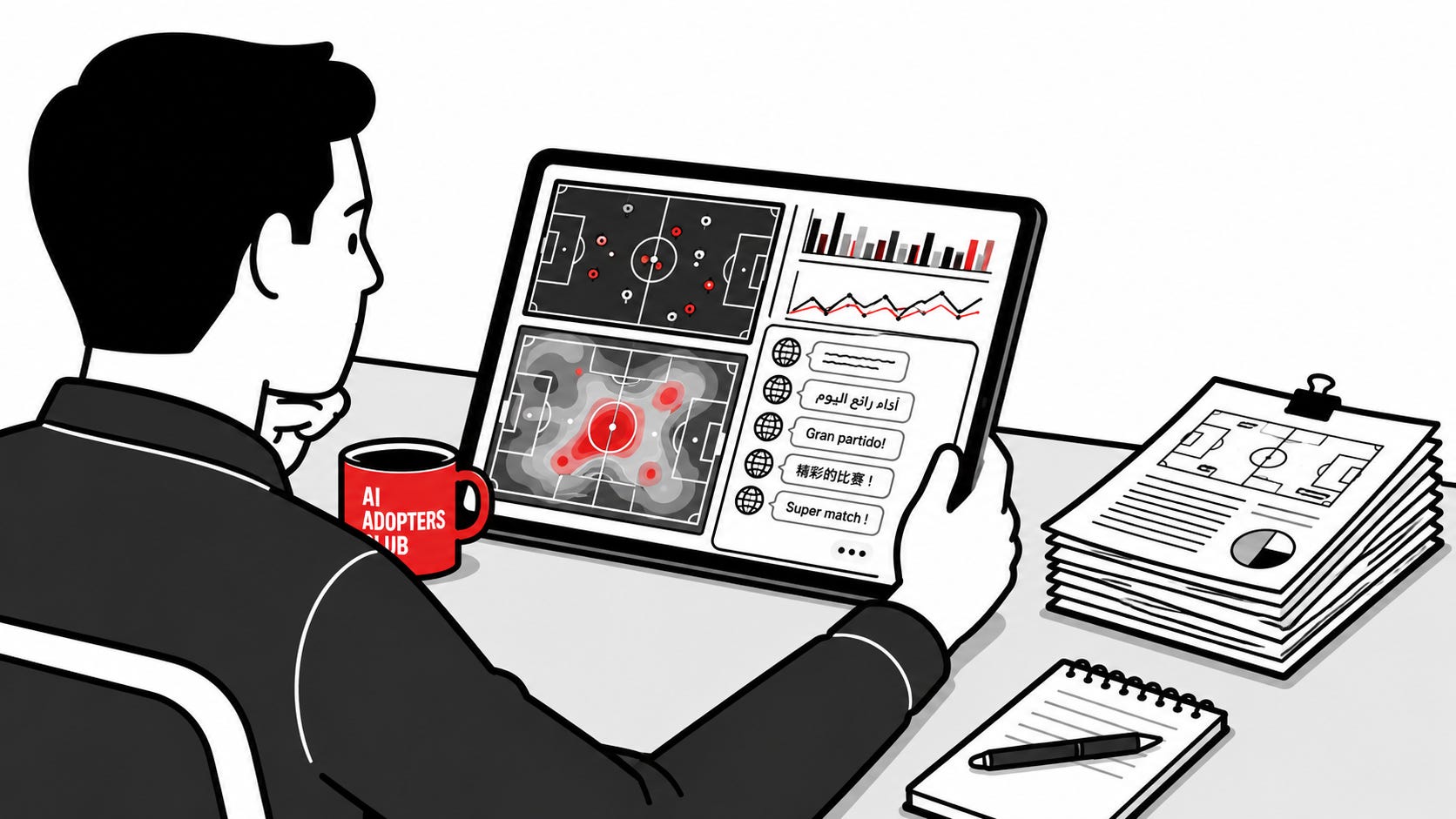
All 48 competing national teams receive identical access, free of charge. Before Football AI Pro, coaching staffs received post-match analysis as 50 to 60 printed pages of data per game, according to Holzmuller. The platform cannot be used during live play, preserving human agency at the moments when it matters most.
The architecture lesson is in what drives the platform’s value. FIFA’s Football Language model is not a general-purpose model that happened to receive some football data. It sits on a corpus that took decades to build, that no competitor can purchase, and that grows richer with every match, every tracking event, every historical record added. The model is the interface. The corpus is the asset. Those are not the same thing.
“We believe that this could help not only to speed up this process but also democratise it because, as you can imagine, probably not every participating team can afford a huge team of match analysts to the World Cup, or to work on that data.”
Johannes Holzmuller, FIFA Director of Innovation
Equal Access Doesn’t Mean Equal Outcomes
Giving all 48 teams identical access to the same platform is the interesting move, not the generosity. It means the tool gets stress-tested across 48 different analytical cultures, 48 different tactical philosophies, and dozens of languages simultaneously. The feedback loop is compressing years of normal product iteration into six weeks of maximum-intensity use. For FIFA, it is the best possible test environment at the lowest marginal cost.
But equal access does not close the performance gap. It moves where the gap lives. The scarcity that Football AI Pro eliminates is data access. The scarcity it creates is interpretive speed: how quickly can a coaching staff translate AI outputs into a tactical decision during a 90-minute match? Nations that arrived at the tournament with experienced analysts who know how to interrogate the system, validate its outputs, and act on the results are not operating the same tool as nations that arrived with the same login and less preparation.
Holzmuller acknowledged this directly. The explicit goal was democratization of access, not standardization of outcomes. Those are different promises, and most enterprise AI deployments need to hold them apart too.
Below, the operational detail worth your attention:
How FIFA’s command center coordinates 16 stadiums across three jurisdictions without a single point of failure
The moderation architecture that removed 530,000 posts in one week and why it is a business problem, not an ethics stance
The commercial logic that ties every layer of the AI stack to an $11 billion revenue number
The six operator moves distilled from the complete stack, including two behaviors FIFA gets right that most enterprises consistently skip