



Hi Adopter,
Executives don’t understand what their people actually do all day. Your employees wrote those. And honestly, on the thing that matters most this year, they’ve got a point.
Your team is already using AI. You’re just not the one they tell.
I walk into companies for a living, and the numbers back the comment section. Ask executives if their people are excited about AI and 76% say yes. Ask the people themselves, it’s 31%. Ask leaders how many of their staff use AI for a real chunk of the working day and they guess around 4%. The staff say 13%, three times higher. And most of what they’re using isn’t yours. At more than 90% of companies, people already run their own AI for work, while fewer than half of those companies pay for an official one.
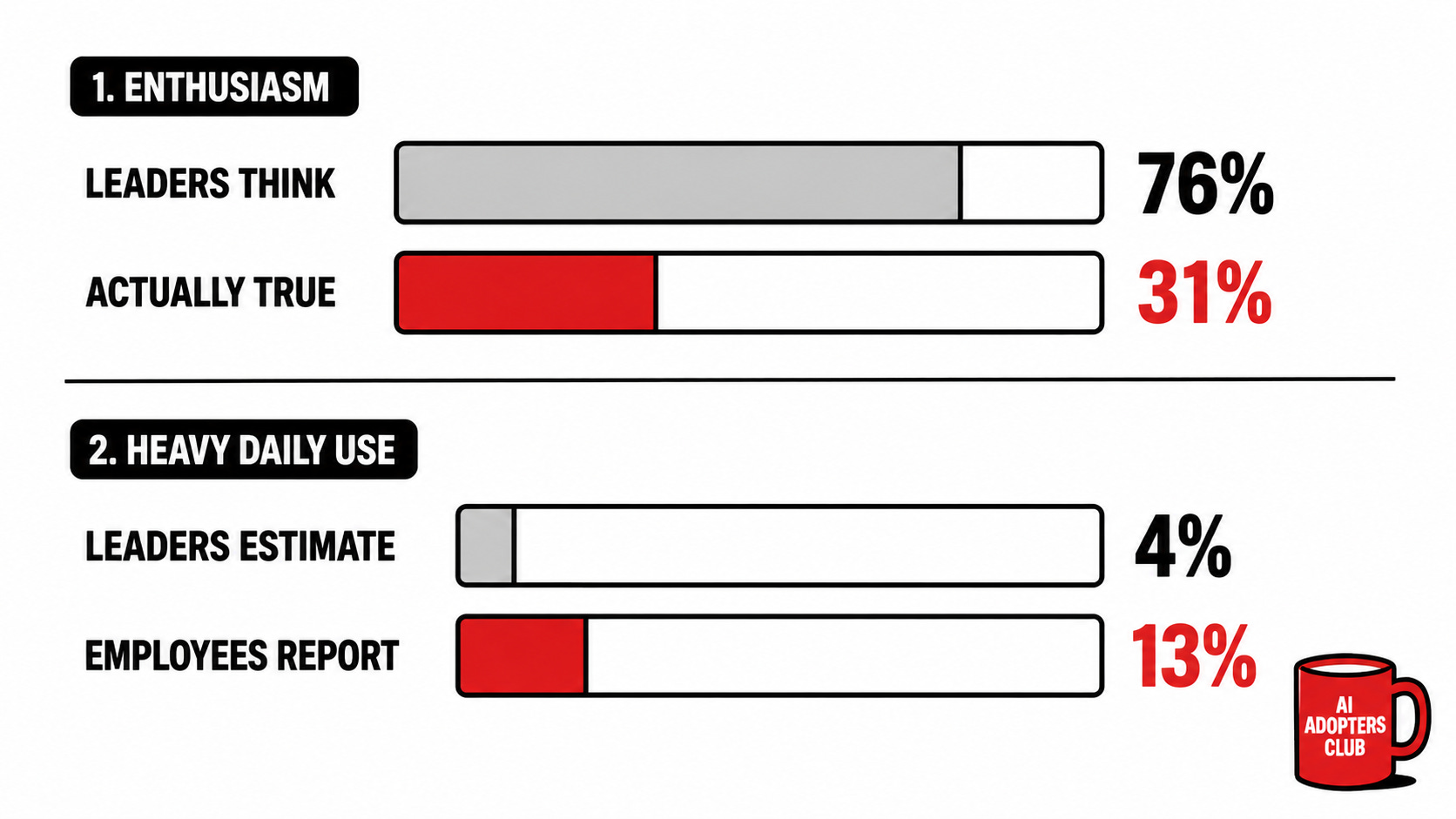
So the adoption problem you think you have might be the wrong problem. You’re measuring excitement in the boardroom while the real work happens two levels down, on tools nobody signed off on. The usage you’ve been trying to manufacture with rollouts and town halls is already here. It’s just off the books, on personal logins, quietly out of your sight.
Which is a governance headache, no argument. It’s also the best news you’ll get this quarter. That’s demand you didn’t have to beg for. You just can’t see it yet, so you keep buying seats nobody opens and running pilots that die in a slide deck.
The move is finding what your team already reached for and making it safe to use in the open. That starts with an amnesty, and meaning it. One message: whatever you’ve been using on your own to get work done, tell me, nobody’s in trouble, I want to make the good stuff official. The credibility of that first sentence is the whole game. Break it once and you’re blind again for a year.
Don’t ask “do you use AI.” Ask “what have you tried on your own that actually saved you time?” People love talking about the hack that works. They hate confessing to a policy breach. Same tool, different door.
Then triage what comes back on two questions: how much real work is it doing, and what data is it touching. A summariser running on public meeting notes is a green light. The same tool pointed at customer records is a different conversation. Bless the high-value, low-risk ones and buy the seats. Move the sensitive data off the useful-but-risky ones before you keep them. Kill the pure exposure, and name the safer swap in the same breath so it doesn’t land as a no.
The people who found the value on their own are your champions, and they cost you nothing. Right now you’re leaving them to solve it in the dark.
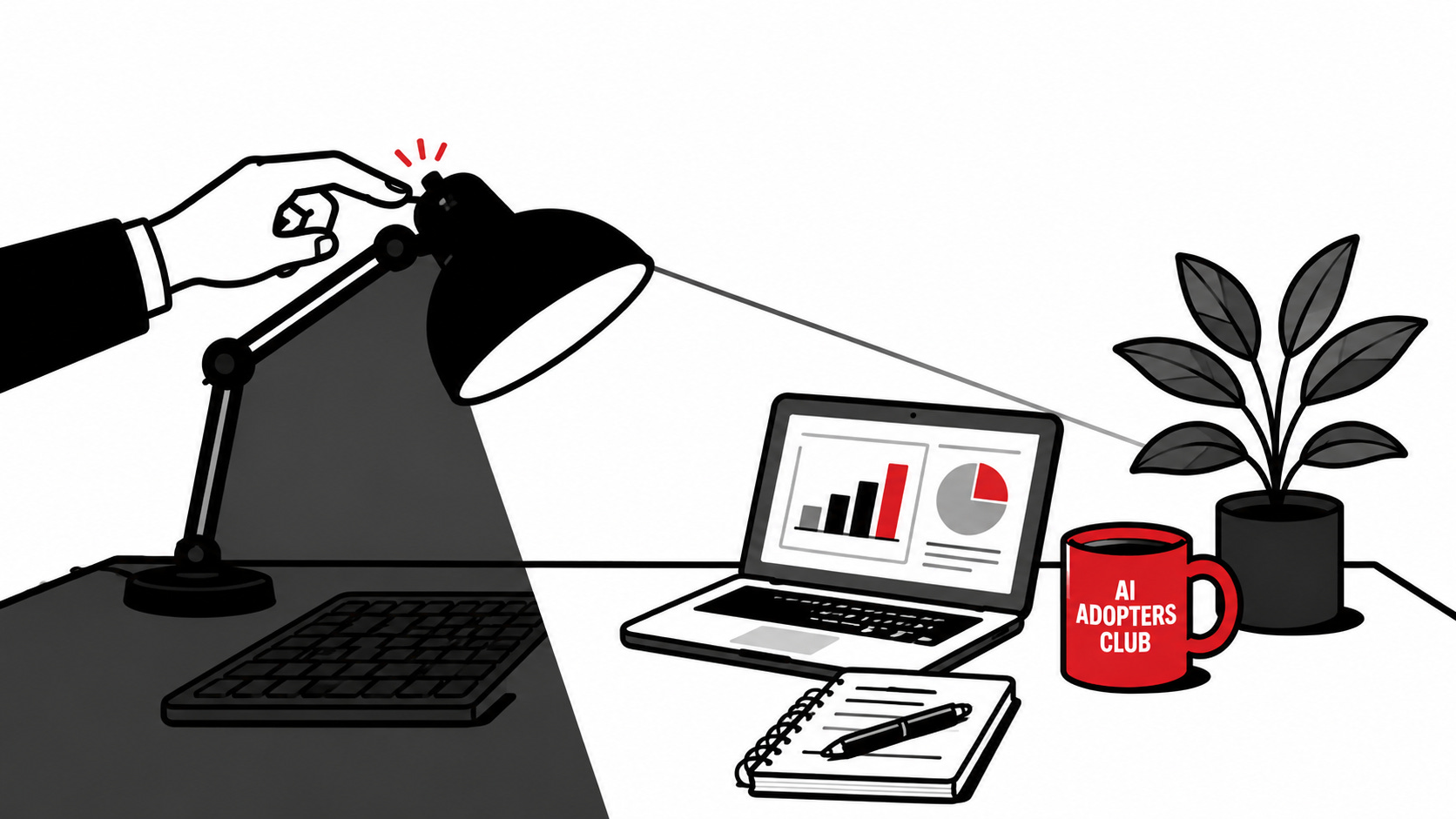
Your best AI adopters are already on the payroll. They found the value your rollout promised and never delivered, and they did it on their own logins because that was easier than asking. Find them before that quiet advantage walks out the door with them. What would next quarter look like if the people already doing this could stop hiding it?
If you want a hand running the amnesty on your real workflows, just reply to this one. No form, no funnel.
Adapt and Create, Kamil
Sources
McKinsey & Company, “Superagency in the Workplace: Empowering People to Unlock AI’s Full Potential,”
MIT NANDA, “The GenAI Divide: State of AI in Business 2025,”
This is why I have always believed leaders should never become disconnected from the work. I’ve spent more than three decades bringing products to market, and every major failure I’ve witnessed started with someone assuming everything was fine because the report said it was. AI doesn’t eliminate the need for leadership. It raises the standard for it. If an executive can’t explain how AI is making decisions that affect customers, employees, or the business, then they aren’t leading the technology. They’re trusting it blindly. The companies that win won’t be the ones with the most AI. They’ll be the ones whose leaders remain curious enough to understand what their AI is actually doing.
This tracks with what I've seen in fintech specifically, the tools people build on their own are usually fine right up until they touch anything regulated. The triage question isn't just "how much work is it doing," it's "would this tool being your team's choice survive an audit." That's usually the actual blocker to making shadow AI official.