


Hey Adopter,
Surgeons learned a brutal lesson about automation and training a decade ago. Your industry is about to learn it too.
The collapse no one predicted
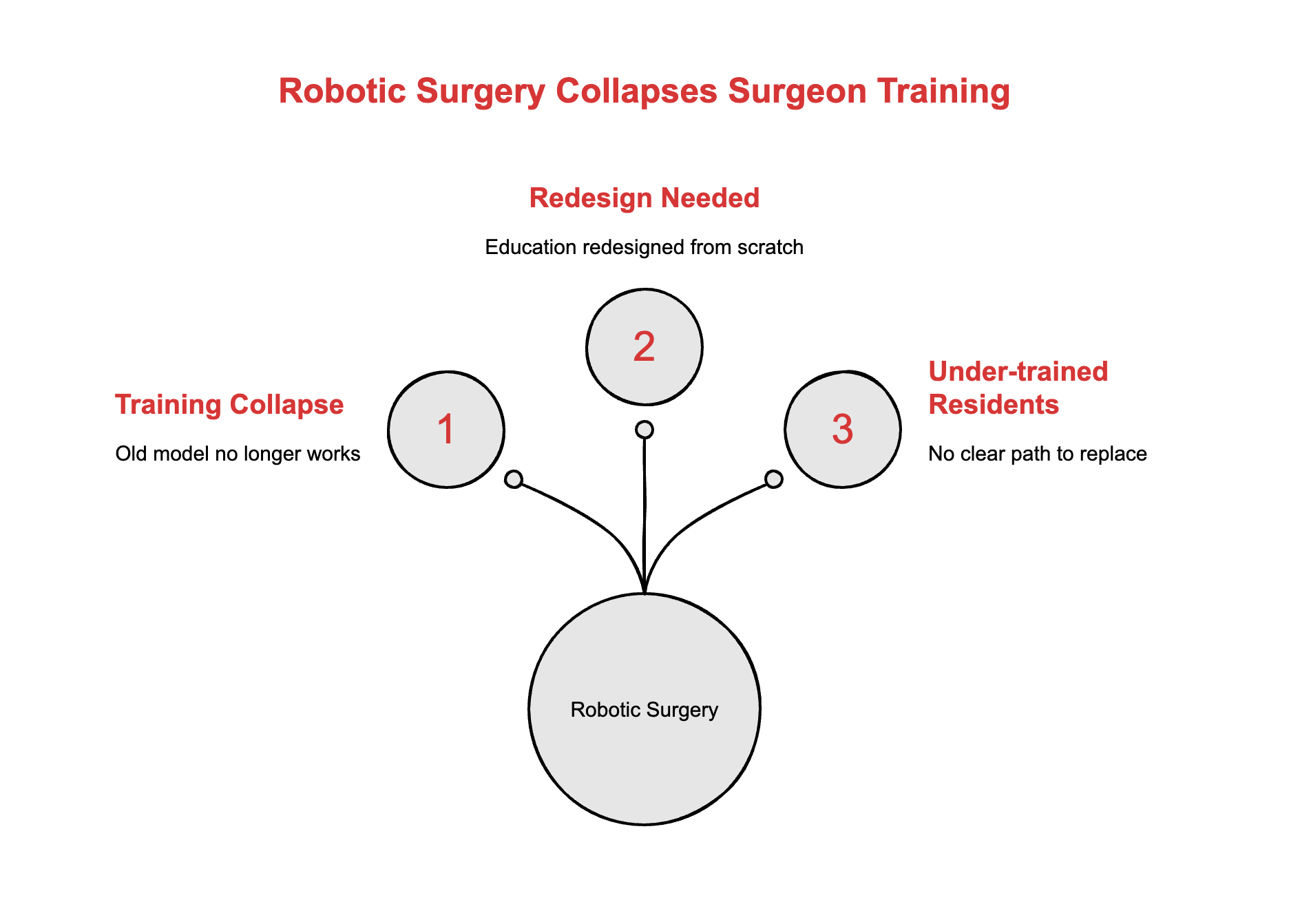
When robotic surgery systems became standard in operating rooms around 2011, something unexpected happened. Training fell apart.
The old model worked for generations. Junior surgeons assisted senior surgeons. They watched. They held instruments. They learned by proximity. Thousands of small, low-stakes moments added up to competence over years.
Robotic systems changed the equation. Procedures concentrated into fewer key operators. The expert worked the console. The junior watched a screen. The hands-on practice that built muscle memory and judgment? Gone.
Within a few years, surgical education had to be redesigned from scratch. Simulation labs. Stepwise curricula. Staged training modules. The organic “learning by assisting” model no longer produced competent surgeons. Hospitals that ignored this ended up with a generation of under-trained residents and no clear path to replace retiring experts.
The robots did not cause a training crisis. The failure to redesign training did.
Now read that paragraph again, but replace “surgeon” with “analyst.” Replace “operating room” with “your department.”
The debt accumulating on your balance sheet
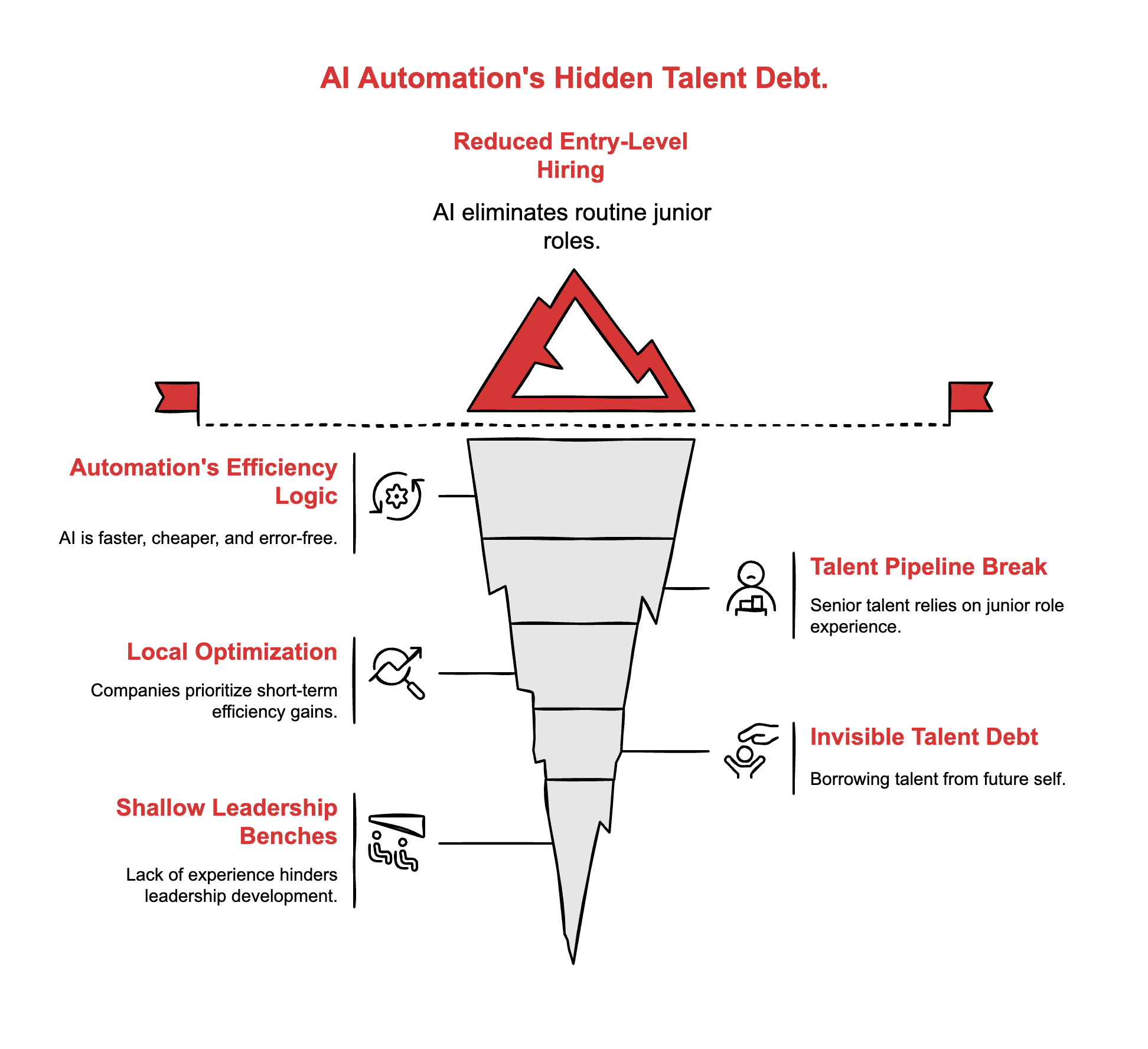
Two-thirds of enterprises are now reducing entry-level hiring because AI handles the routine work those roles used to do. More than 90% say automation has changed or eliminated positions entirely.
The efficiency logic is clean. Junior employees cost money. They need supervision. They make mistakes. They’re slow. AI is none of those things.
But this logic has a hole. Your senior people did not arrive senior. They climbed through roles that no longer exist. They made mistakes on projects that now get automated. They learned judgment by doing work that AI now handles faster.
Wharton researchers call this a potential talent pipeline break. Every company optimises locally. Cut junior headcount. Boost efficiency metrics. Hit quarterly numbers. Each firm assumes senior talent will remain abundant. No firm is building it.
The result is a debt that compounds invisibly. You’re not saving money. You’re borrowing talent from your future self at a rate you haven’t calculated.
And the bill comes due faster than you think. The stretch assignments, messy stakeholder work, and low-stakes failures that build judgment take years to accumulate. Strip them away today, and you get shallow leadership benches in five years, not ten. That’s one promotion cycle. Maybe two.
The surgeons thought they had time too.
What the hospitals figured out
The surgical programs that recovered did not bring back the old model. They couldn’t. The technology had changed too much.
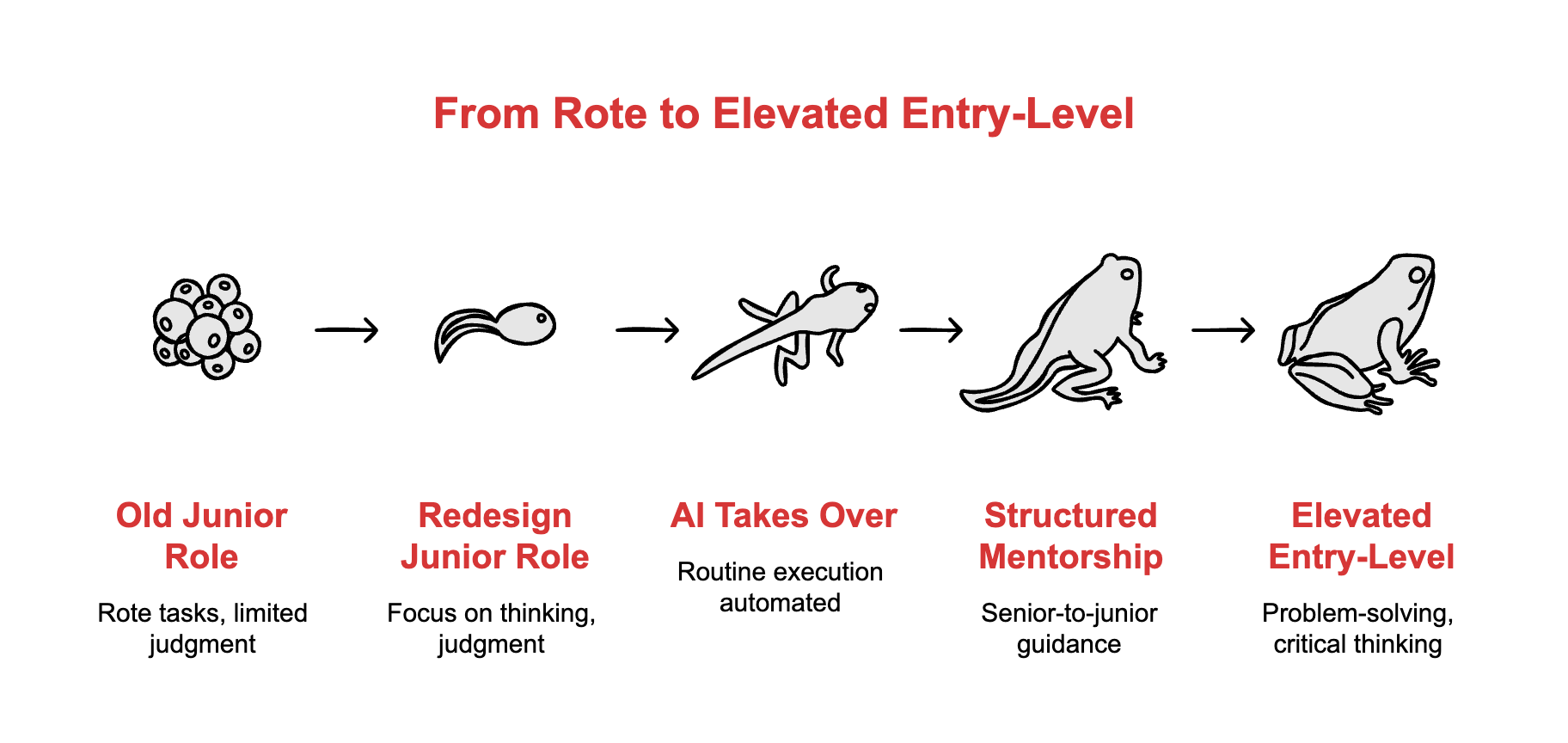
Instead, they redesigned what “junior” meant. Less holding retractors. More interpreting scans, making judgment calls in simulation, handling exceptions under supervision. The rote work went to the machines. The humans, from day one, practised thinking.
The business equivalent is what one researcher calls the “elevated entry-level” role. AI does the routine execution. Juniors don’t process paperwork. They frame problems. They evaluate AI outputs for errors. They handle the edge cases that require judgment. They build the meta-skills, learning agility, critical thinking, adaptability, that survive when the tools change again next year.
This requires structured mentorship. Senior-to-mid, mid-to-junior layers where teaching is part of the job. It requires simulation and sandboxed projects where mistakes are cheap. It requires intention.
The hospitals that invested in this rebuilt their talent pipelines within a few years. The ones that didn’t are still struggling to staff operating rooms.
The one question that reveals your exposure
You do not need a task force or a consulting engagement to know if you have this problem.
Pick one junior role on your team. List the tasks that person does in a typical week. Now circle the tasks that build judgment: decisions under uncertainty, stakeholder navigation, interpreting ambiguous information, recovering from mistakes.
If you struggle to circle anything, you have a role that trains nobody. You have a position that could vanish tomorrow without damaging your output, but that is also contributing nothing to your future bench.
Multiply that by every junior role in your organisation. That is your talent debt.
The companies that will dominate 2030 are not the ones automating fastest today. They’re the ones redesigning their ladders while everyone else celebrates efficiency gains.
You now know what the surgeons learned the hard way. The question is whether you act before your bill comes due.
Adapt & Create,
Kamil
I was just talking about this. How do you preserve the human in the loop judgement for those entering the workforce now or for kids in elementary who will become AI natives. This seems like an interesting approach to Keep training humans on what good looks like
Automating the junior layers without rebuilding the ladder is how you hollow out a company.