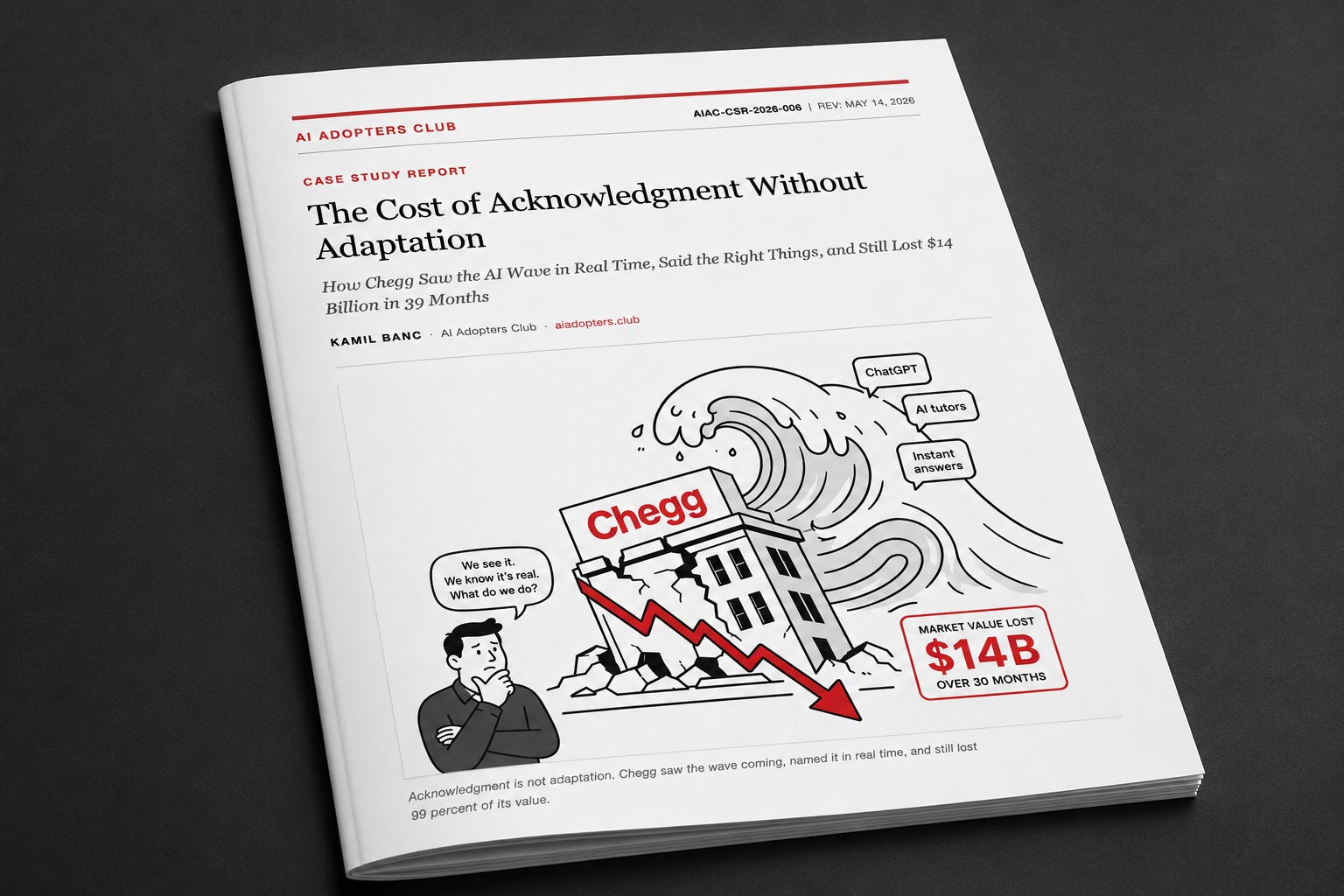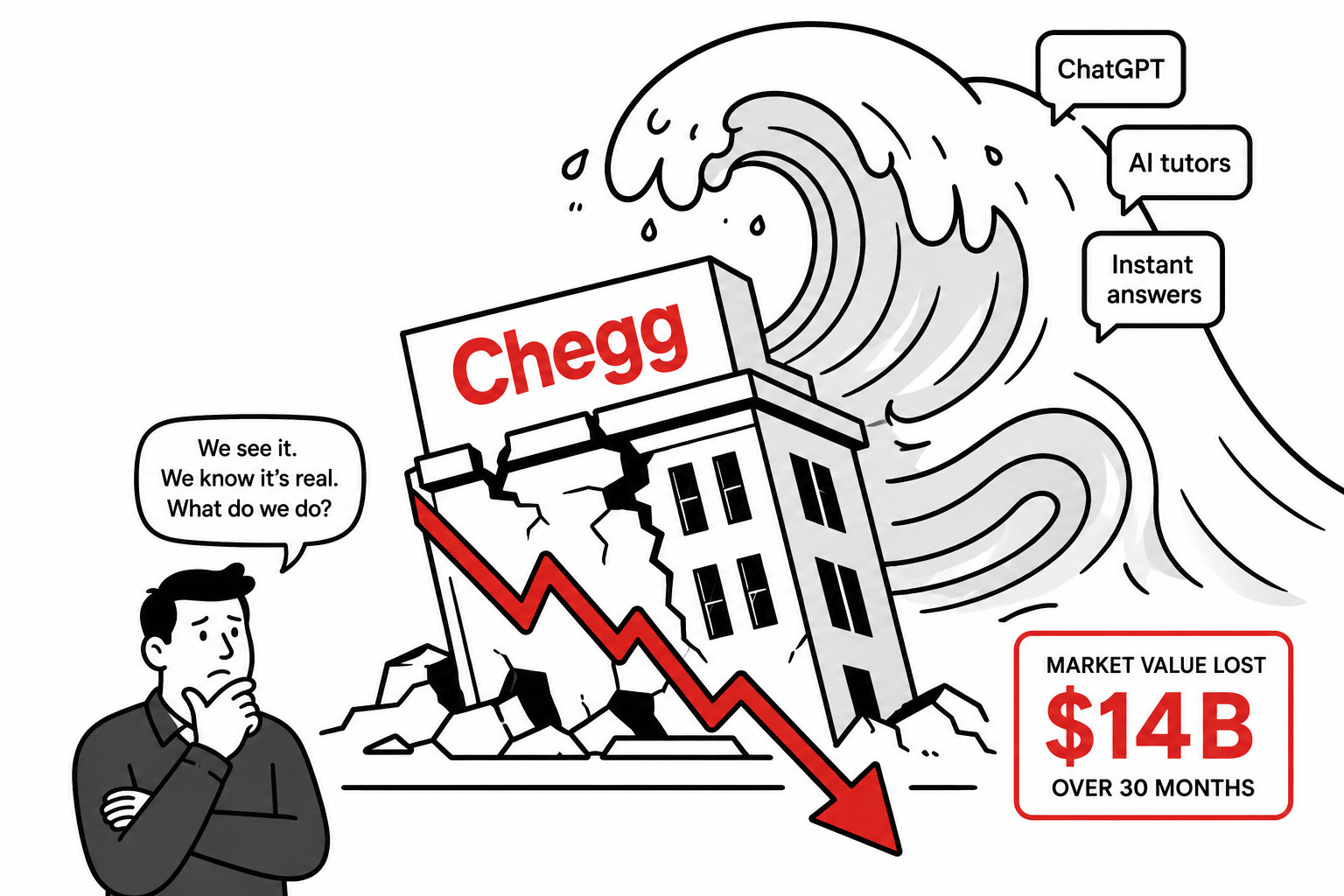
Chegg lost $14 billion in market value over 30 months. The CEO publicly told the truth about why the entire time.
He acknowledged the ChatGPT threat on a live earnings call. He went on stage at Fortune and called himself “the poster child for getting your ass kicked in the public markets by A.I.” He launched an AI product within two weeks of the bad news. He said all the right things in public, from May 2023 through October 2025.
They still lost 99 percent of the company’s peak value.
This is a case study about the difference between acknowledging AI disruption and actually adapting to it. The two are not the same thing, and Chegg is now the public face of the gap between them.
Here is what is in this piece:
Why telling the truth about AI did not save Chegg. The mechanics of acknowledgment without adaptation.
The wrapper trap. What CheggMate was, why it failed at launch, and why most companies running internal AI strategy reviews are about to build the same thing.
What Khan Academy, Duolingo, and Quizlet did differently in the exact same 30-month window. Each one had a sharp answer to one question Chegg never answered.
Three rules for any leader sponsoring AI strategy in 2026. Doable on a board agenda this quarter. None require special technology.
If your company is at the “we see this, we know it’s real, what do we do” stage, this one is for you. The full case study PDF (sources, timeline, references, full diagnosis) is the premium download for this edition.