Hi Adopter,
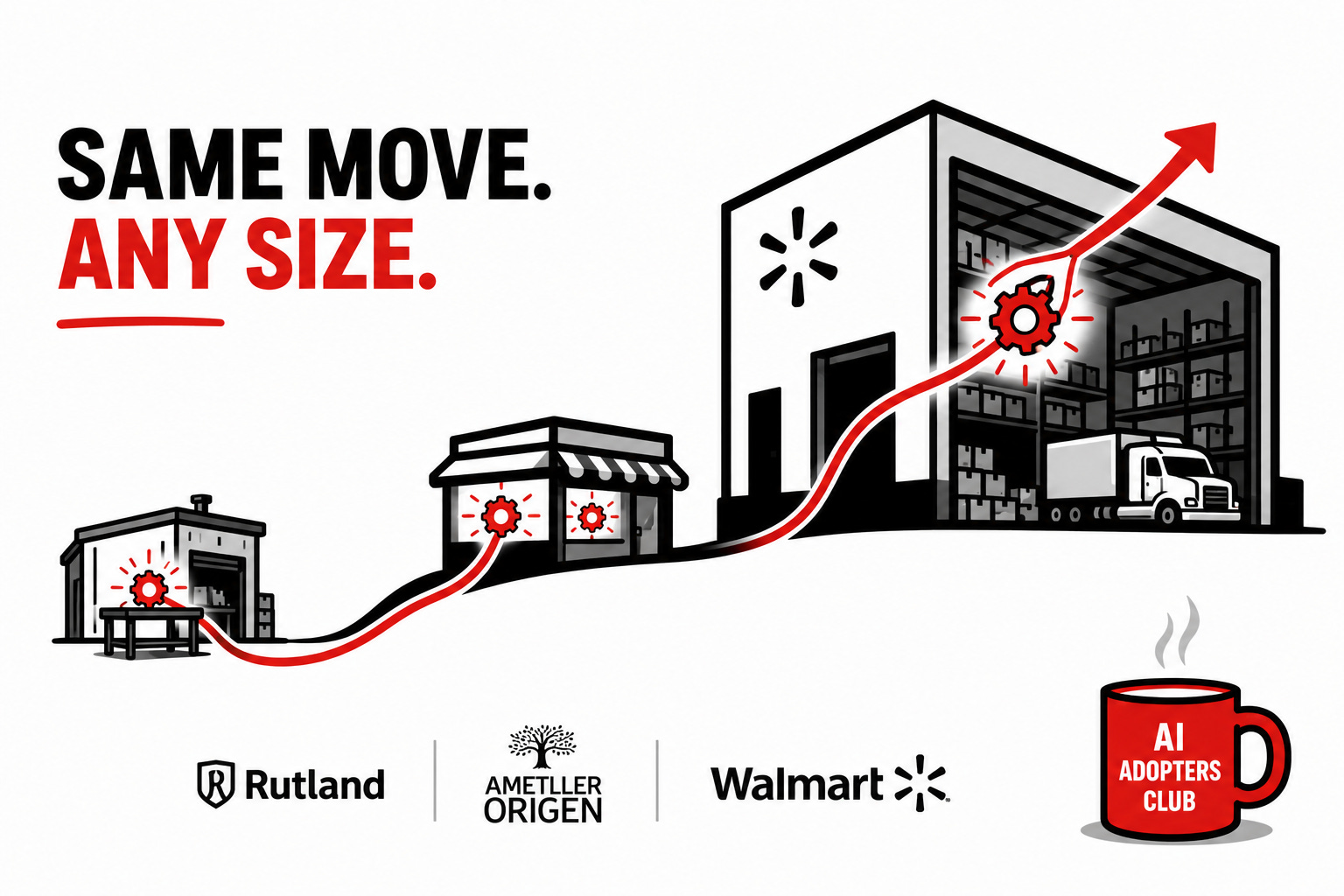
You’ve probably got a part of your business that still runs on a spreadsheet somebody rebuilds by hand every week. Most companies I walk into do. For Rutland, a 31-person workshop in Chesterfield that makes fire-door closers, it was their stock. Export the numbers out of Sage, drop them in Excel, guess what to reorder.
Then lead times hit four months. Steel got scarce, containers got dear, and the spreadsheet that had always sort of worked just stopped. So they handed the reordering to an AI tool that bolts onto the system they already had. Within a year they’d pulled about a million pounds back off their shelves, pushed their fill rate from 92 to 97 percent, and turned a full day of purchasing admin into an hour.
Now put that next to Walmart, with its $330 million robot warehouse and a digital twin of its whole network. Different budget. Same play.
Everyone’s buying it. Almost nobody’s running it.
Here’s what gets me. 57 percent of operations leaders say they’ve integrated AI. Only 23 percent have a real strategy behind it, and in retail and wholesale, only 10 percent have it actually live in the daily workflow.
So the winners aren’t the ones who spent the most or bought the fanciest platform. They’re the ones who took one painful process and got it running. That’s it. The forecasting Walmart spent years building in-house, a 31-person shop now rents by the month.
The benefit isn’t robots. It’s cash. Inventory is money you’ve stacked on a shelf as cardboard, and McKinsey puts the fix at 20 to 30 percent less of it, plus 5 to 20 percent off logistics.
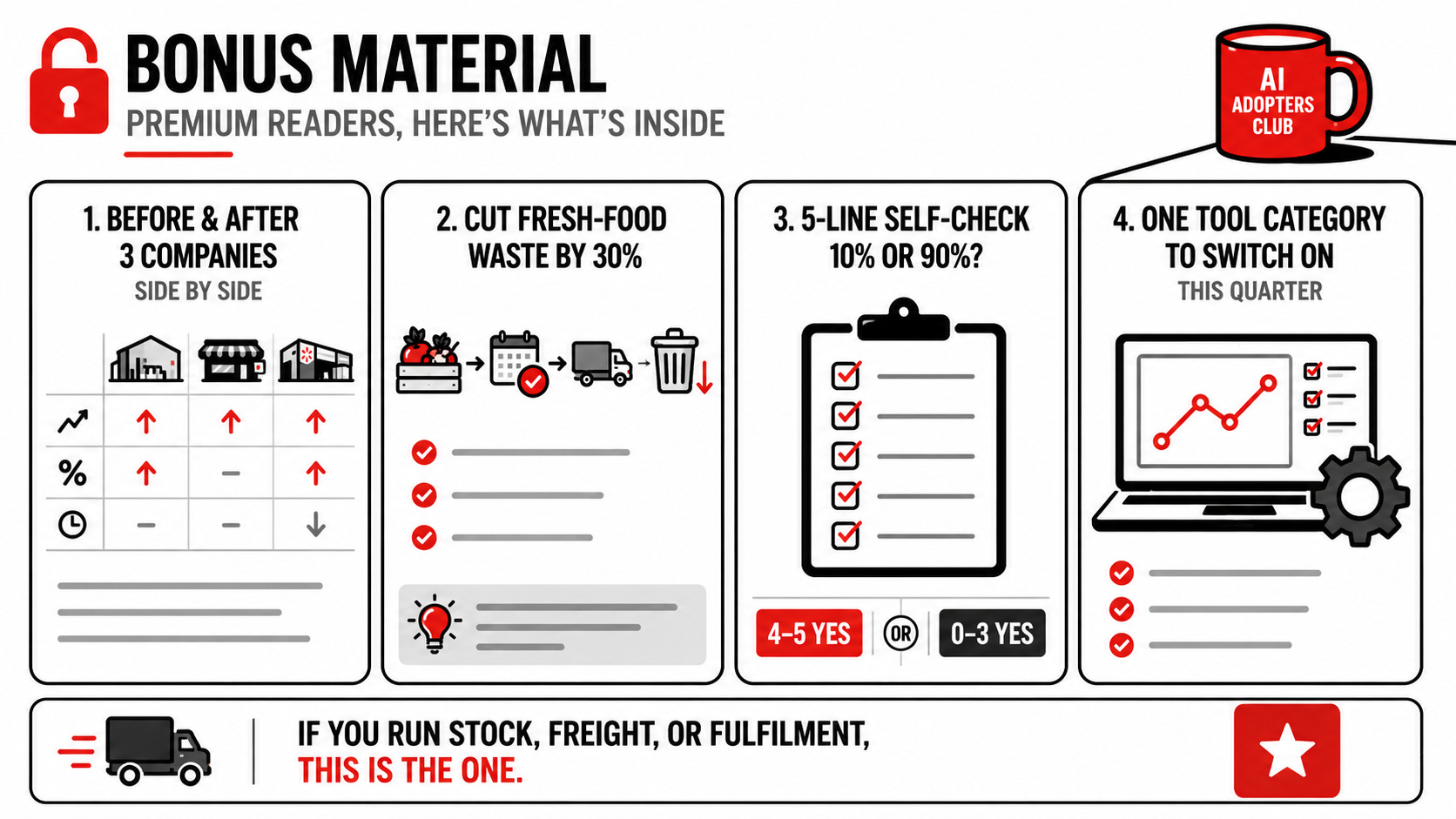
Below, for premium readers, the full teardown:
The before-and-after numbers for all three, side by side
What a grocery chain did to cut fresh-food waste by 30 percent, and why perishables are the smartest place to start
A five-line self-check to tell if you’re in the operating 10 percent or the stuck 90
The one tool category a small team can switch on this quarter, no data team
If you run stock, freight, or fulfillment, this is the one.