

Hi Adopter,
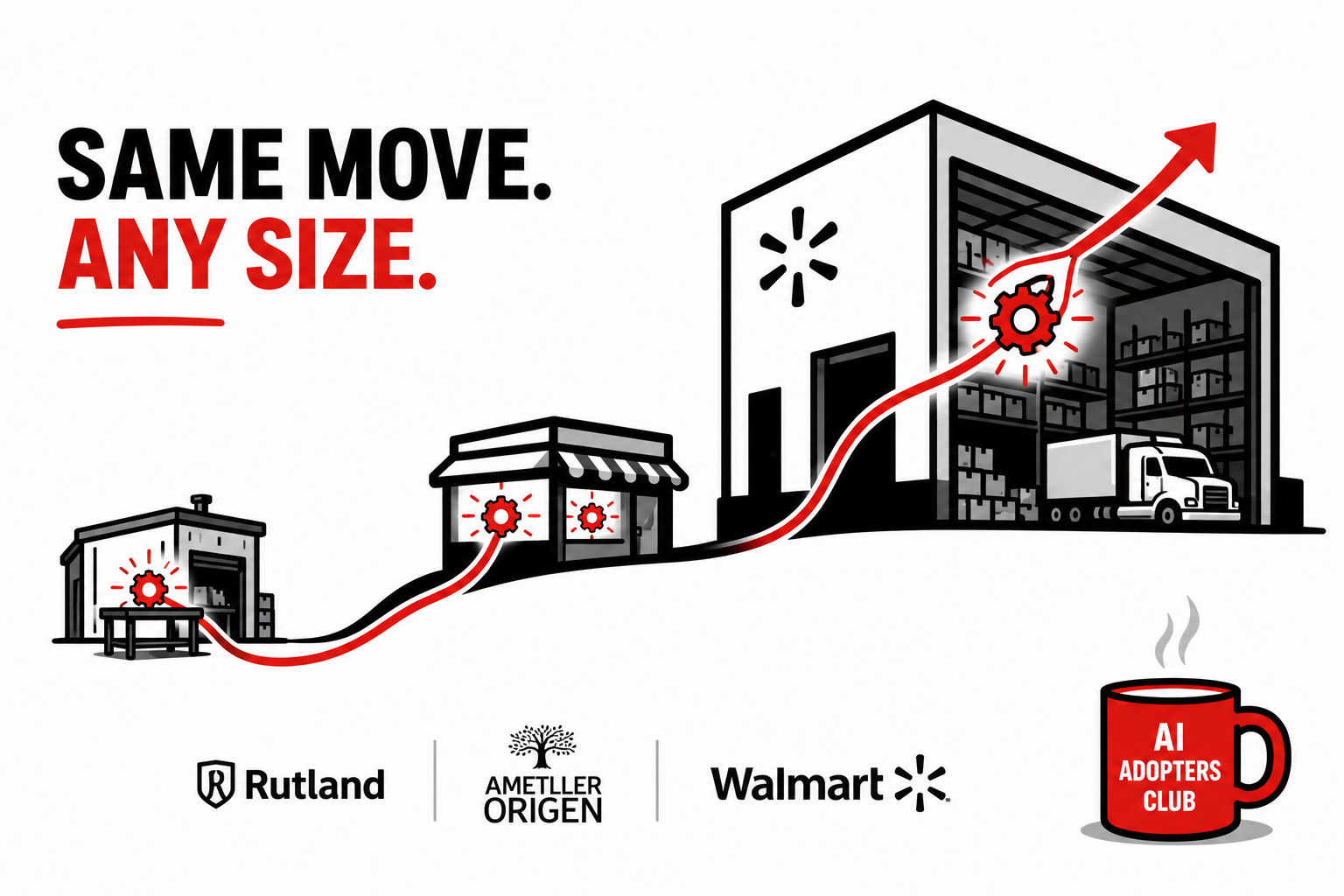
You’ve probably got a part of your business that still runs on a spreadsheet somebody rebuilds by hand every week. Most companies I walk into do. For Rutland, a 31-person workshop in Chesterfield that makes fire-door closers, it was their stock. Export the numbers out of Sage, drop them in Excel, guess what to reorder.
Then lead times hit four months. Steel got scarce, containers got dear, and the spreadsheet that had always sort of worked just stopped. So they handed the reordering to an AI tool that bolts onto the system they already had. Within a year they’d pulled about a million pounds back off their shelves, pushed their fill rate from 92 to 97 percent, and turned a full day of purchasing admin into an hour.
Now put that next to Walmart, with its $330 million robot warehouse and a digital twin of its whole network. Different budget. Same play.
Everyone’s buying it. Almost nobody’s running it.
Here’s what gets me. 57 percent of operations leaders say they’ve integrated AI. Only 23 percent have a real strategy behind it, and in retail and wholesale, only 10 percent have it actually live in the daily workflow.
So the winners aren’t the ones who spent the most or bought the fanciest platform. They’re the ones who took one painful process and got it running. That’s it. The forecasting Walmart spent years building in-house, a 31-person shop now rents by the month.
The benefit isn’t robots. It’s cash. Inventory is money you’ve stacked on a shelf as cardboard, and McKinsey puts the fix at 20 to 30 percent less of it, plus 5 to 20 percent off logistics.
Below, for premium readers, the full teardown:
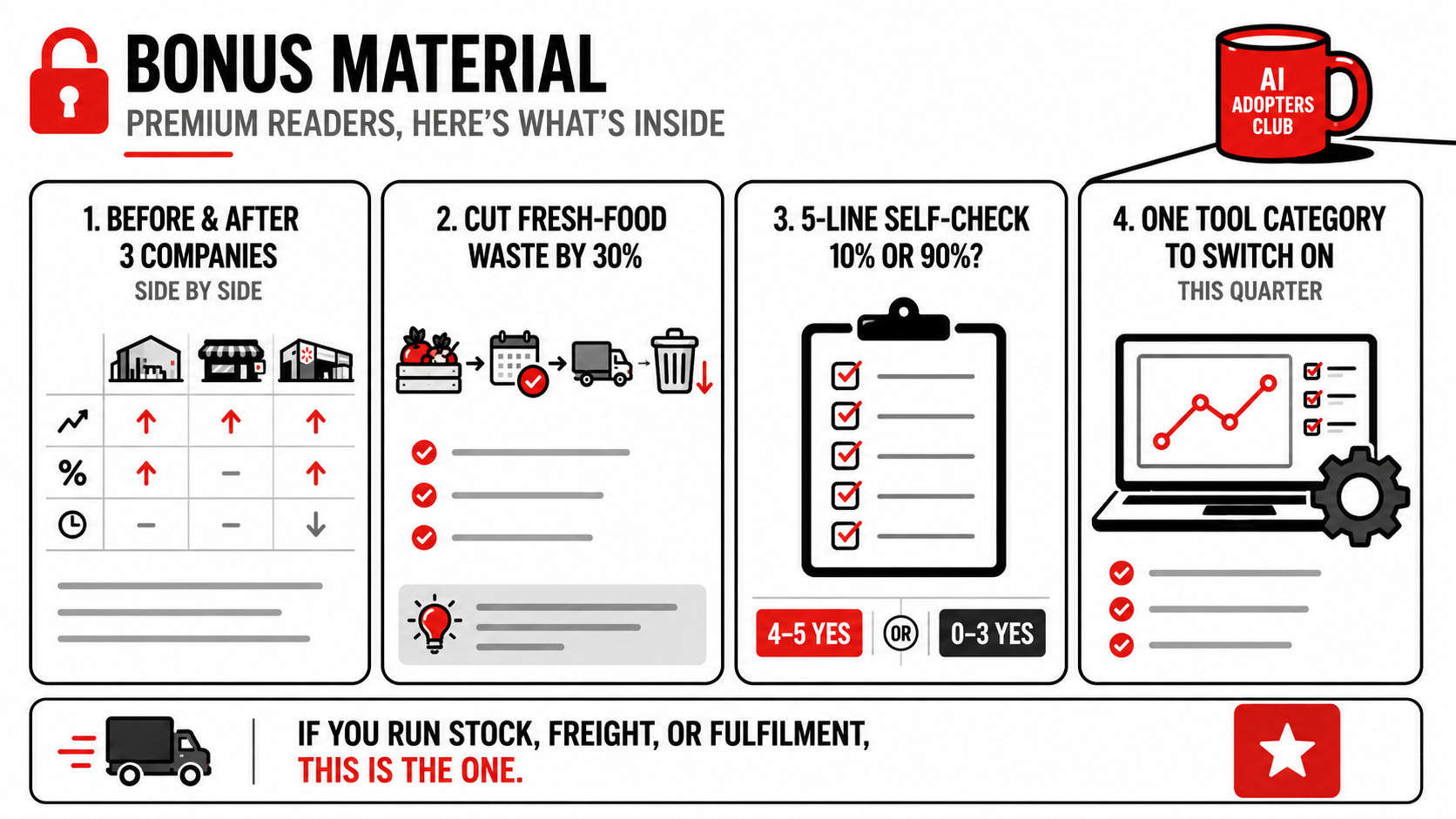
The before-and-after numbers for all three, side by side
What a grocery chain did to cut fresh-food waste by 30 percent, and why perishables are the smartest place to start
A five-line self-check to tell if you’re in the operating 10 percent or the stuck 90
The one tool category a small team can switch on this quarter, no data team
If you run stock, freight, or fulfillment, this is the one.

What each one actually turned on
Three companies, three sizes, same move. Here’s what they switched on and what it moved.
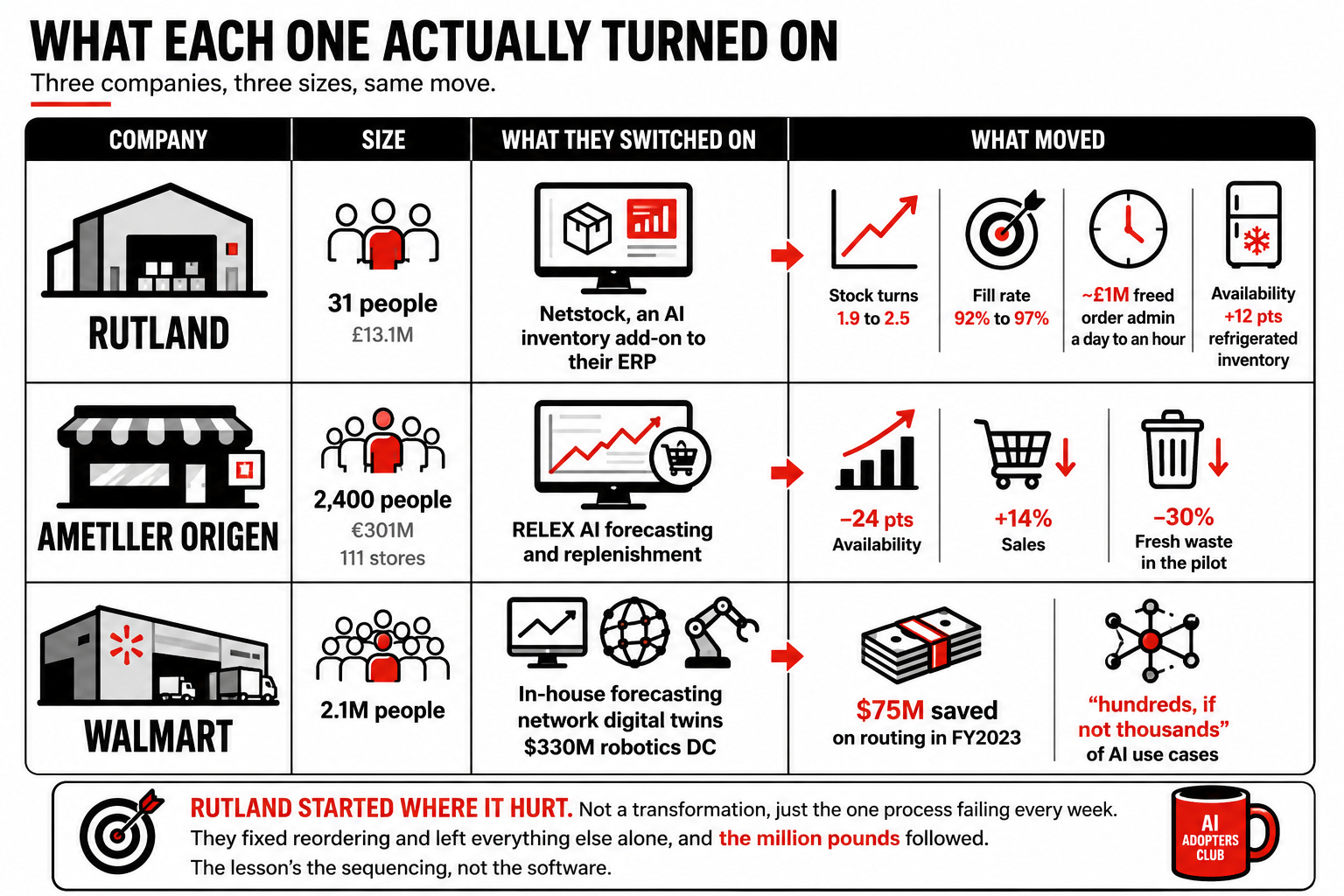
Rutland started where it hurt. Not a transformation, just the one process failing every week. They fixed reordering and left everything else alone, and the million pounds followed. The lesson’s the sequencing, not the software.
Ametller went at its hardest category on purpose. Fresh food is where forecasts are worst and waste is highest, so it’s where good forecasting pays most. Its RELEX rollout lifted availability while cutting stock, and dropped fresh spoilage 30 percent in the pilot. Don’t test AI on your easy products. Point it at the messy, perishable ones where the old way’s already failing.
Walmart’s lesson is the least about Walmart. Ignore the digital twins and the $330 million robots. The part you can copy is smaller. It built its forecasting to show the why, weather, local events, search trends, so planners trust it instead of overriding it. And the routing system that saved $75 million in fiscal 2023, Walmart now rents out as software. The moat became a subscription.
Where you actually stand
Five questions. Every no is a place your AI’s sitting on a shelf, not working.
Can you name one process AI runs end to end today, with nobody re-checking it by hand?
Has it moved a real number, cash, fill rate, or waste, in the last quarter?
Does it run on data you already had, or is it still waiting on a data project that never ships?
When it makes a call, can your team see why, or do they override it and go back to Excel?
If the person who set it up left tomorrow, would it keep running?
Mostly yes, you’re in the 10 percent. Mostly no, and you bought a licence, not a capability.
Where this is heading
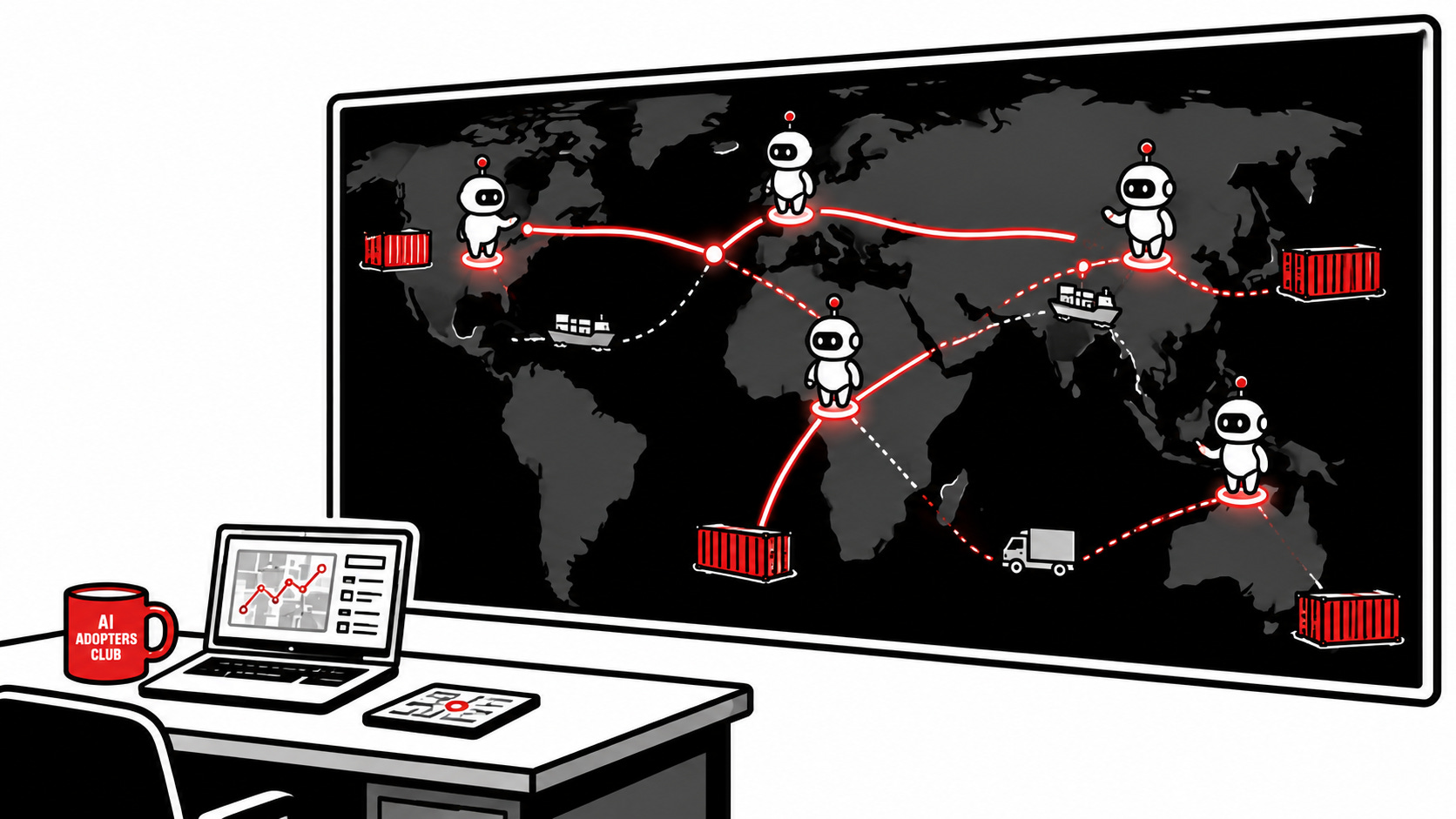
The three above are doing forecasting and replenishment, the boring, profitable core. The frontier is agents that act, not just advise. In October, C.H. Robinson launched 30-plus AI agents that book, track and reschedule freight and, in its own words, “self-optimise” the network, cutting planning from hours to seconds. It claims up to 25 percent lower costs, its own number. The companies who handle that well will be the ones who got forecasting working first.
Your move
Name the one process in your operation that’s visibly leaking. The reorder that’s always late, or the bestseller that’s always out. Just one. Then go find out if there’s a tool that bolts onto what you already run. The case study attached to this edition has the numbers, the tools, and the self-check for all three. You don’t need a bigger budget than Rutland had. You need a smaller starting point than you think.
So which one would you fix first?
Adapt and Create, Kamil
Sources
Supply Chain Dive, Walmart automation and robotics, Opelousas distribution center
Gartner, just 23 percent of supply chain organizations have a formal AI strategy, June 2025
McKinsey, Harnessing the power of AI in distribution operations
INFORMS, Walmart awarded the 2023 Edelman Award for retail truck routing and load planning
Walmart Commerce Technologies launches AI-powered logistics product