Hi Adopter,
Every campaign comes with the same questions: who’s this for, what can we promise, and how should it sound?
This week, I’ll show you how to keep those answers in Codex and set up two specialists to help with the writing, with you approving the result. I’ve included seven prompts to walk you through the whole setup.
If you have questions, hit reply. I read every email, and I’ll do a follow-up if you’re interested.
Know someone who’s starting a small AI team? Share this setup.
Understand who does what
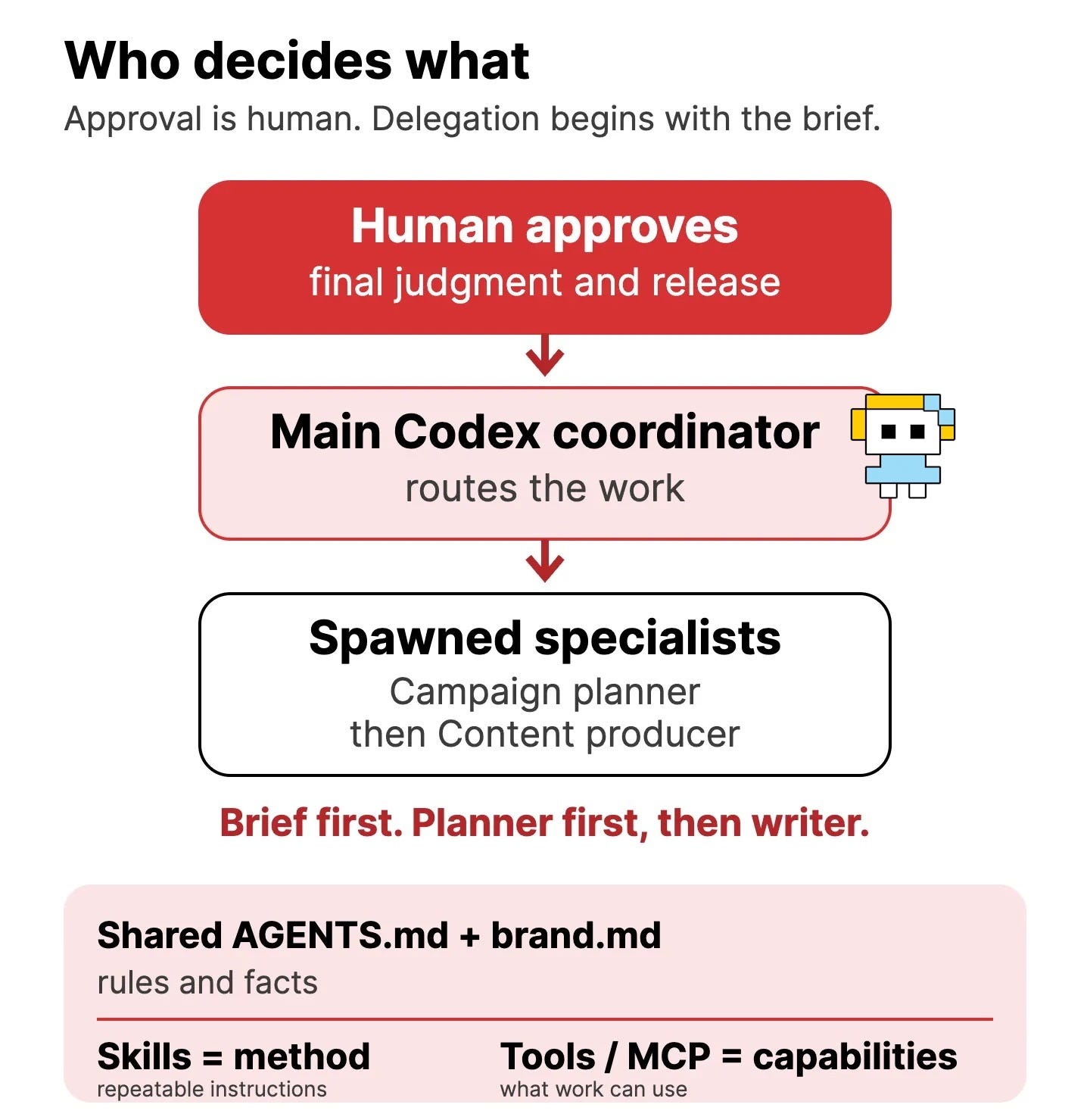
You give the main Codex agent the outcome.
It coordinates the job and can spawn subagents: separate work threads with their own context that report back.
A specialist profile defines a role. It only becomes a working helper when Codex spawns it. For our campaign, the planner develops the brief; the content producer writes from that brief. They don’t both need to start at once. I’d start with two. More agents mean more handoffs to check before you know whether the workflow helps. Codex subagents
Skills hold reusable instructions for a job, such as turning an approved brief into three posts and landing-page copy. Tools perform actions, such as reading files or searching the web. MCP connects Codex to additional tools and context. Plugins can bundle skills and MCP connections. Installing a skill doesn’t grant account access. Skills, MCP