


Hey Adopter,
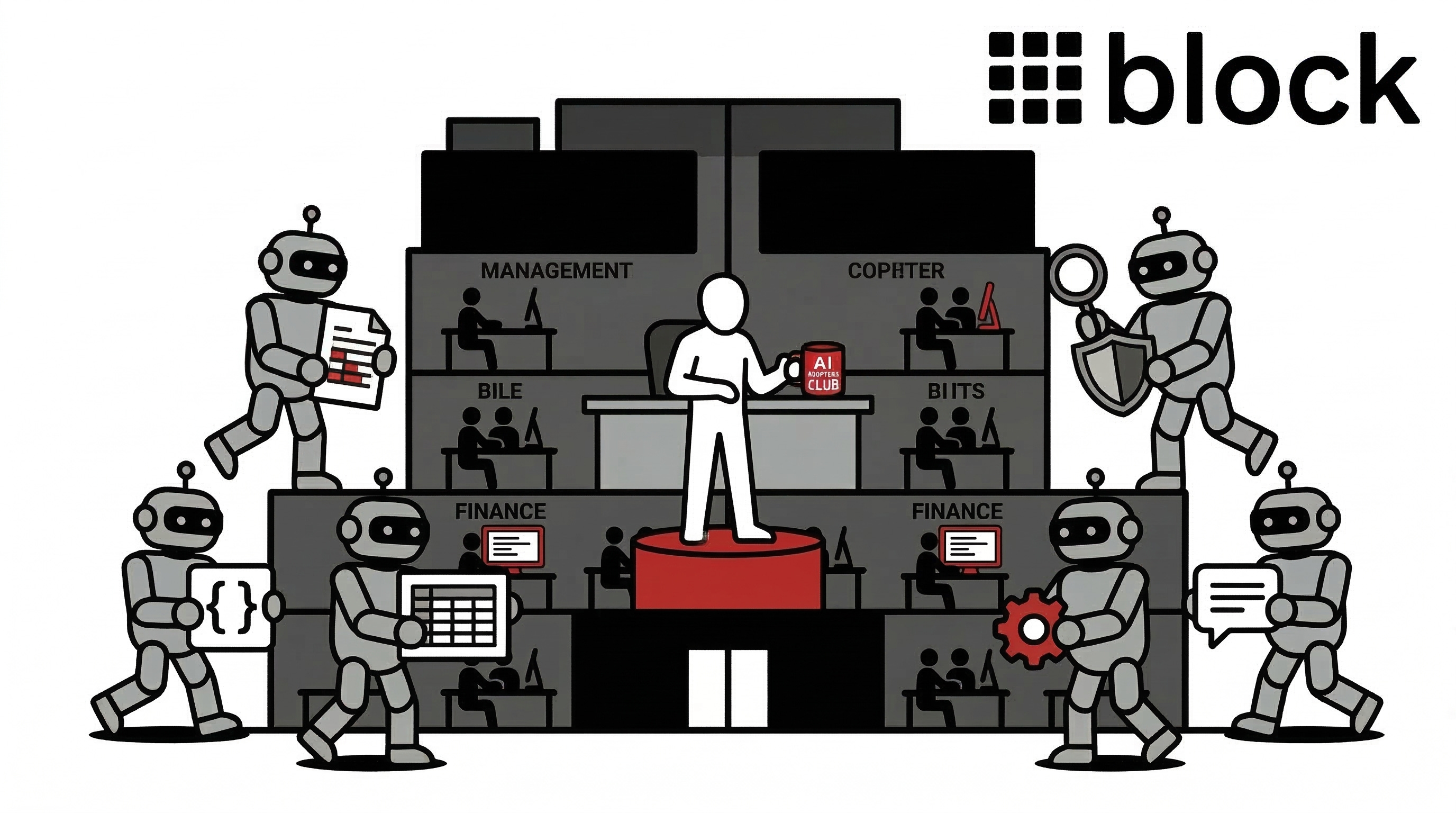
Block slashed its workforce from 10,205 to under 6,000 in February 2026. The stock jumped 24% the same day. Wall Street didn’t flinch. It cheered.

Jack Dorsey’s company didn’t frame this as belt-tightening or a post-pandemic correction. The official line: AI made those jobs unnecessary. Engineers using Block’s internal tools now ship 40% more production code than they did six months ago. Non-technical staff build their own workflow apps in hours, skipping IT entirely. The company committed $130 million to AI infrastructure for 2026, funded largely by the salaries it no longer pays.
Bold claims. But the numbers behind them tell a more complicated story, one that every operator should study before their own leadership starts asking similar questions.
Download the full case study and get the complete breakdown, including Block’s 90-day transition playbook adapted for SMB operators.
How Block’s CTO wrote an internal AI manifesto two years before the cuts, and what it demanded
The open-source agent saving engineers 8 to 10 hours per week
Why Block killed its entire Web3 division to fund AI instead
A phased execution plan you can adapt for teams of any size
The “AI-washing” counterargument and what displaced workers actually say