


Hey Adopter,
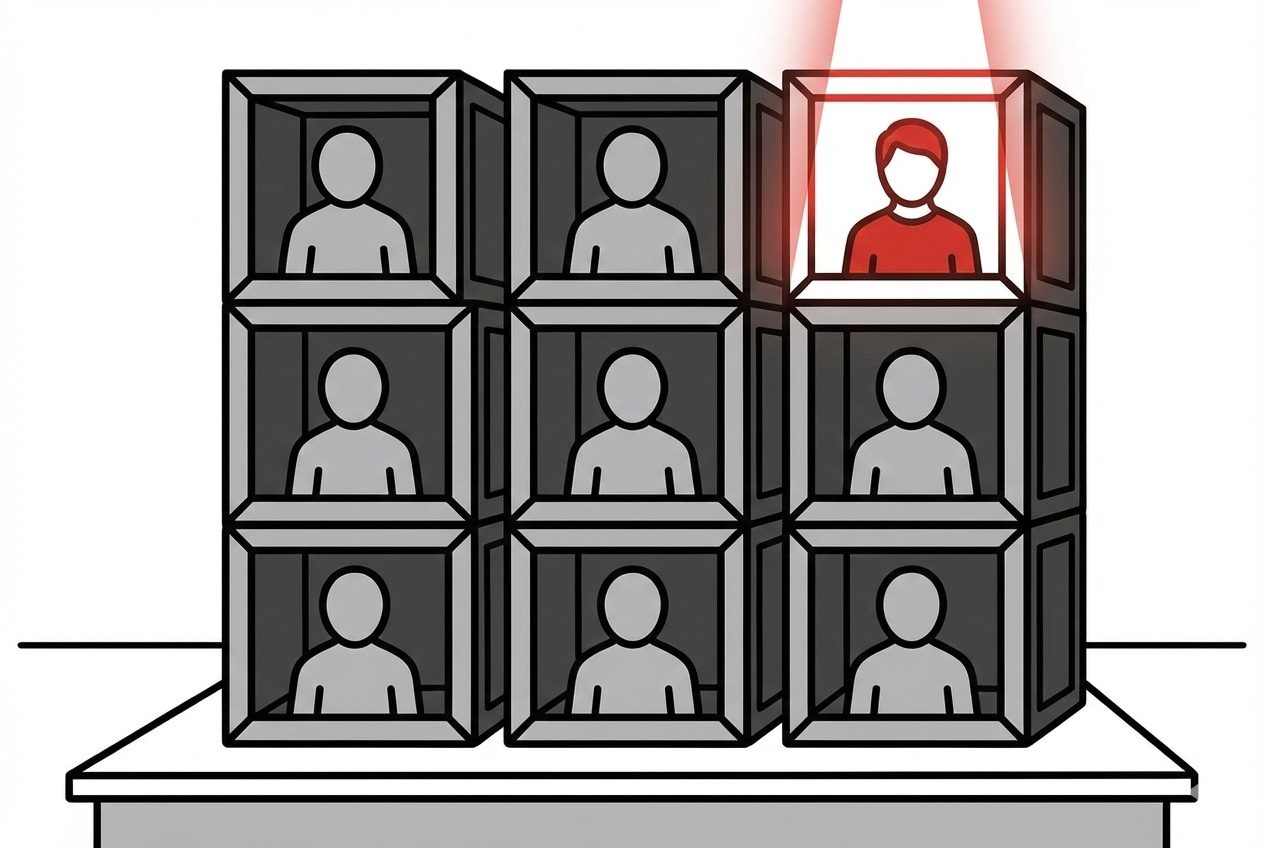
Your team just survived another year. Some people carried the weight. Others occupied a seat.
Most managers end December the same way. Vague performance reviews. Uncomfortable conversations. A nagging sense that they’re promoting the wrong people and ignoring the ones who actually move the needle.
There’s a reason succession planning feels like guesswork. Without a system, it is guesswork. You’re making decisions about people based on gut feelings and recency bias.
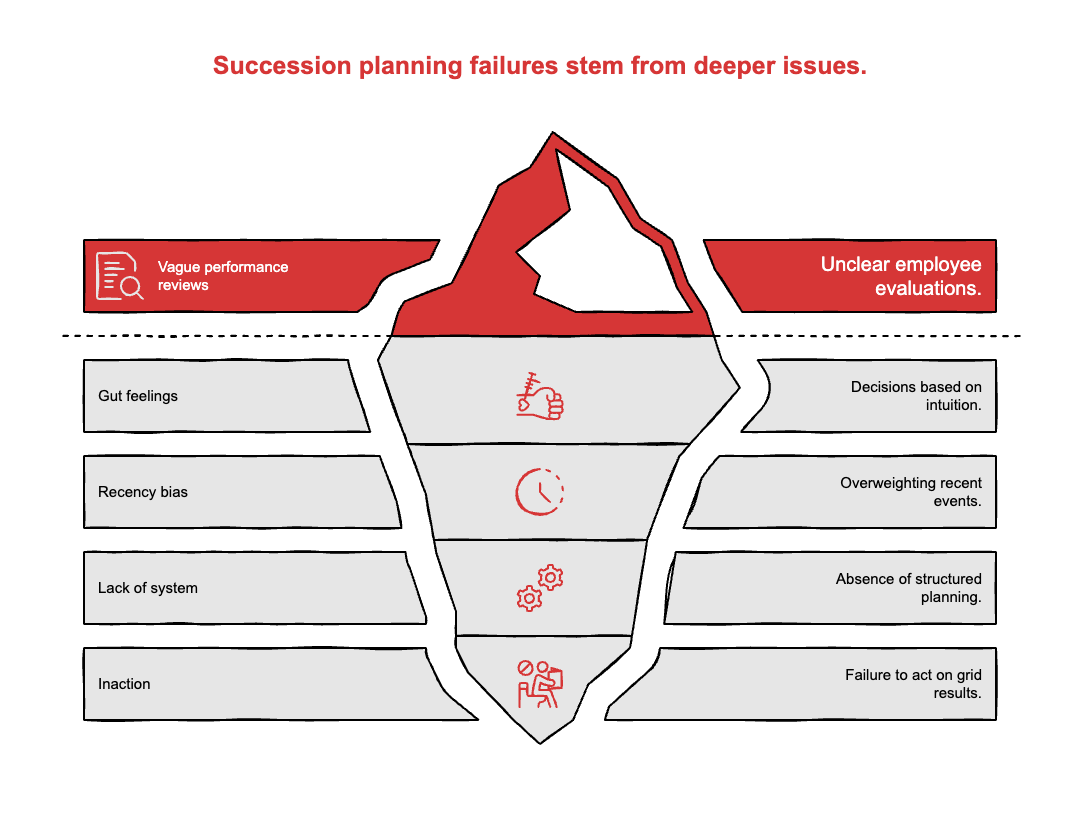
The cost of getting this wrong compounds fast. Promote the wrong person into leadership and you lose the team underneath them. Ignore someone with high potential and they leave for a company that noticed. Keep an underperformer too long and you signal to your best people that standards don’t matter here.
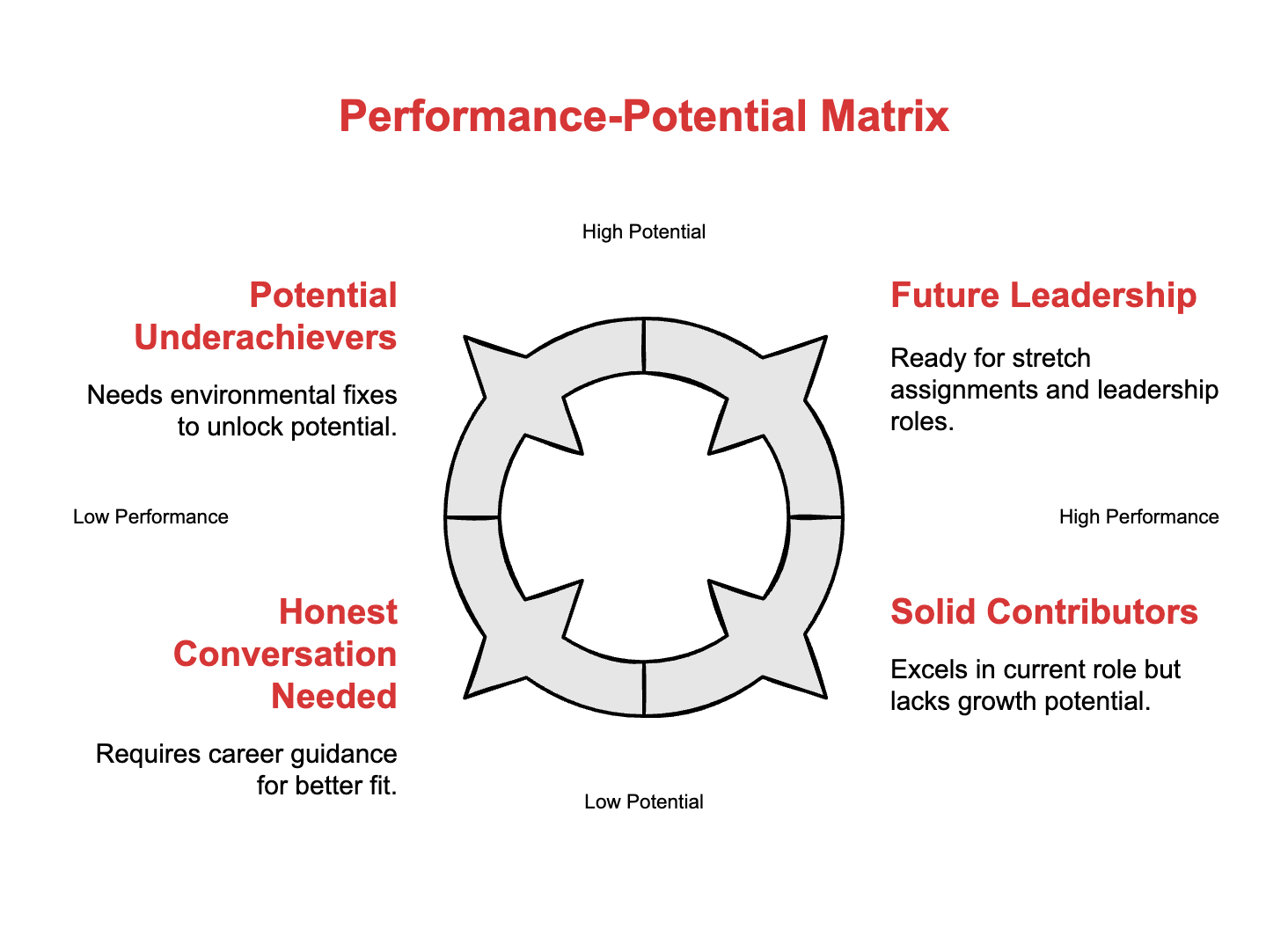
HR professionals have used a tool for decades that solves this. It’s called the 9-Box Grid, and it maps every employee on two axes: current performance and future potential. Nine boxes. Clear categories. Specific actions for each one.
But here’s where most businesses fail. They build the grid, place their people, then do nothing with it. The grid isn’t a snapshot for your files. It’s a planning tool that triggers specific moves for every category of employee.
Below, I’ll show you exactly how to implement this. Not with another template you’ll never use. With an AI-guided session that walks you through each employee, asks the right questions, places them on the grid with reasoning, and hands you a ready-to-use output you can take into Q1.
How the grid actually works
When you place someone in a box, you answer two questions. How well are they executing right now? How much room do they have to grow?
High performance, high potential. Your future leadership. These people need stretch assignments, visibility, and a clear path forward. Lose them and you’re handing competitors a gift.
High performance, low potential. Solid contributors who’ve hit their ceiling. Don’t push them into roles they’ll fail at. Let them master what they do well.
Low performance, high potential. This is where most managers mess up. These people aren’t failing because they can’t. They’re failing because something isn’t clicking. Wrong role. Wrong manager. Wrong support. Fix the environment before you write them off.
Low performance, low potential. Have the honest conversation. Sometimes the kindest thing is helping someone find a job they’ll actually succeed at.
The middle boxes hold most of your team. Moderate performers with moderate potential. Not stars. Not problems. Your engine. Invest in them accordingly.
Why static templates fail
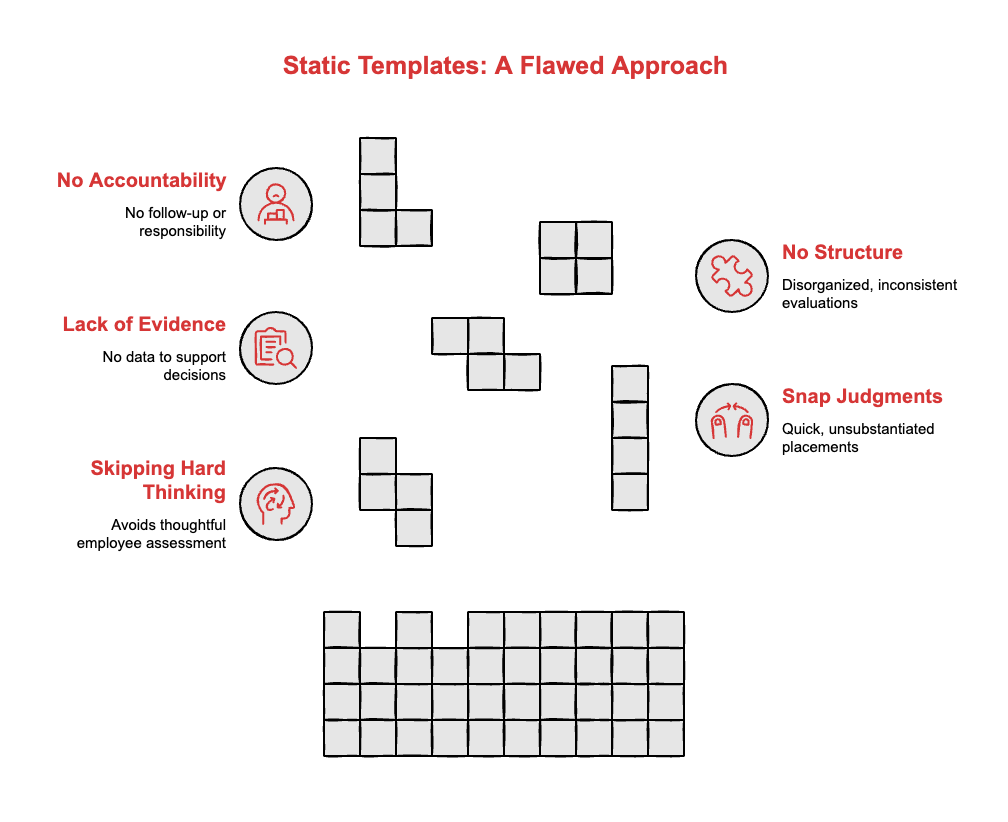
I’ve seen managers download 9-Box templates, spend an hour filling them in, then never look at them again. The problem isn’t the framework. It’s the approach.
Templates let you skip the hard thinking. You glance at someone’s name, make a snap judgment, drop them in a box. No evidence. No structure. No accountability.
What you need is a system that forces specificity. One that asks you pointed questions about each person and won’t let you move on until you’ve actually thought it through.
That’s what the prompt below does.
The guided assessment prompt
Copy this into ChatGPT, Claude, or your preferred AI assistant. Don’t fill anything in upfront. The AI will ask you everything it needs, one step at a time. Answer honestly. Let it guide you through each employee until you have a complete picture.