


Hey Adopter,
Four of the biggest AI models walked into a simple question and tripped on the same step.
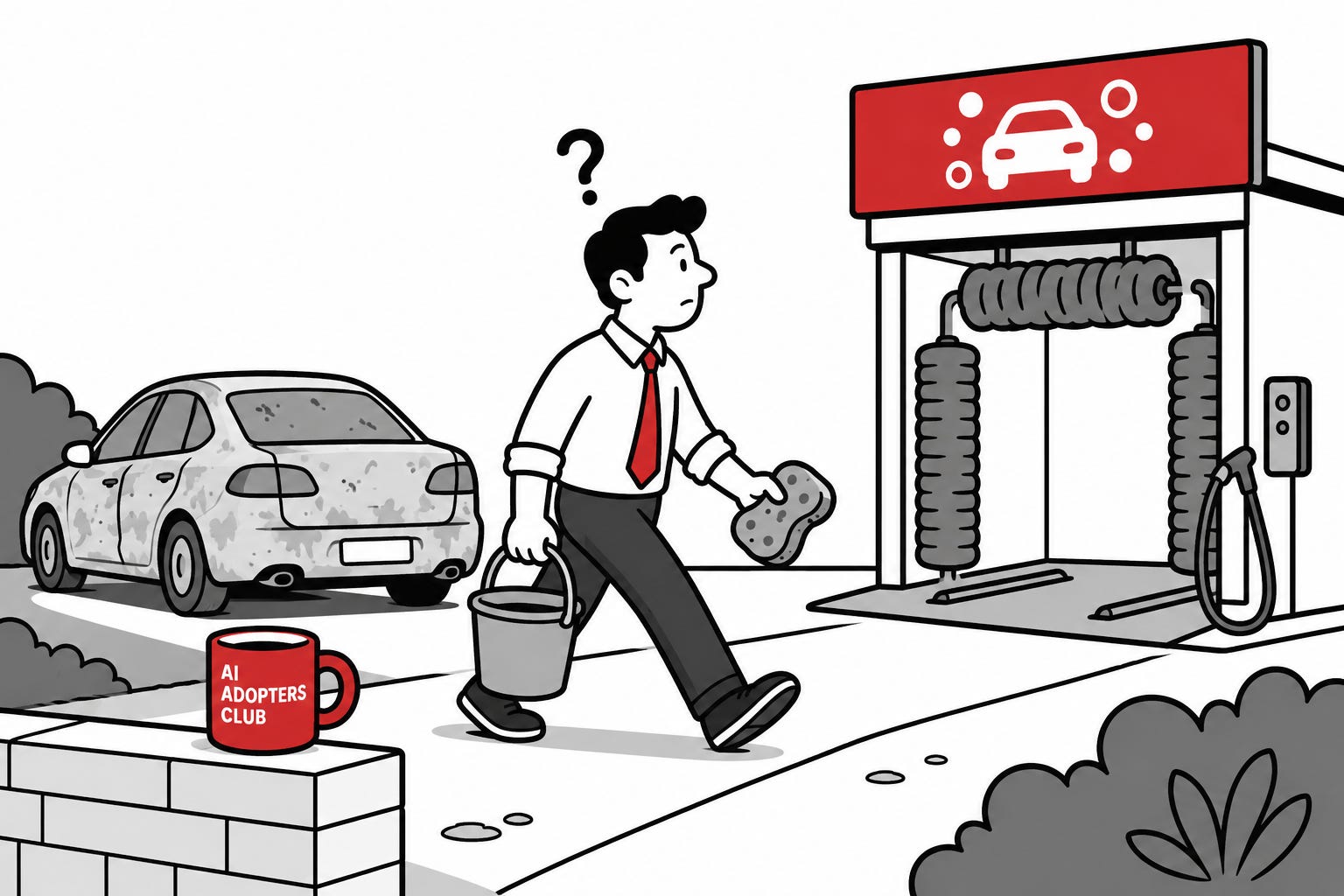
The question: “I want to wash my car. The car wash is 50 metres away. Should I walk or drive?” ChatGPT said walk. Claude said walk. Gemini said walk. (Claudia actually said “Drive…”). Researchers ran it past 53 models, and only five got it right more than once in ten tries. You can see the full test and scores here.
You know the answer a six-year-old would give. Drive. The car has to be at the car wash. The models never clocked that, because the phrase “50 metres” lit up a tidy little shortcut, short distance equals walk, and they built a confident reply around fuel savings and step counts. Right reasoning. Wrong problem.
Now the part worth sitting with. No amount of “think harder” rescued them.
Check out Claudia - a free open source project of mine that I have launched in January to make your Claude sessions more helpful. With persistent memory and many more helpful features.
If you need help installing her, the AI Adopters Perks include a detailed step by step guide for mac and windows.
The model fills your silence with a guess
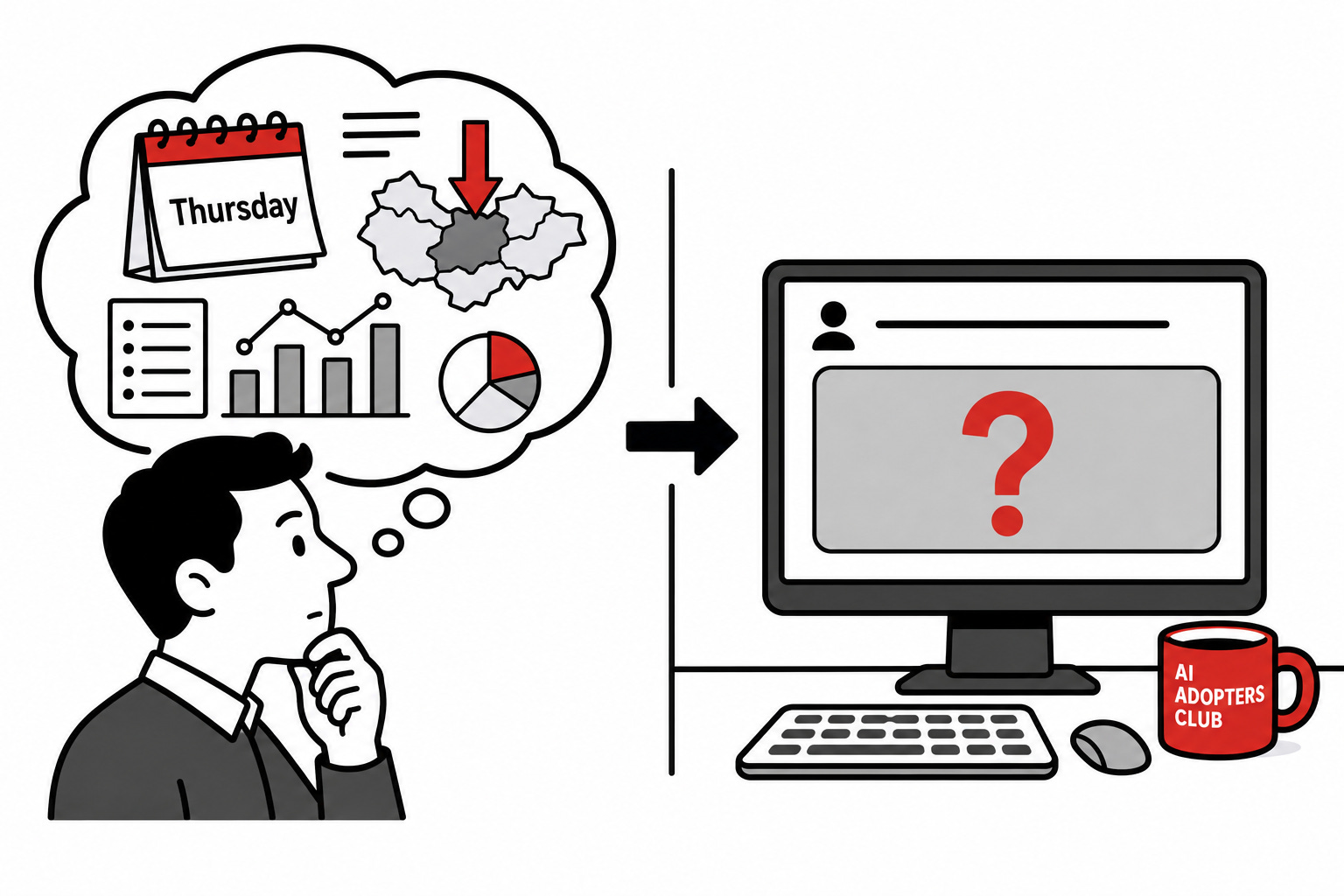
The model is not lazy and it is not broken. It answered the question you wrote, not the one in your head. The car’s location lived in your mind and never made it onto the screen, so the model did what it always does. It filled the gap with the most common pattern it had ever seen.
Andrej Karpathy put the whole thing in one line. You can outsource your thinking, but you cannot outsource your understanding. The model will happily do the work. It has no way of knowing what the work is for unless you say so. Scott Loftesness has a sharp write-up on that idea if you want to chew on it.
You have watched this play out at your own desk. You hand a new hire a one-line brief, “pull together the Q3 numbers”, and back comes a tidy report answering a question nobody asked. Not their fault. You knew the report was for Thursday’s board meeting and needed to flag the dip in the north region. They did not. Same failure, different intern.
Why a fancier prompt will not save you
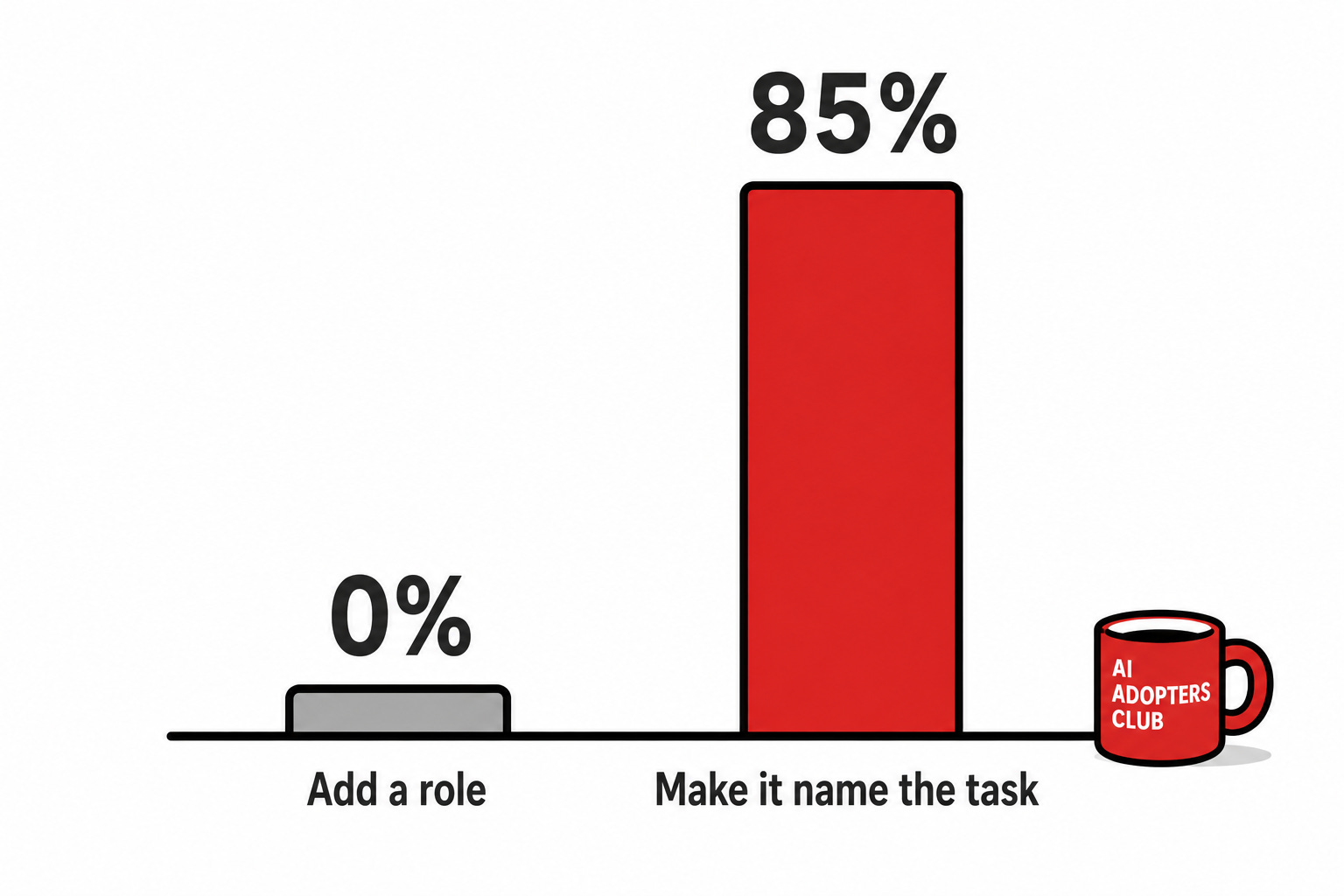
Most advice points the wrong way. Add a role, people say. Tell it to act as an expert strategist and watch it sharpen up.
A researcher tested that exact move on the car wash problem. Role definition on its own moved the score from zero to, well, zero. The model played the part and still strolled off to the car wash without the car. What moved the needle was a structure that forced the model to name the situation and the task before answering. Pass rate jumped to 85 percent. Same model, same question, no new information. The full breakdown is here.
The difference was never a smarter prompt. It was making the model surface the thing you left out. Which points straight at the fix.
Make it interview you first
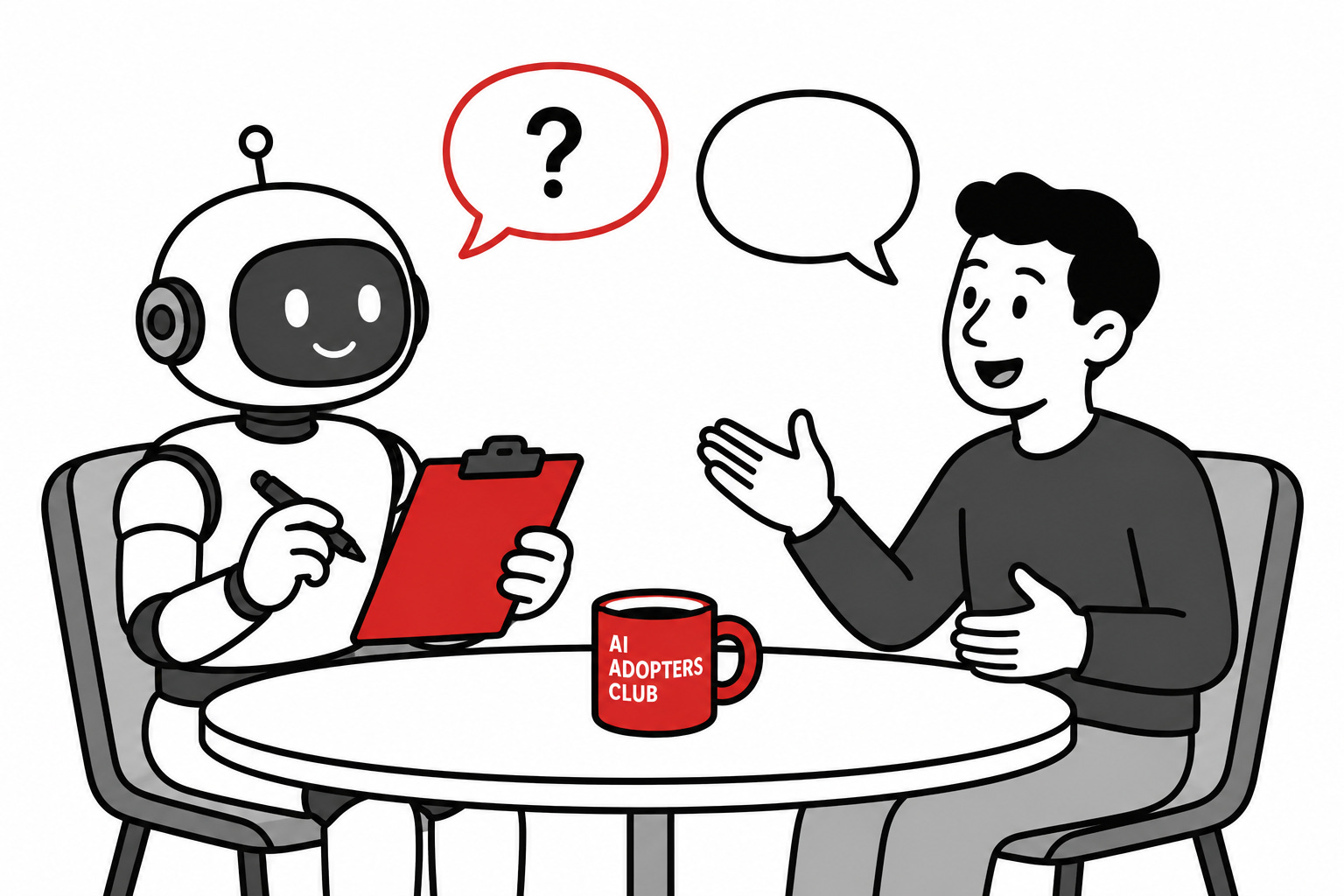
Flip the order. Instead of handing the model a one-liner and hoping, get it to pull the details out of your head before it writes a word.
Paste this at the start of your next real task:
Before you do anything, ask me questions one at a time about my goal, who this is for, and what a good result looks like. Keep going until you have enough to do this properly. Then summarise what you understand and wait for me to confirm before you start.
That is the whole trick. No role-play, no magic words. The model becomes the one asking, and every answer you give drops another piece of what you know onto the page where it can be used.
People have run a lighter version of this for a while, “before you respond, ask me five questions that would help you give a better answer”. One writer calls it the one prompting technique everyone can use, and it works for the same reason. The bottleneck was never the model’s intelligence. It was everything you knew and never said.
Run the test yourself this week
Do not take my word for it. Prove it in your own chat.
Pick a real task you would normally fire off in one line. A client email, a project plan, next month’s report.
Run it the old way first. One sentence, hit enter, save the output.
Open a fresh chat. Paste the interview prompt above and answer honestly, one question at a time.
Let the model summarise, correct anything it got wrong, then turn it loose.
Put the two outputs side by side.
The gap between them is the work you were leaving on the table every single time.
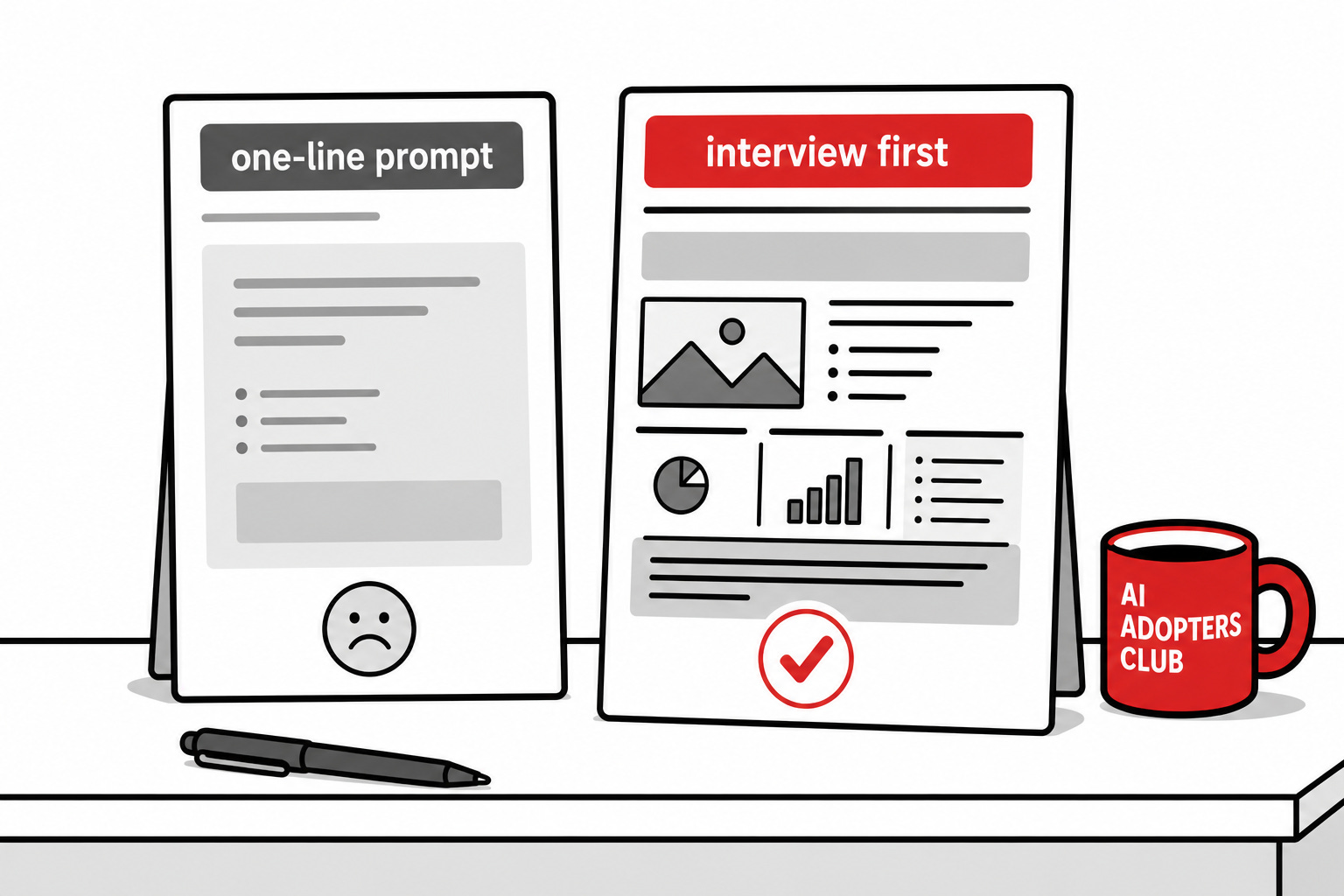
One more move. Once the model has interviewed you and you have a version that lands, do not let that hard-won detail die when you close the tab. Drop it into a saved document, your role, your audience, the way you like things done, and feed it in at the start of the next job. Nicole Leffer makes a strong case for that habit. You answer the questions once. The model stops guessing for good.
The car wash test stays funny right up until you realise you have been the one walking to the car wash, asking a brilliant tool to read a mind it cannot see. The fix costs you four questions and two minutes. The understanding stays yours, which is the only part that was ever going to.
Adapt & Create,
Kamil
The ablation is the part I keep coming back to: role prompting moved it zero to zero, but structure that forced the model to name the situation and task first jumped it to 85.
Same model, same information, so the whole gain is elicitation rather than intelligence, which is a cleaner result than most prompting advice ever bothers to isolate. What I find myself curious about is how far the interview move generalizes. It reframes the model from answer-giver to question-asker, which feels like it's doing something closer to supervision than prompting.
Have you noticed whether the habit carries over once people internalize it, where they start specifying intent up front on their own, or does the magic mostly live in the prompt doing the asking for them?
This is exactly why I believe the future belongs to people who understand both technology and human behavior.
AI can tell me how to wash my car. It can tell me the best route to the store. It can summarize a contract, write code, and analyze data in seconds.
But it still cannot replace curiosity, judgment, experience, and common sense.
After bringing more than 160 products to market, I have learned that information alone rarely creates success. Execution does.
The winners over the next decade will not be the people who blindly follow AI. They will be the people who know when to use it, when to question it, and how to turn its output into real world action.
AI is an incredible tool.
A hammer can build a house.
A hammer can also hit your thumb.
The difference is not the tool. It is the person holding it.
The opportunity is not to become dependent on AI. The opportunity is to become more capable because of it.
That is where the real advantage will come from.