


All your prompts, instantly accessible in your browser (50% off forever)
Hi Adopter,
Your support queue costs more than anyone in the room says out loud. Three to eight dollars a contact once you count wages, tooling, QA, and the manager who cleans up after all three.
So when a model turns up that’s fast, cheap, and good enough for the boring half of that queue, you look. Airbnb looked. The model was Alibaba’s Qwen.
Brian Chesky said it plainly last October. Qwen was “very good” and “also fast and cheap.” He also said OpenAI’s integration wasn’t “quite ready” for what they needed. Seven months later, two House committees sent him a letter about that decision.
What makes this worth twenty minutes of your attention isn’t the letter. It’s that Airbnb’s answer wasn’t a lawyer’s answer. It was an architecture answer, and it only existed because of something they’d built a year earlier for completely unrelated reasons.
What actually happened
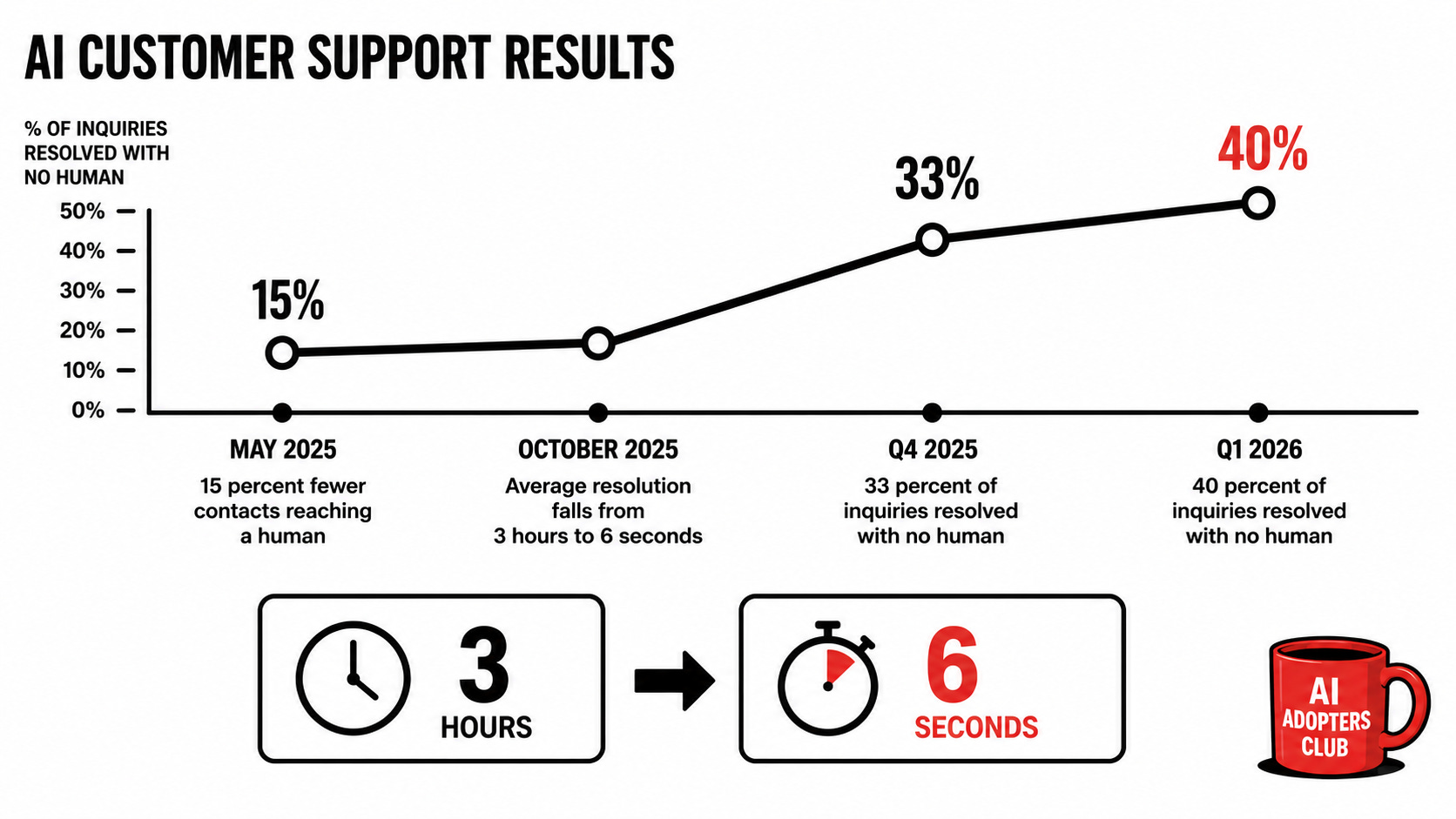
The rollout was quiet. Airbnb started testing AI on narrow queries in 2024, began the US rollout in April 2025, and within about a month Chesky reported a 15% drop in people needing a human.
That first win wasn’t clever. It was triage. A chunk of their inbound was repetitive, lookup-shaped, and never needed a person to begin with.
By October, average resolution had gone from roughly three hours to six seconds. By Q4 2025, AI handled about a third of US and Canada support. By Q1 2026, 40%, and Chesky told investors cost per booking had fallen “about 10 percent year over year.”
Then in April, the House Select Committee on the CCP and the Homeland Security Committee wrote to ask what exactly a Chinese model was doing inside an American company’s customer data.
The part worth stealing
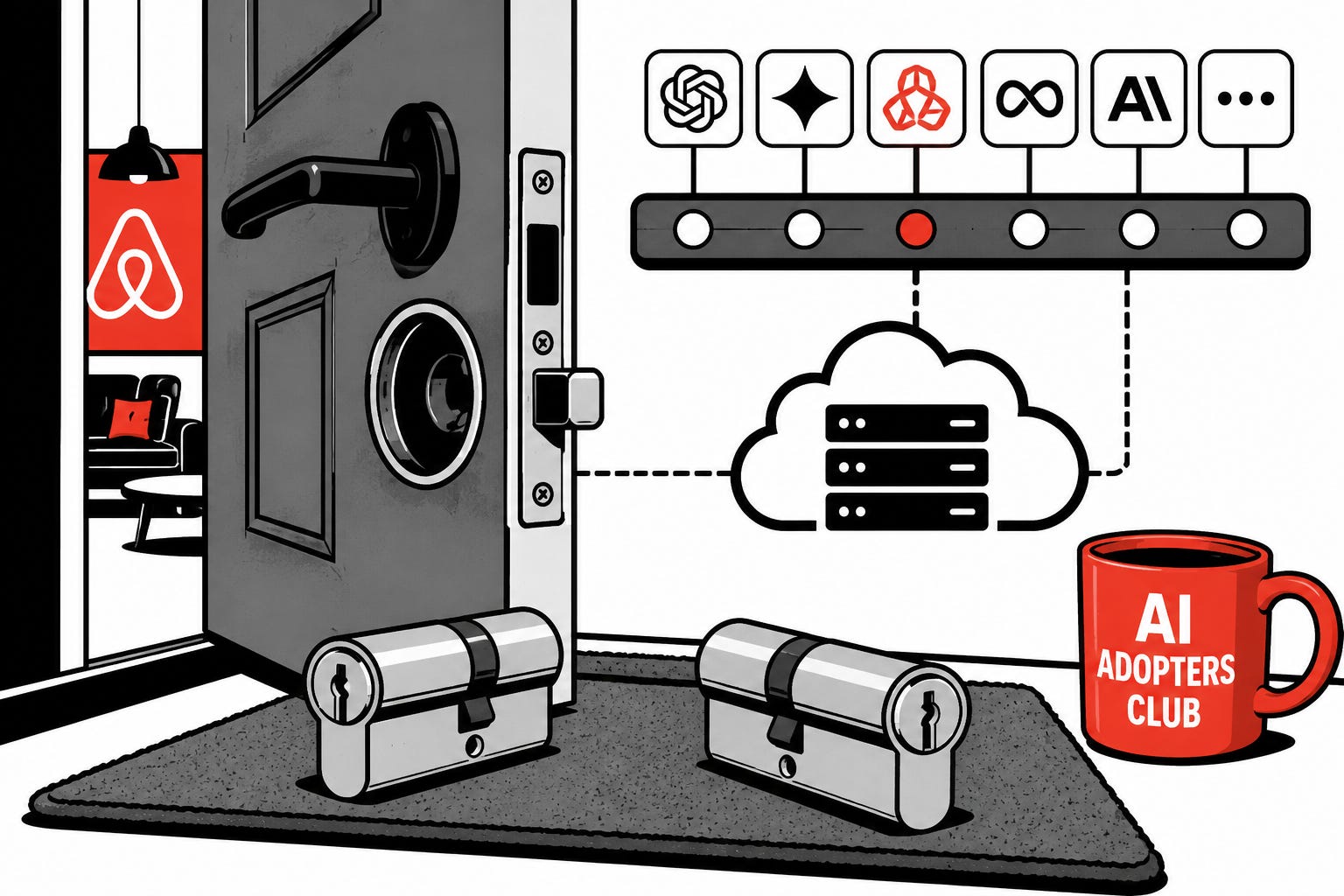
Chesky’s response was short. “We are not providing data to any Chinese companies. They don’t have access to any data.” He’s right. Qwen is open weights, which means Airbnb downloads it and runs it on their own hardware. Nothing phones home.
But the sentence that did the real work came next. He said Airbnb uses “a variety of open-source models, including U.S. open-source models.”
That sentence is only available to a company that built a router before it built a dependency. Airbnb runs thirteen models. Qwen does the heavy lifting on volume, and everything above it, the routing, the policies, the escalation rules, transfers to whatever they swap in next.
They can drop Qwen in a quarter and lose nothing that took time to build. Most companies making the same bet can’t say that.
Below the paywall this week:
The four-layer teardown of their stack, and which layer actually costs you money to rebuild
The reconstructed unit economics, including what a 10% cost-per-booking drop is worth in real dollars at their volume
The two June incidents where the agent did something expensive, and the one design gap behind both
The move most teams reach for first that quietly destroys the reversibility this whole case depends on
Members get the full teardown plus the 13-page case study PDF with the exhibits and source ledger.