


No time to read?
Just drop this TL;DR prompt into your AI and have a conversation.
Hey Adopter,
When I say model, I mean the engine inside the chatbot on your laptop. ChatGPT. Copilot. Whatever your company already pays for. The bit that writes the draft and answers the question. Think of it like the engine in a car. You can argue Ford versus Toyota all afternoon. The car still does not move if nobody knows the route.
You’re trying to become the person your boss asks when they want AI to do something real. Reciting product names will not get you there. The person who gets the seat can look at one messy process, invoices, refunds, the weekly report nobody wants to write, and say whether a chatbot is even ready to touch it.
Yesterday OpenAI put a new ChatGPT out. They call it Astra. Your invoices did not get smarter overnight. The meeting that starts with “did you see it” will not get you a seat.
Companies bought the tools. The licenses sit there. There’s a Slack channel called AI-something that three people still post in. Private equity put about $1.5 billion into a company that does not build chatbots at all. It only puts AI into real work inside real businesses.
You can spend six months comparing tools. Someone else in the building, or a vendor in the room, will become the person the VP trusts. That is the cost.
If you cannot answer four questions about one process you already own, you do not have a system. You have a demo that has not failed yet.
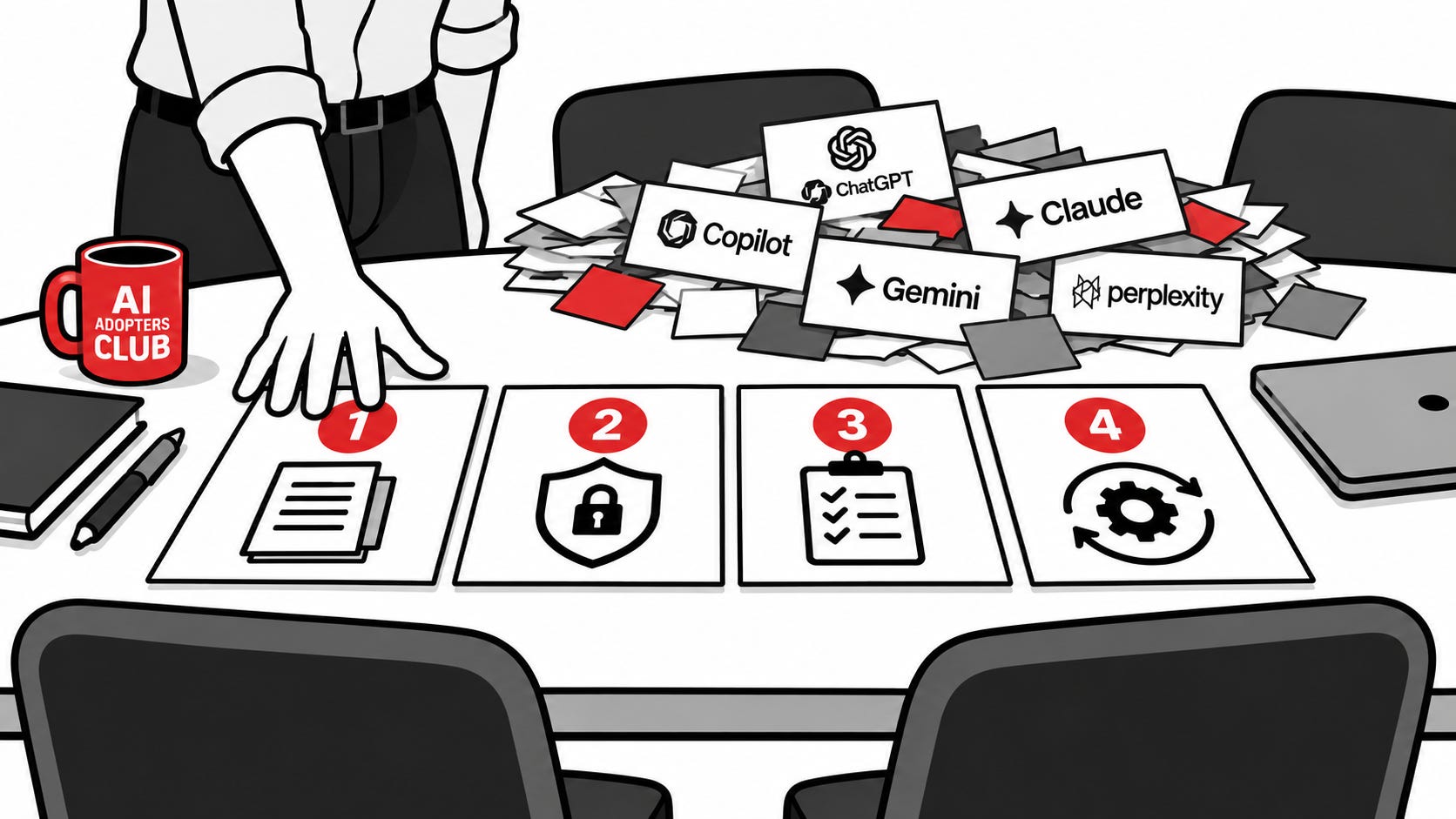
Those four questions are the whole job.
The $1.5 billion is Ode, a company Blackstone helped stand up whose whole job is putting AI inside real businesses. Eddie Siegel, their chief technologist, said which chatbot you pick matters, but that is not where most of the work goes. One ingredient in a system.
Gartner asked 353 data and AI leaders the same thing another way. Organisations that report good AI results spend up to four times more, as a share of revenue, on data quality, rules, people, and getting the team on board, than the ones with poor results. Not four times more on the chatbot.
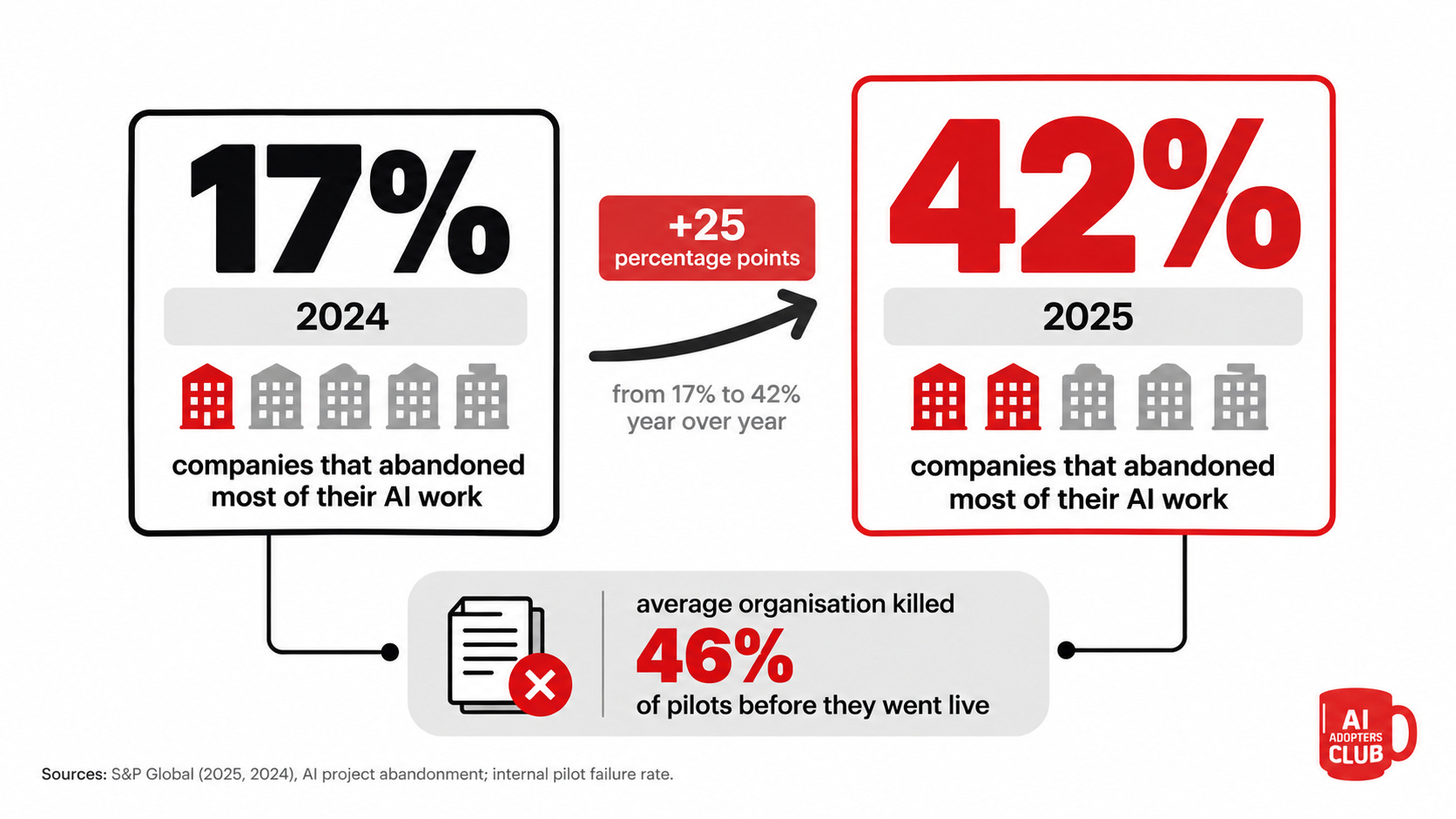
And S&P Global found that 42% of companies abandoned most of their AI work in 2025, up from 17% the year before. The average organisation killed 46% of pilots before anything went live.
All of that is a work problem.

Four questions that kill the chatbot argument
I will not let a build start until these have answers. You can walk into a meeting with the same list. You do not need to become an engineer.
What does it need to know, and where does that live?
If the chatbot has to go hunting through five systems and a folder called FINAL_v3, it will guess. Guessing looks confident. It is still guessing. Your job is to write down the facts first. Claim type. Customer status. The rule that changed last quarter. Hand it a packet, not a junk drawer.
The red flag is a bot that rummages through live company files on its own. That is an intern with the master password.
What is it not allowed to do, and what stops it?
If the only rule is a sentence you typed into the chatbot, that is a hope. A hope does not survive a clever prompt. Customer files, prices, anything you would not paste into a public chat, should never reach the engine. The output should hit a hard check. If it is off the list, the system does nothing.
How will you know it still works next month?
Vendors ship new versions. Your prices change. Write twenty real examples from last quarter, with the right answer. Run that pack before anything goes live, and again when the vendor updates. If you cannot produce a score, you have a demo.
If they triple the price, do you start over?
If swapping ChatGPT for Copilot means rebuilding the whole thing, you built a wrapper. The packet of facts and the tests should stay. The engine should be the part you can change.
A vendor who wants to skip this list is selling you a demo with a bow on it. Your value in the room is being the person who will not skip it.
If it is refunds, do this before the meeting
Pick one process you already own. Not an AI strategy. Refunds. Invoice exceptions. The weekly report. One job.
Say it is refunds. Write down where the truth lives. Order number in the shop system. Payment status in finance. The policy in a doc nobody updated since March. The tribal bit, which manager always says yes under fifty dollars.
Take twenty refunds from last quarter and write the right answer next to each. Approved, rejected, needs a human. That pack is your test. When the vendor ships a new chatbot next month, you run the pack again.
Write the don’ts. No issuing money above a set amount. No touching a VIP account. No sending the customer file to the engine. Then write whether a person or a system enforces each one. If the answer is “we told the chatbot not to,” that is not an answer yet.
Bring that to the meeting. Leave the product comparison at home. You will sound more useful than the vendor, because you showed up with the work, not with a logo.
If the room still wants to argue about ChatGPT versus Copilot, let them. Then ask the four questions out loud. The argument usually dies.
The next time they ask which chatbot to buy
Do not spend this week comparing chatbots. Spend it on one process you already do, and those four questions.
The chatbot will keep changing. The person who knows the work, the failure modes, and the tests becomes the one everyone has to go through. That person is hard to fire.
How will you answer, the next time someone asks which chatbot to buy?
Adapt & Create, Kamil
Want help running this on your own work?
