Hi Adopter,
This week’s case study looks at AI adoption inside Anthropic, the company behind Claude.
Its internal research gives us a way to examine a practical business decision:
When should you add more AI capacity, and when should you improve the way people review and finish the work?
Inside this Premium edition
I’ve put the evidence and a way to apply it together. Here’s what you get when you subscribe:
The 19-page case-study PDF. Findings, sources, limitations, and lessons across sales, finance, legal, hiring, and management.
The ACCEPT test. Six steps to define acceptable work, measure human effort, test one AI change, and choose what to fix next.
A worked business example. Follow an invented distributor’s human hours, review workload, and cost per accepted quote.
Three printable worksheets and a thirty-day test. Find the constraint, compare investments, and run a pilot with owners, checks, and stop conditions.
The point is to help you make that next decision in your own business. You don’t need to run an AI research company to use the method.
What Anthropic measured
By August 2026, agents directed by Anthropic’s employees ran for six times as many hours as the employees were assumed to work.
Inside research groups, the ratio was nineteen to one. The employment report compares agent runtime with headcount multiplied by a forty-hour week.
That isn’t a count of artificial workers replacing employees, or a six-times productivity claim.
Interactive sessions also spent about 80% of their wall-clock time waiting for a person.
That includes legitimate review, deliberate pauses, abandoned work, and people handling something else. Treating all of it as waste would miss what people are doing.
Work devoted to setting up, steering, and checking agents grew from 10% to 22% of interactive Claude sessions. That’s a share of sessions, not employee time.
Anthropic also estimated that reading every generated word would take 424 hours per person per week in engineering and research. Nobody did that; it’s a theoretical reading-volume estimate.
Where this shows up in your business
You can recognize the problem in a much smaller business. A sales agent prepares a proposal in minutes.
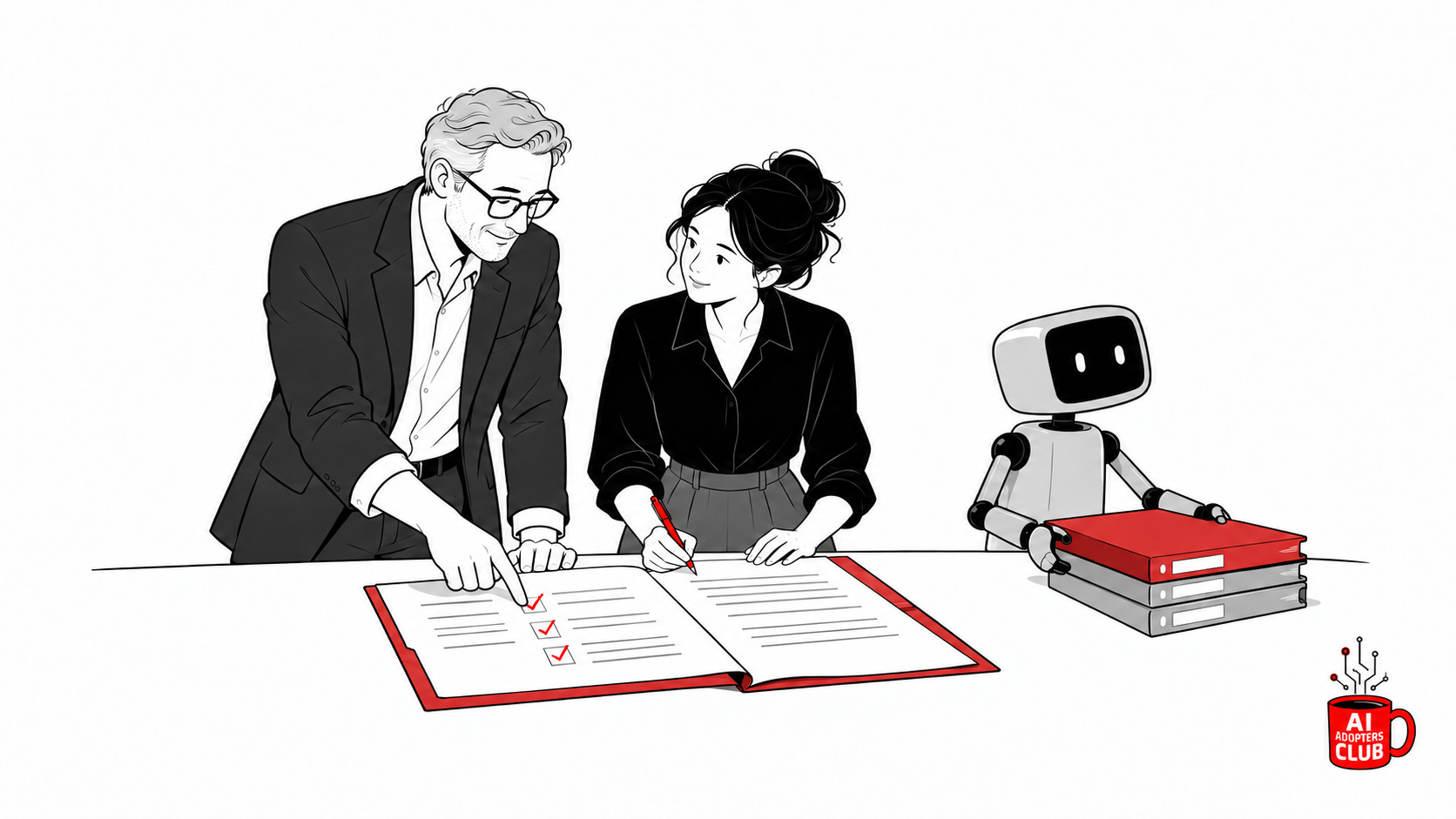
Then someone checks the price, confirms the delivery date, fixes the product recommendation, and traces a claim back to its source.
Faster drafting helps, but you still need to know how much work is waiting for the reviewer.
Anthropic is an unusual company studying its own tools. Its results aren’t a forecast for yours. They give us a useful starting point for measuring the whole job before buying more capacity.
Below the paywall, we’ll use ACCEPT to turn that question into a measurable test, then work through the distributor calculation and a thirty-day pilot.